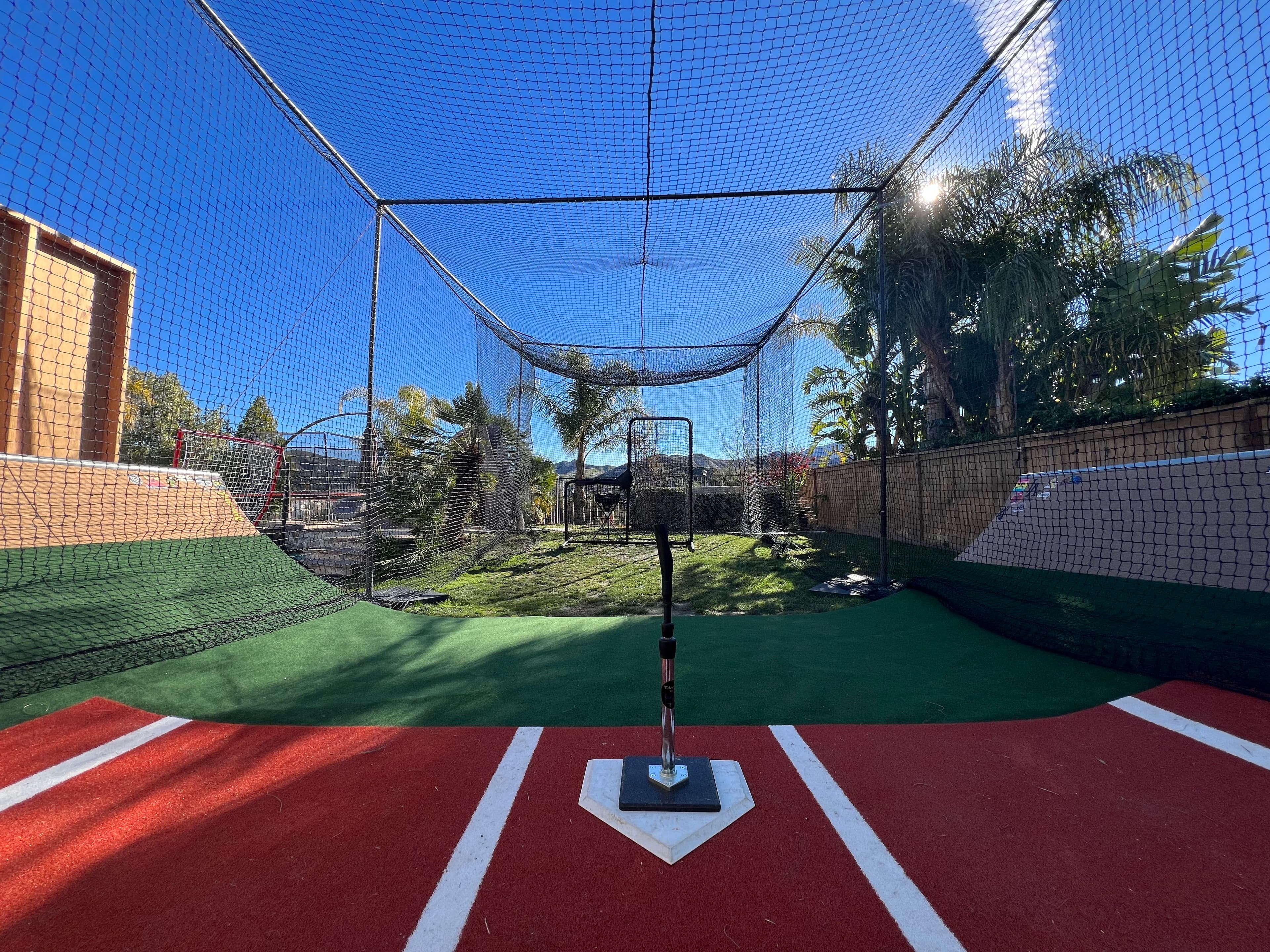
Search "batting cage" and you get a product category: a net, a frame, a price. That is not what a cage actually is. A cage is whatever a baseball family could build out of the yard, the budget, the winter and the building they already had. Which is why no two of them look alike.
We host thousands of cage profiles on CageList, and a couple hundred of them are private cages you can book by the hour. Reading through them is the closest thing that exists to a national survey of how American families build a place to hit. There are barns in Mississippi with an Iron Mike bolted to the floor. There is a 10-foot strip of driveway in San Leandro. There is a 70-foot tunnel three blocks from Oracle Park. There is a cage in Pensacola whose host politely warns you about the above-ground pool.
This is a field guide to all of it: 27 types of batting cage, grouped by the decision that created them, with real photos and real bookable listings for each one. If you are trying to figure out what to build, the fastest way to get unstuck is to see what somebody with your yard, your climate and your budget already did.
What backyard cages actually look like, by the numbers
Before the types, some ground truth. We pulled the spec panel on every bookable cage listing on CageList in August 2026 — 214 of them, across 32 states — and counted.
Two things stand out. Turf has quietly become the default rather than the upgrade. And more than four in ten backyard cages now have something over them, which is a different sport from the bare net-and-poles setup most people picture when they start planning. A third number is worth holding onto as you read: 68 percent of these cages have night lighting, and the hosts who added it will tell you it is the cheapest thing they ever did for their calendar.
Family 1 — The open-air backyard cage
Grass, sky and a net. This is where a slight majority of backyard cages live, and where nearly every build starts before it turns into something else.
1. The starter net
Not a tunnel at all: a pop-up net, a tee and a bucket. Under $200, sets up in a driveway in four minutes, and it covers tee work, soft toss and front toss for a seven-year-old. It does not contain a ball hit hard by anyone older than about ten, which is the entire reason people move on from it. It is a real stop on the ladder, not a failure — plenty of hosts still keep one in the corner of a full-size cage for warm-up swings. Our small-space nets guide covers the category.

2. The prefab kit cage
A boxed kit — Skywalker, Fortress, Anything Sports, the classic BCI trapezoid — with a light frame and a net, delivered on a pallet. It is the honest answer for players eleven and under and for anyone who has to take the whole thing down in October. Two things kits do not tell you: the trapezoid profile is low enough that you clip the top net throwing from a bucket, and thin-wall frames twist in one real windstorm. We priced the category tier by tier in Backyard Batting Cage Kits, Compared.
3. The conduit corner-fitting DIY
Corner fittings ordered online, ten-foot conduit from the hardware store, popped together into a trapezoid over a weekend. It is the most-Googled backyard build, and the builder we source most of our construction guidance from is blunt about it.
I would never ever do it that way because it looks like poo and has ricochets and kinks inward causing sag.
Conduit carries no load. It kinks, it sags, and holes open where the net meets the tube. The reason kit companies push this route is logistical rather than structural: nobody can economically ship a 15-foot schedule-40 steel pole, so they sell you fittings and send you to the hardware store. If this is the budget you have, build it and enjoy it. Just plan on it being version one.
4. The bucket-and-sleeve removable cage
Five-gallon buckets filled with concrete around landscaping timbers or chain-link top rails, PVC sleeves so the uprights lift straight out, cable across the top. Around $250 and completely reversible, which is the whole point: it is the answer for renters, for HOA neighborhoods where a permanent structure is a fight, and for northern yards where the cage comes down in November. Read permits and HOA rules before you dig anything permanent.
5. The slide-to-mow cage
The most common complaint about a backyard cage is that it is a nightmare to mow around. The fix is to hang the net on pulley rollers riding a wire between two anchor points, so the whole thing slides aside like a shower curtain. Carabiners work; metal-on-metal chafe frays the cable, so rollers are the upgrade. This is the poor man's version of type 14.
6. The tree-to-tree cage
No poles at all. Triple overhead cables run tree to tree, with 2-inch tree straps and ratchet straps instead of turnbuckles. Our build advisor runs his own cages this way, and points out it can mean going 29 feet up a tree on an extension ladder, so this is an expert build rather than a cheap one. A tunnel needs three anchor points and you can mix them: tree, eyebolt, pole.

Family 2 — The real backyard tunnel
Between the kit and the facility sits the thing most people actually picture: 12 to 15 feet wide, 50 to 70 feet long, 12 feet tall, standing there permanently.
7. The grass-floor tunnel
Full-size frame, full-size net, and the lawn you already had. Two caveats worth planning for: grass wears to dirt in the batter's box inside one season, and a net that touches dirt wears faster because wind drags it along the ground. Budget for a hitting mat in the box even if you never turf the rest.

8. The turf-lane tunnel
The version most hosts land on, and now the majority of our inventory. Turf end to end, a home-plate mat, a pitching lane, and a net that never touches soil. Turf changes how a cage feels to a guest more than anything except lighting. If cost is the blocker, the field-proven intermediate steps are indoor-outdoor carpet or painted horse-stall mats. Our surfaces comparison and the turf buyer's guide both go deeper.

9. The concrete-footed steel tunnel
The one a professional builds. Schedule-40 thick-wall round steel, 3 to 4 inches in diameter. Sixteen-foot poles with roughly 13 feet above ground and 30 percent of the height buried in a square footing that is wider at the bottom than the top, with rebar in it. Four to six poles. Each pole set intentionally kicked back so it squares up to 90/90 once the tensioned net pulls it inward. Real steel poles run $400 to $800 apiece, which is the number that surprises everyone who budgeted $70 a pole for conduit.
This is the grade you need if strangers are going to hit in it. Holes in a net are a liability problem, not a cosmetic one. The CageList build guide walks the full spec, and the cost calculator will price your version of it.

10. The sliver cage
Some of the best cages in our inventory are not in a backyard at all. They are in the six feet between a house and a fence, down a side yard, or straight up the driveway. A host in San Leandro built a 10×35 driveway cage and deliberately left the hitting mat unattached so it slides for different batters and nobody catches the net on a backswing. Another in Whittier squeezed a cage six feet wide against a wall and notes that the avocado tree handles the shade. A Phoenix host turned the alley alongside the property into a lane.
Short cages are not lesser cages, but they are different: the ball comes back at you faster in 35 feet than in 70, so a real screen matters more, not less. See how much space you actually need and cage lengths compared.


Family 3 — Cages with something over your head
Cover changes the economics of a cage, because it turns a fair-weather asset into a year-round one. It is also the single biggest jump in cost. Forty-three percent of our bookable cages have made it.
11. The shade-cover cage
Shade cloth, a stretched tarp, or an existing patio cover pulled out over the hitting end. Cheap, fast, and in Arizona or Florida it is the difference between a cage that gets used in July and one that does not. It buys shade and it slows UV damage to the net. It does not buy you a dry cage in a storm.

12. The carport or pavilion cage
An auger-anchored metal carport or RV cover dropped over turf gives you a covered cage in a day with no concrete footings, and it is the fastest-growing pattern in the builder groups right now. One thing that gets learned the hard way: carport tubes are thin-gauge, so pad or foam-noodle any interior post before a ball finds it.

13. The full-roof structure
A proper roof on proper posts, open on the sides. Rain-proof, sun-proof, and genuinely a small building — which is also the point where permits, setbacks and your county assessor start to matter. We priced this tier in a covered cage structure under $25,000.

14. The retractable cage
The most underrated type on this list. A triple cable overhead grid — two side cables plus one center top line, with carabiners every foot or two — lets you pull the entire net back to mow, do tree work, or beat a storm. A 70-foot cage runs about $200 in snap links, which is exactly what people skip, and skipping it turns a retractable design into a permanently hung one. The pro version raises the center cable a foot or two above the side cables into a pitched roof: less sag, more headroom to watch a line drive, and fewer ricochets back at the feeder.
Indoors the same idea shows up as a retractable divider that splits a wide space into two lanes and opens back up for fielding work. Full detail in retractable batting cage systems and the sag-free cage guide.

15. The climate-controlled backyard building
Where a covered cage becomes a private facility. Heat, air conditioning, an actual dugout, and an observation deck so parents and coaches are not standing in the doorway. The Nebraska host below runs an Iron Mike with 400 balls in a heated and air-conditioned space with a bathroom, a kitchenette, and water and Gatorade on site, for $15 an hour.

Family 4 — The conversion
The cheapest square footage in America is the building you already own. Some of the most impressive setups on CageList are not builds at all. They are conversions.
16. The barn cage
The archetype. High ceilings, an existing frame to hang from, a floor that is already flat, and no weather. A Georgia host runs two cages inside a barn — a 70-footer with a Pro Batter simulator and a 60-footer for softball — seated with real ballpark chairs pulled from Wrigley and Busch Stadium. A California host lists an outdoor 48×12 and an indoor 21×40 barn as two separate options and asks you to say which one you want. A Mississippi host turfed a 70-foot barn lane and bolted in a stationary Iron Mike that throws baseballs or softballs.


17. The outbuilding or metal-building cage
Pole barns, machine sheds, prefab steel buildings. A Utah family converted a 50×100 outbuilding into a two-cage practice building with room left over for fielding work. An Oklahoma host runs a 30×50 metal building with equipment along the walls and an open area in front, next to a softball field. The math is hard to argue with: a metal building plus turf plus netting often comes in under a comparable outdoor covered structure, and it works in February.


18. The shop and garage cage
Same idea, smaller. A 40×55 shop in Oklahoma with turf down and parking for ten cars. A 40×60 heated outbuilding in Ohio where the walls are covered floor to ceiling in team photos and jerseys, which is its own argument for why people love these spaces. A garage gets you about 35 feet of usable lane, which is enough for tee work, front toss and a machine at a shortened distance. It is not enough for live pitching.


19. The low-ceiling tunnel
The type nobody builds on purpose and everybody in a cold state ends up wanting. Basements and low outbuildings give you length but almost never height: we have bookable tunnels with 10-foot, 8-foot and 7-foot ceilings. Under about 10 feet you are in side-wall cable territory rather than overhead cable, and you are running tee work, front toss and a machine at short distance rather than full BP. It is still the difference between hitting in January and not hitting in January.


20. The urban indoor cage
The rarest and most valuable type. In a dense city there is no backyard, so the cage is a leased bay or a ground-floor room and the price reflects the real estate. One of our hosts runs a 70-foot cage and bullpen three blocks from Oracle Park in San Francisco at $100 an hour, which in that market is a bargain. In Robbinsville, New Jersey, an 8-foot-ceiling climate-controlled tunnel goes for the same rate with a Hack Attack Jr. and foam machine balls included.

Family 5 — Land-scale setups
21. The acreage or ranch cage
When space stops being the constraint, cages get long, rough and honest. A Texas host outside Seguin runs a 15×55 open cage on a private stretch of land with medicine balls, a tractor tire and an 8-pound sledgehammer in the training package. A Colorado host lists a cage and an infield on a ranch. A California host named theirs Stockyard Cage. These setups tend to have the best sightlines and the worst cell service, and both are part of the appeal.

22. The cage-plus-infield compound
A tunnel is a hitting tool. Add open turf and it becomes a practice. A Bonita, California host runs a 69-foot cage attached to roughly 7,000 square feet of turf you can take ground balls on. A Grand Prairie, Texas host built a 71-foot indoor cage with a roll-up door at the end and a full-size softball infield behind it. For a coach trying to run a real team practice, this is the category that matters. See booking a cage for team practice.


23. The multi-tunnel setup
Two lanes, three lanes, five lanes. Once you cross into multiple tunnels you are operating a facility whether you call it one or not: one lane on a machine, one on tees, one bullpen, one open. An Arizona host runs four dedicated lanes, one each for a softball machine, a baseball machine, tee work and pitching. The cheaper version of the same idea is a divider net down the middle of one wide cage, which a Washington host uses to split a 70-footer in two.


Family 6 — What goes inside
Four upgrade layers show up again and again, and they are what separate a cage people book twice from a cage people book once.
24. The machine cage
There is a clear ladder here. A light machine and a soft-frame screen handle tee and toss work for younger kids. A Junior Hack Attack is the machine that grows with a kid and is by far the most common serious backyard pick in our listings, because the three wheels are visible and adjustable by hand. A full Hack Attack, an ATEC three-wheel or a JUGS BP3 is what facilities run. Then there is the arm-style machine — Iron Mike and its relatives — which shows the hitter a real arm swing and self-feeds forty-plus balls without a reload, which is why it keeps turning up in barns and country cages where somebody hits alone. As one Alabama host puts it, he prefers that style because it mimics the arm motion of an actual pitcher.
Two things hosts consistently get wrong: a soft-frame screen stops being a screen the moment a 13-year-old squares up a machine ball, and real leather baseballs die fast in a wheeled machine. Use dimpled poly, synthetic machine balls or dense foam. If you are picking a machine, we compared Hack Attack vs. Junior Hack Attack, reviewed the JUGS BP3, and keep the whole category in the CageList pitching machine shop.


25. The data cage
The newest layer, and the one that lets a backyard host charge facility rates. HitTrax for exit velocity and launch angle, Rapsodo or Trackman for spin and pitch data, a pocket radar clipped to the net for velocity. One of our Maryland hosts runs a 22-foot-tall cage with Trackman and a full weight room attached. A host in Fontana, California runs Rapsodo 3.0 in a netted turf cage with a shaded parent lounge. We broke down the two most common systems in HitTrax vs. Rapsodo.

26. The night cage
The cheapest upgrade with the biggest effect on bookings, which is why 68 percent of our listings have it: lights roughly double your usable hours from October to March. The field-standard approach is LED work-light strands clipped to the center cable, brighter and cheaper than solar at the cost of running a cord. Mount them outside the net so balls cannot find them, and run a conduit sleeve by a post while the frame is going up even if the lights are a next-year project. See the cage lighting picks.


27. The guest-ready cage
The last type is not a structure at all. It is the set of details that make a cage rentable: a gate a stranger can find, a code or lockbox instead of a meet-up, somewhere for parents to sit, water, shade, a stocked gear locker, and house rules posted where people will read them. The hosts who do this are the ones with repeat bookings. One of ours keeps a shed beside the cage stocked with tees, weighted balls, cones and training bats so a guest never has to ask. Another lists the covered patio lounge next to the cage as a feature, because for a parent watching a 90-minute session it genuinely is one. A Texas host put in a walk-through gate for the simplest reason there is: so you do not get tangled in the net on the way in.


If that reads like a to-do list, it is one: build your cage for self-entry and the amenities that actually get booked are the two places to start.
Which one should you build?
Almost every real decision comes down to four inputs: who hits in it, how much yard you have, whether you need it in winter, and whether anyone besides your own kid will ever use it.
| If this is you | Build this type | Rough all-in |
|---|---|---|
| One kid, ten and under, small yard | Prefab kit or bucket-and-sleeve (2, 4) | $400 – $1,500 |
| Renting, or an HOA you would rather not test | Removable or slide-to-mow (4, 5) | $250 – $2,000 |
| 13-and-up hitter, permanent yard, mild winter | Concrete-footed steel tunnel (9) | $5,000 – $12,000 |
| Hot climate, cage goes unused all summer | Shade cover or carport (11, 12) | add $1,500 – $6,000 |
| Cold state, want reps in January | Barn, outbuilding or shop conversion (16–18) | Depends entirely on the building |
| Long basement, low ceiling | Side-wall cable tunnel (19) | $1,500 – $4,000 |
| Planning to rent it out on CageList | Type 9 plus layers 24, 26 and 27 | $8,000 – $22,500 |
Before you build one, go hit in a few
The best advice we can give anyone planning a cage is to book two or three near you first. An hour in a 70-foot turfed tunnel and an hour in a 35-foot grass cage will settle your arguments about length, surface and lighting faster than any spec sheet, and it costs less than the netting will.
You can browse backyard cages by state, search for cages near you, or read the companion pieces: the five kinds of backyard cage compared side by side, how to build a backyard batting cage, what a backyard cage really costs, and what happens when you build a cheap one. If you already have a cage and it sits empty five days a week, listing it takes about fifteen minutes.
Photos are from live CageList host listings and link back to them. Inventory figures were counted across all 214 bookable cage listings on CageList in August 2026. CageList links to gear retailers as an affiliate: as an Amazon Associate, CageList earns from qualifying purchases.
Get the numbers
Get your free batting cage cost estimate
Enter your email and we'll send you an itemized build breakdown: frame, netting, turf, lighting, and install, plus what a cage like yours could earn if you rent it out.
No spam, unsubscribe anytime. Prefer the interactive tool? Open the full cost calculator.
Already have a cage?
Rent it out when you're not hitting
Players, parents, and coaches near you are looking for cage time. Listing is free, you set your own price and hours, and you approve every booking.
Related Guides
View all articles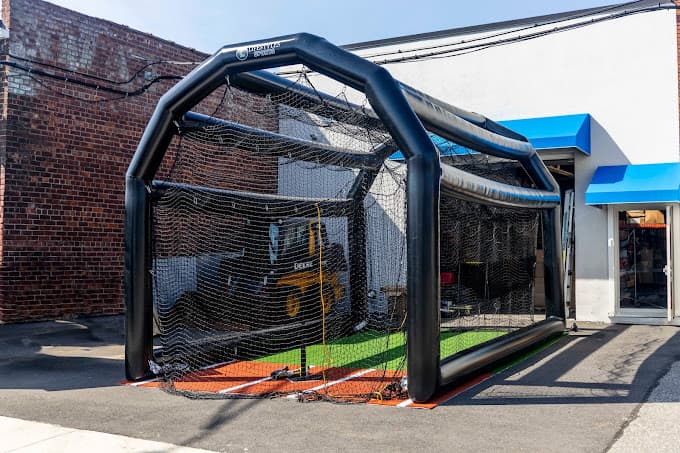
Inflatable Batting Cages: What They Cost, and Whether They Pay for Themselves
Inflatable batting cages run from $1,500 party units to $10,000 branded commercial builds, and only one manufacturer publishes a real price. What each tier costs, why $3,999 is not the price of a cage, and the booked hours it takes to pay one off.
6 min readRead
JUGS BP1 vs BP2 vs BP3 vs mini3: Which One Fits Your Cage
JUGS BP1, BP2, BP3, and mini3, compared on the numbers that actually matter: real pitch speed range and weight, straight from JUGS's own spec pages.
4 min readReadBuying a JUGS Machine Online? Here's How to Tell a Real Dealer From a Reseller
Not every JUGS listing online is what it looks like. Here's how to tell an authorized dealer from a reseller before you spend $2,000+ on a pitching machine.
3 min readRead
Run a travel team? Get your free page.
Baseball or softball. Claim a free directory page, post tryouts, and share cagelist.com/@yourteam with families.
Find your league
Free directories of real leagues and clubs near you. Then book a batting cage to get your reps in before opening day.
1,417 organizations
 leagues in 49 statesAdult hardball near you: MSBL, NABA and independent leagues.Browse men's leagues
 leagues in 49 statesYouth baseball and softball leagues, organized by state.Browse little leagues
 programs in 41 statesTravel and club programs in your region. Find one, or list yours free.Browse travel teams
Join the backyard batting cage community
Talk builds, gear, hosting and player development with cage owners, coaches, parents and baseball families.