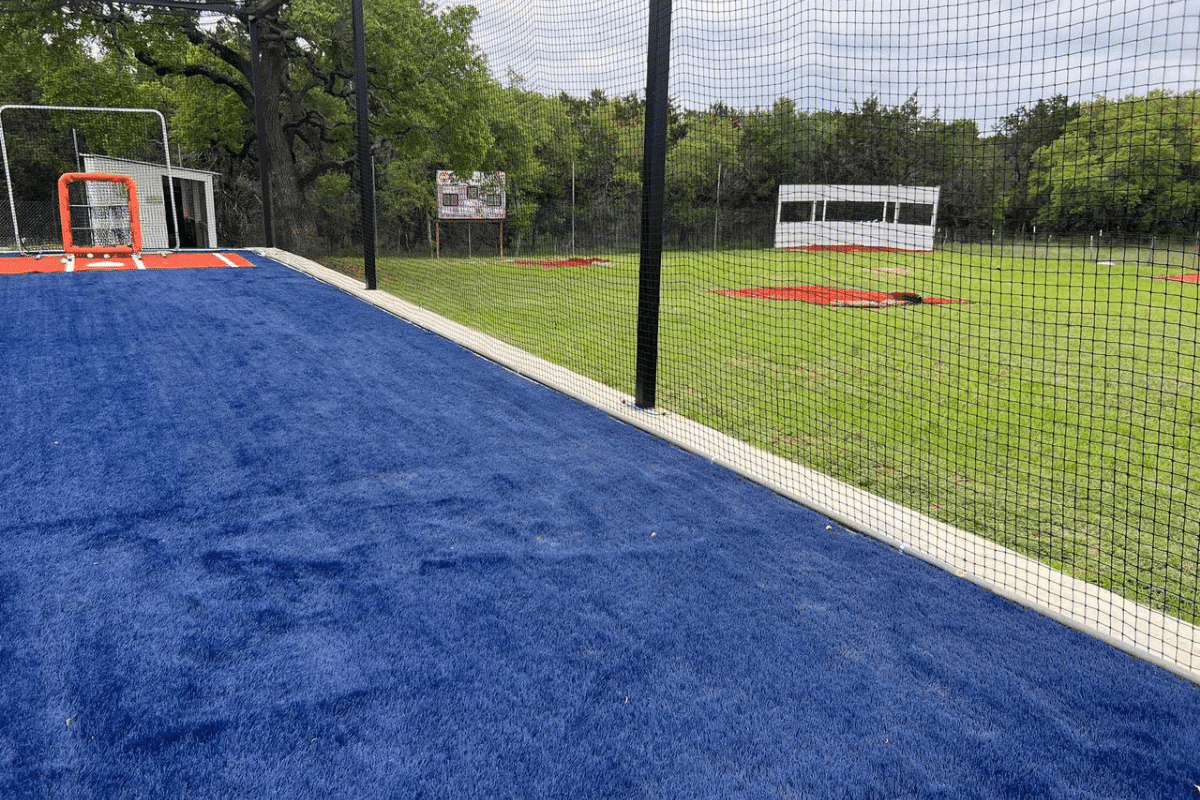
Hitting mat, full turf roll, or pitching mat? Protect your floor, get consistent footing, and make the cage look like a real facility, with the right surface for each zone.
Updated July 2026
The right surface protects your floor, gives hitters and pitchers consistent footing, and makes a cage look like a real facility instead of a net over dirt. But "batting cage turf" spans everything from a batter's-box mat to a full artificial-grass roll. This guide sorts out which surface you actually need, and where to spend first.
Planning the whole build? Surface is a stage in our batting cage build guide. Here we focus on choosing the mats and turf.
The right surface makes a cage playable and easy to maintain.
Four surfaces, four jobs
Most cages mix a few of these. Match each to the job before you compare prices.
Hitting mat (with batter's box)
Best for: The batter's spot: a defined, durable place to stand and swing.
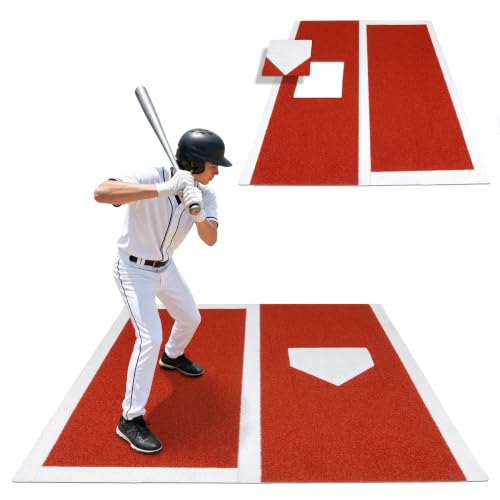
A thick turf mat, often printed with a batter's box and home plate, that sits where the hitter stands. It protects the floor from cleats and swings, gives a consistent footing, and instantly makes a cage look like a real facility.
Examples: ZivPlay 12x6 hitting mat with batter's box.
Full turf roll (floor the whole cage)
Best for: Covering the entire tunnel for a clean, finished surface.
A large artificial-grass roll that floors the whole cage or hitting area. Best for a permanent setup where you want a uniform, drainable, good-looking surface end to end, indoors or out.
Examples: Garland Rug 12x21 artificial turf roll.
Pitching mat
Best for: Bullpen and machine work at the throwing end.
A long, narrow mat (often with a built-in rubber and printed power line) that gives pitchers a consistent, durable landing surface and protects the ground under a machine.
Examples: All Turf Mats 3x10 pitching mat with rubber.
Stance / training mat
Teaching young hitters a repeatable setup.
What makes a good cage surface
A few things separate a surface that lasts from a rug that shreds in a season.
Why a surface at all
Bare ground or a garage floor takes a beating from cleats, swings, and dragged feet, and looks it in listing photos. A mat or turf protects the floor, gives consistent footing, drains better, and makes the cage photograph like a facility instead of a backyard net.
Thickness & backing
Thicker turf and a grippy rubber backing wear longer and stay put during swings and pitching deliveries. For the batter's box and pitching areas (the highest-wear spots), favor a heavier mat over a thin rug.
Indoor vs. outdoor drainage
Outdoor cages need turf that drains and shrugs off UV and rain; indoor or garage setups can prioritize cushion and floor protection. Confirm a roll is rated for outdoor use before you leave it in the weather.
Batting cage turf & mats FAQ
What surface should I put in a batting cage?
Most cages use a heavy hitting mat (often with a printed batter's box) where the hitter stands, a pitching mat at the throwing end, and optionally a full turf roll to floor everything in between. Prioritize the high-wear spots (the batter's box and the pitching area) with thicker, grippier mats.
Do I need turf, or just a hitting mat?
A hitting mat alone is enough to protect the batter's spot and give consistent footing, and it's the cheapest way to start. Add a full turf roll when you want a finished, uniform surface across the whole cage, more of a facility look and feel.
Can I use indoor turf outside?
Only if it's rated for it. Outdoor cages need turf that drains and resists UV and rain; indoor or garage mats can prioritize cushion and floor protection. Always confirm outdoor suitability before leaving a surface exposed to the weather.
How thick should a batting cage hitting mat be?
For the batter's box and pitching areas (the highest-wear zones), favor a thicker mat with a grippy rubber backing so it holds up to cleats, swings, and pitching deliveries and doesn't slide. A thin decorative rug won't last in those spots.
Does a turf surface help my cage get booked?
Yes, a clean, defined surface protects your investment and makes the cage look far more professional in listing photos, which helps it stand out and book on CageList. Guests notice the difference between a bare net and a finished cage.
Turf & Mats Worth Buying
Hitting mats with a batter's box, full turf rolls, and pitching mats, pulled live from the CageList gear store.
Affiliate disclosure: As an Amazon Associate, CageList earns from qualifying purchases.
A smaller mat with printed foot guides that build a consistent stance and stride. A cheap add-on for development-focused cages, not a floor covering.
Examples: Davison batting stance training mat.
Coverage plan
Most owners mix formats: a heavy hitting mat where the batter stands, a pitching mat at the throwing end, and, if they want a finished look, a turf roll for everything in between. Buy for the wear zones first.