A pitching machine is the most efficient way to get high-quality reps — consistent speed, consistent location, no one's arm getting tired. But a lot of hitters actually swing worse off a machine at first, because it strips away the windup they normally time against. Here's how to fix that: how to time it, what speed to use, a step-by-step routine, and the machine types explained.
Most CageList cages include a machine — you can find and book one near you by the hour.
Why hitting off a machine feels harder
A live pitcher gives you rhythm — a leg lift, an arm swing, a release — that your body naturally times against. A machine gives you none of that, so hitters freeze, guess, or lunge. The good news: once you add your own timing trigger (below), that consistency becomes an advantage, and machine work turns into some of the most productive practice you can get.
A pitching machine practice routine
Run these rounds in order. Adjust the number of swings to your age and stamina, but keep the progression — slow to game speed to velocity to situational.
Set it slow and find the release point
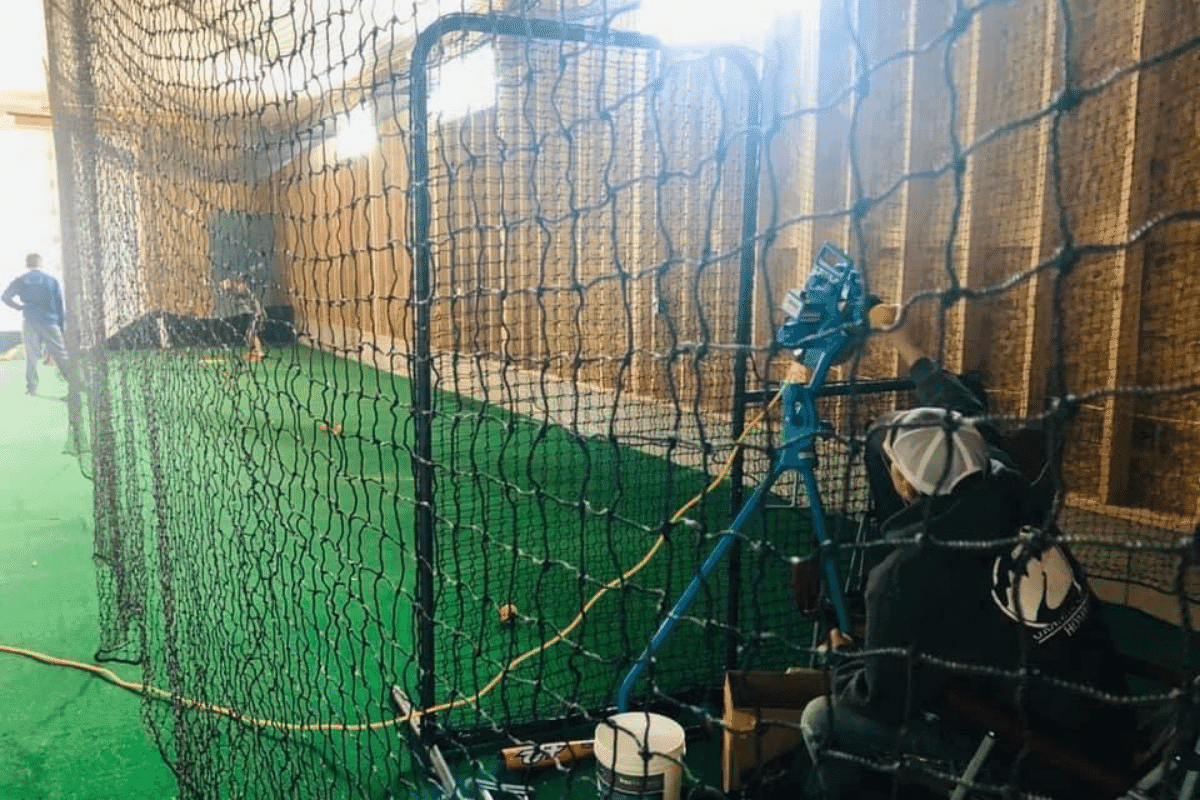
Start well below game speed for a warm-up round. A machine gives you no windup, so your first job is to learn where the ball comes out — the feeder's hand on an arm machine, or the wheel slot on a wheel machine. Just track and make easy contact.
Move to game speed and hold a balanced finish
Bump the speed up to a level where you can still finish balanced and drive the ball. If you're lunging or barely fouling it off, the machine is too fast — back it down. Take a full round squaring balls up.
Build a timing trigger
Because there's no leg kick to time against, create your own rhythm: start your load and stride as the ball reaches the top of the feed or leaves the wheel. Use the exact same pre-swing move every pitch so your timing is repeatable.
Add a velocity round
Bump the speed a few mph for a round to train quicker decisions and an earlier load. Drop back to game speed afterward so you finish the session on-time and confident, not defensive.
Want the specific rounds to run inside this routine? See the machine drills in our batting cage drills guide.
Machine types & how they change your timing
Not all machines feel the same. Knowing what you're hitting off of tells you where to look for the ball:
Arm-style machine
Mimics a throwing arm, so it's the easiest to time — you get a visual 'throw' to load against. Common at older commercial cages.
Single-wheel machine
Compact and very consistent, but there's no arm — pick up the ball as it leaves the wheel slot and lean on your own timing trigger.
Two-wheel machine
Adjust each wheel to throw fastballs plus breaking balls and change speeds. Great for realistic work; watch the wheels for spin cues.
Three-wheel machine
Top-end machines that throw nearly any pitch and movement at high velocity — usually found at premium facilities.
Common pitching machine mistakes
- Setting the speed too high. If you can't finish balanced, you're training to survive, not to hit. Earn the velocity.
- No timing trigger. With no windup to read, hitters freeze or guess — build a consistent load-and-stride move keyed to the feed or wheel.
- Standing too close. Set up at a realistic distance so the reaction time matches game speed; crowding the machine trains a rushed swing.
- Cheating on location. A machine repeats the same spot, so it's tempting to pre-load to it. Practice a real approach or you'll be exposed against live pitching.
Machine safety
Machine work is where most cage injuries happen. Whoever loads the machine should feed from behind an L-screen or protective screen, the hitter should always wear a helmet, and no one crosses in front of a loaded machine. Keep hands well clear of the wheels — they don't stop instantly. If you're booking a cage, the listing details note whether a machine, screens, and balls are provided.
Pitching machine hitting FAQ
- How do you time a pitching machine?
- Because a machine has no windup, you build your own timing trigger: start your load and stride at a fixed reference point — the feeder's hand reaching the top on an arm machine, or the ball leaving the wheel on a wheel machine. Use the identical pre-swing move every pitch so your timing repeats. A few warm-up pitches to find the release point makes the rest of the round click.
- What speed should a pitching machine be set to?
- Set it to a speed where you can finish balanced and drive the ball, then work up from there. A good rule: if you're lunging or just fouling pitches off to survive, it's too fast. Progress velocity a few mph at a time as your timing sharpens rather than starting at the max.
- Why is it harder to hit off a pitching machine?
- A machine removes the windup and arm action you normally time against, so hitters lose their natural rhythm and end up guessing. It also repeats the same location, which quietly rewards cheating. The fix is a consistent timing trigger and a real approach on every pitch — do that and machine work becomes some of the most efficient practice there is.
- Is hitting off a pitching machine good practice?
- Yes — a machine delivers consistent, repeatable pitches so you can groove timing and take high-quality reps on demand. Just pair it with live or front toss when you can, since a machine won't fully replace timing a real arm. Use it for volume, mechanics, and situational work, and add a timing trigger so the reps transfer.
- Are arm or wheel pitching machines better?
- Arm-style machines are easier to time because they mimic a throwing motion, which is great for younger or newer hitters. Wheel machines (especially two- and three-wheel models) are more compact and can throw a wider range of speeds and breaking balls, which is better for advanced work. Neither is 'best' — it depends on the hitter and what you're training.


