Your league cage,
open all year
Turn your batting cage into a year-round resource for your league. Give families a place to train on their schedule, with reserved paid time, money back to the league, and full calendar control. We take $0 of your cage rate.
For Little League leadership and boards.
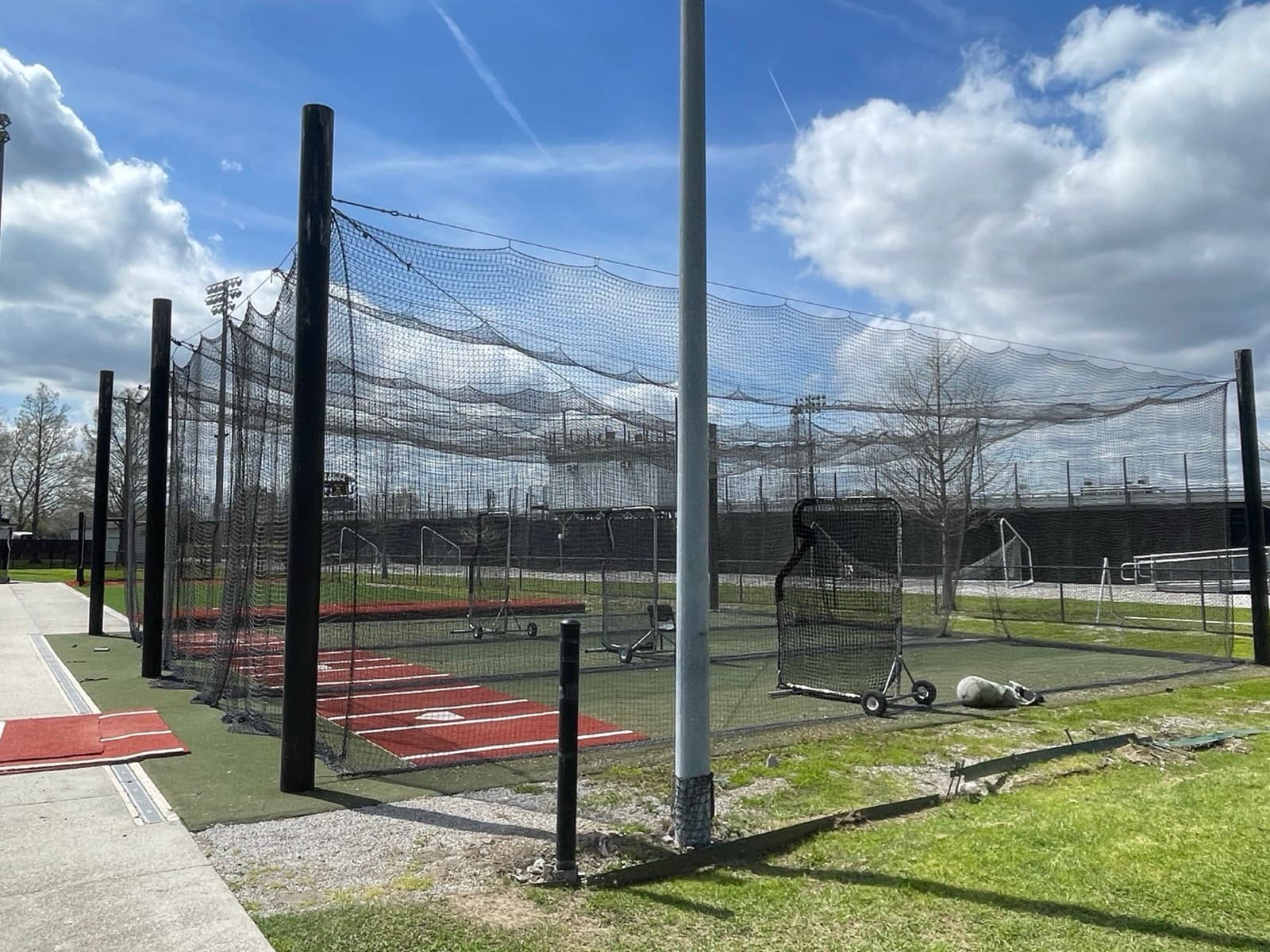
Valuable cages, locked most of the week
Many leagues own a batting cage that sits idle for much of the week, while families nearby want more places to train and are already used to a shared code on the gate.
Opening that time in a controlled way means more reps for players, convenience for families who know their slot is reserved, and revenue that funds the program, without turning volunteer dads into a booking desk.
Four steps, and you keep control
Four steps to put your cage to work without giving up control.
Claim your league
Find your league in our directory and claim it. We verify you're on the board, and that verification is what lets your league keep 100% of the cage rate, so this step comes first.
List your cage
A designated board member (usually the president or VP of ops) lists the cage: location, rules, pricing, and how bookings get approved.
Control access and scheduling
Block practices, games, tournaments, and maintenance. Leave instant-book off and every request comes to you to approve, so you decide who gets the cage.
Families book; the league gets paid
Approved families reserve a real time slot online, pay when they book, and know the cage is theirs for that window. Payouts go to your league bank account.
More reps, more money, less work
More reps, on their schedule
Families train when it works for them, and a paid booking means that window is actually theirs.
Revenue that funds the program
We take $0 of your league's cage rate. Bookers pay CageList's standard all-in service fee; 100% of your posted rate goes to the league.
Full schedule control
Your league decides exactly when the cage is open and when it's reserved for league activity.
Less volunteer burden
Online booking and payments beat Venmo threads, shared lock codes, and “who has the cage tonight?” group texts.
Digital booking records
Every booking is recorded, so you have a clear log of who used the cage and when. That beats a padlock alone.
Built for baseball and softball
CageList is designed specifically around cages and the leagues that run them.
Trust and control come first
Here's how we think about the questions boards ask.
Safety and liability
CageList does not provide insurance or replace your existing coverage. Confirm with your carrier that paid or off-hours use fits your policy before going live. We give you digital booking records, posted rules, and controlled access windows.
A lock isn't enough
A code on the cage handles access. CageList handles reserved time, payments to the league, refunds, and a record of who was booked, so “local dads know the code” doesn't become the whole system.
Who runs the account
One designated admin owns the CageList login (typically the president or ops lead). Payouts still connect to the league bank account, not a volunteer's personal account.
Scheduling
Your league controls all available days and times. Block recurring practices, games, tournaments, camps, and maintenance so league activity always comes first.
Volunteer burden
Online booking and payments mean minimal ongoing management, far lighter than coordinating manual rentals, while keeping decisions in your league's hands.
Facility rules
Your league sets the rules: age requirements, equipment, supervision, footwear, cleanup, and any use restrictions you want enforced.
Three things to confirm first
We could tell you this is a no-brainer and leave you to find the complications yourself. These are the three that catch leagues out, and the email below asks all of them at once.
Who owns the cage and the ground under it
Little League fields sit on every kind of arrangement: league-owned outright, leased from a city or county under a multi-year use agreement, or borrowed from a school or church. Your answer decides who has to approve this, and there is no common default.
What your use agreement says about revenue
Agreements that permit league programming don't automatically permit paid use by anyone else. Some spell it out, most are silent, and silence is worth a phone call rather than an assumption.
What your general liability policy covers
Little League's own guidance is that a league renting out its facility should confirm coverage and, where the field belongs to someone else, that the property owner is named as an additional insured. Ask your carrier directly. A broker answer in writing is what your board will want to see.
None of these are CageList requirements. They are your league's own paperwork. We flag them because a board that has the answers in hand moves faster than one that gets surprised at a meeting. We wrote the long version, with the tax answer your treasurer will ask for.
We take $0 of your league's cage rate
For verified Little Leagues, 100% of your posted hourly rate funds your program: baseballs, scholarships, uniforms, field work. Bookers pay CageList's standard all-in service fee; you keep the full cage rate.
Actual booking volume depends on your pricing, availability, and local demand. Results vary by league.
What getting started looks like
Board alignment
Work the three checks above with your district admin and carrier, then agree a designated account admin.
Claim your league
Find your league in the CageList directory and claim it. Verification is what lets your league keep 100% of the cage rate.
List the cage
Create your CageList listing with pricing, rules, and approval-only bookings to start.
Connect league payouts
Link Stripe to your league bank account so revenue lands with the program.
Access & calendar
Set your lock or code approach and block league practice and game windows.
Launch
Approve your first bookings by hand. Turn on instant-book only when you're ready.
Three messages, ready to send
You still have to sell this to a district admin, a board, and your families. Here is all three, ready to send.
To your district admin or city contact
Answers the two questions a board cannot answer on its own.
Hi [NAME],

Our league is looking at opening our batting cage for paid, scheduled use during hours we aren't using it, with the revenue going back into the program. Before we take it to the board I want to confirm three things:

1. Who holds title to the cage and the ground it sits on: the league, the city/county, or another party?
2. Does our current use agreement or lease permit revenue-generating use by people outside league programming? If it's restricted, is there a process to request it?
3. On insurance: does our general liability coverage extend to paid community use, and would the property owner need to be named as an additional insured?

Happy to send over the details of how the scheduling and payments would work. We'd control the calendar and approve every booking.

Thanks,
[YOUR NAME]
[LEAGUE NAME]
To your board
The version that survives a board meeting.
Proposal: open our batting cage for scheduled paid use

What it is: we list our cage on CageList, a booking platform built for batting cages. Families reserve a time slot online and pay when they book. The money goes to the league bank account.

What it costs us: nothing. CageList takes nothing from the cage rate for verified Little Leagues; the league keeps 100% of the rate it sets. Suggested starting rate is $20/hour.

What we control: the entire calendar. Practices, games, tournaments and maintenance stay blocked. Every booking request comes to us to approve or decline before anyone gets access.

What I still need to confirm before we vote:
- Whether our lease or use agreement allows revenue-generating use
- Whether our general liability coverage extends to paid community use
- Whether the property owner needs naming as an additional insured

I've sent those questions to [DISTRICT ADMIN / CITY CONTACT].

[YOUR NAME]
To your league families
Send once the listing is live.
Our batting cage is now bookable online.

You can reserve cage time at [YOUR LISTING LINK]: pick a slot, pay online, and the cage is yours for that window. Every dollar goes straight back into the league.

Slots outside practice and game times are open. If you've been looking for somewhere to get extra swings in, this is it.

[YOUR NAME]
[LEAGUE NAME]

Your cages are infrastructure
Almost every Little League I have been around owns batting cages that sit locked nearly every hour they could be open. Not because anybody wants them locked, but because they got built as part of the field and nobody at the league ever started thinking of them as something a family could book themselves on a Tuesday night. Somebody would have to buy scheduling software, set it up, collect the money, answer the parent who turns up at the wrong hour, and do all of it again next season on a board that turns over every year or two. So the padlock is not really a decision about whether renting your cages is a good idea. It is a decision about who has to own the calendar.
Here is the part I care about more, because I have watched it from the inside for twenty years. A padlock is not neutral. Somebody has the key, and it is usually a board member, because the person who ends up running a league is the person who loves baseball the most or whose kid does. His son trains in there. The private coach who gives that kid lessons gets in too, because he knows the family. Nobody in that chain is doing anything wrong, and the result is still that the one place in town a nine-year-old can get real reps belongs to the few families closest to the board. Those kids get better, because more reps is how anybody gets better. Then they are the all stars. Then a dad decides his son is too good for this league and leaves with the best players to start a travel team, the league goes thin, the volunteers dry up, and everybody blames travel ball. Travel ball is the last step in that story. The first step was a lock.
That is why we built this. A Little League renting its own cages to its own baseball and softball families should be the most ordinary thing in youth sports: the families are already yours and the cage is already paid for. You set the hours and the price, your families book what is open, the money lands in the league's account, and nobody on your board has to become the cage scheduler. It raises funds, and it raises the level of play, because a cage any family can book at a fair price is a league where the kid who wants it badly enough can go get it. If CageList can be the place a league runs all of that from, I think that does more for the game than anything I could build higher up. This is the level where a kid decides whether they love baseball and softball or quietly drifts away.

Founder of CageList. Seven pro seasons in five countries, and a decade of lessons since.
Frequently asked questions
- Not automatically, and we'd rather tell you than let you find out. There is no members-only setting today. What you get instead is approval over every booking: leave instant-book off and each request comes to you to accept or decline, so nobody gets the cage without your say-so. Most leagues start there. A true members-only mode is on our list.
- Yes. You control the calendar and can block recurring practices, games, tournaments, camps, and maintenance windows so league activity always takes priority.
- Your league does. You set the hourly rate and any booking rules, and you can adjust them over time.
- No. For verified Little Leagues, CageList takes $0 of your posted cage rate, and 100% goes to your program. Bookers still pay CageList's standard all-in service fee (itemized at checkout).
- Connect your league's bank account via Stripe (not a volunteer's personal account). Families pay online when they book; payouts go to the league.
- One designated board member, usually the president or VP of operations. They own the login and calendar; money still flows to the league bank account.
- A lock is great for access. CageList adds reserved paid time, automatic payments to the league, and a booking record of who was there when. That means convenience for families and accountability for the board.
- Yes. You can pause bookings or remove your listing at any time, for the offseason, maintenance, or any other reason.
- Yes, we recommend it. Confirm how opening your cage to approved paid bookings fits your existing policy before going live. Every league's situation is different.
- No. CageList does not provide insurance and does not replace your league's existing coverage. We provide booking, payments, scheduling control, and digital records.
Ready when your board is
Claim your league, list the cage, connect the league bank account, and open booking to your families. Once your claim is verified, CageList takes nothing from your cage rate and your league keeps 100%.
Want a hand with it?
Fifteen minutes with Isaac, who played seven years of pro ball and built this. Optional; most boards go straight to listing.
Book a 15-minute call