A batting cage is the most efficient place on earth to get better at hitting: consistent pitches, no chasing balls, and reps on demand. But walking in and hacking at a bucket is a wasted hour. This guide covers how to structure a session, the drills that actually transfer to games, what to work on by age and level, the mistakes that quietly hold hitters back, and how often to take BP — everything you need to turn cage time into results at the plate.
When you're ready to put it into practice, find a batting cage near you and book by the hour.
How to structure a batting cage session
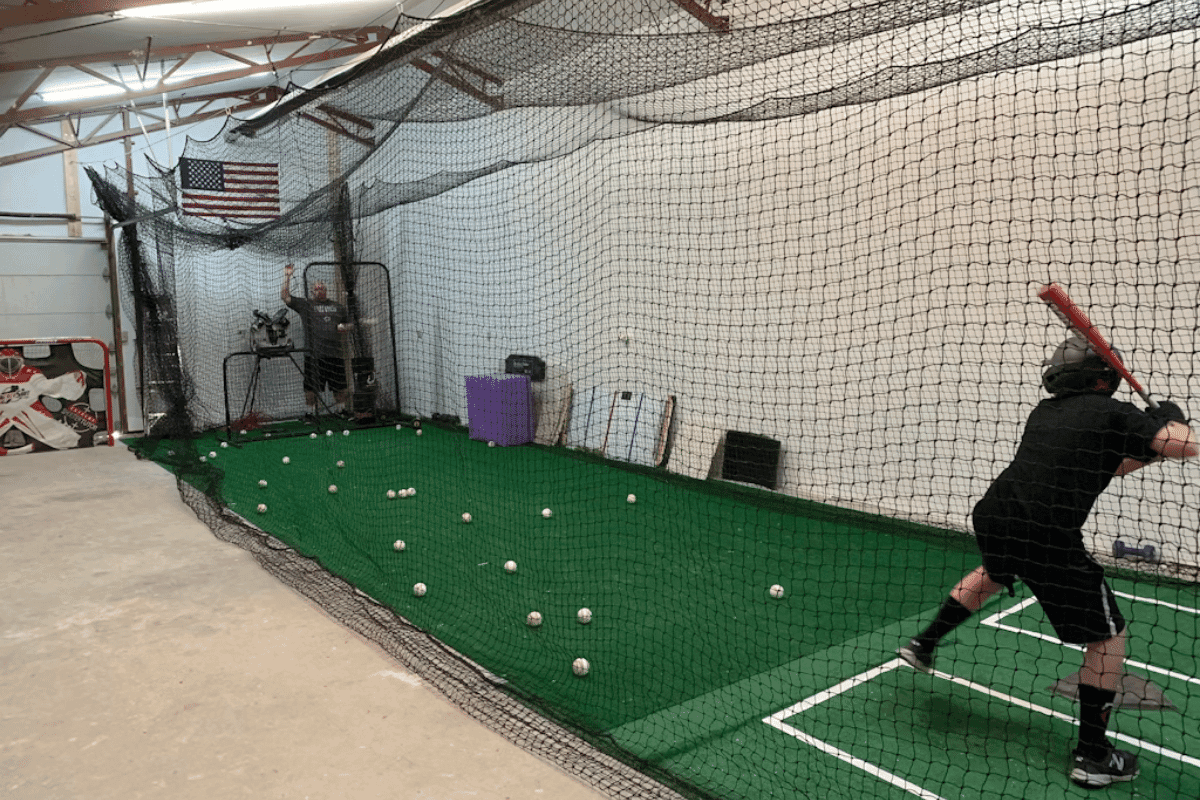
The best sessions move from stillness to speed to competition: fix the swing on a tee, test it against a moving ball, see real velocity on the machine, then compete in a situational round. Here's a proven 45-minute template you can scale up or down:
Warm up and move (5 min)
5 minBefore you swing hard, get loose: light jog or arm circles, trunk rotations, and 10–15 easy dry swings building from 50% to game speed. Cold, max-effort swings are how you tweak an oblique or a wrist.
Tee work — build the swing (10 min)
10 minStart on a tee so nothing is moving. Hit 20–30 balls focused on one mechanical cue at a time (balanced finish, hands inside the ball, hitting the inside-middle of the ball). The tee is where you fix your swing; everything after is where you test it.
Front toss or soft toss — timing (10 min)
10 minMove to soft toss or front toss to add a moving ball at a controlled speed. Work on timing and tracking the ball to contact. Take 20–25 quality swings — quality reps beat rushed volume every time.
The best batting cage drills
A drill is just a round with a purpose. Rotate through these instead of taking the same flat swing 100 times — each one targets a specific skill that shows up in games. For the full set — tee, toss, machine, and competitive drills — see our complete batting cage drills guide.
High-tee / low-tee
Swing plane on high and low pitches
Set the tee at the top and bottom of your zone on alternating rounds. Teaches you to match the plane of the pitch instead of one flat swing for everything.
Inside-outside tee
Handling pitches on both edges
Move the tee to the inside corner (pull) and the outside corner (drive it the other way). Trains you to keep your hands inside the ball and use the whole field.
Opposite-field round
Staying through the ball
Off soft toss or the machine, try to drive every ball to the opposite-field gap. Kills the early roll-over that produces weak ground balls.
Two-strike round
Battling with a shorter swing
Choke up slightly, widen your stance, and shorten your swing to put the ball in play. The most game-transferable round you can take.
One-cue round
Fixing a specific flaw
Pick a single cue (stay back, balanced finish, hands to the ball) and hold it for a full round. One thought per round — never a checklist mid-swing.
Want a full breakdown of cage equipment — tees, machines, L-screens, and nets? See our batting cage quality guide and recommended gear.
What to work on by age and level
The framework is the same at every level — the emphasis changes. Match the session to the hitter:
Youth (7–12)
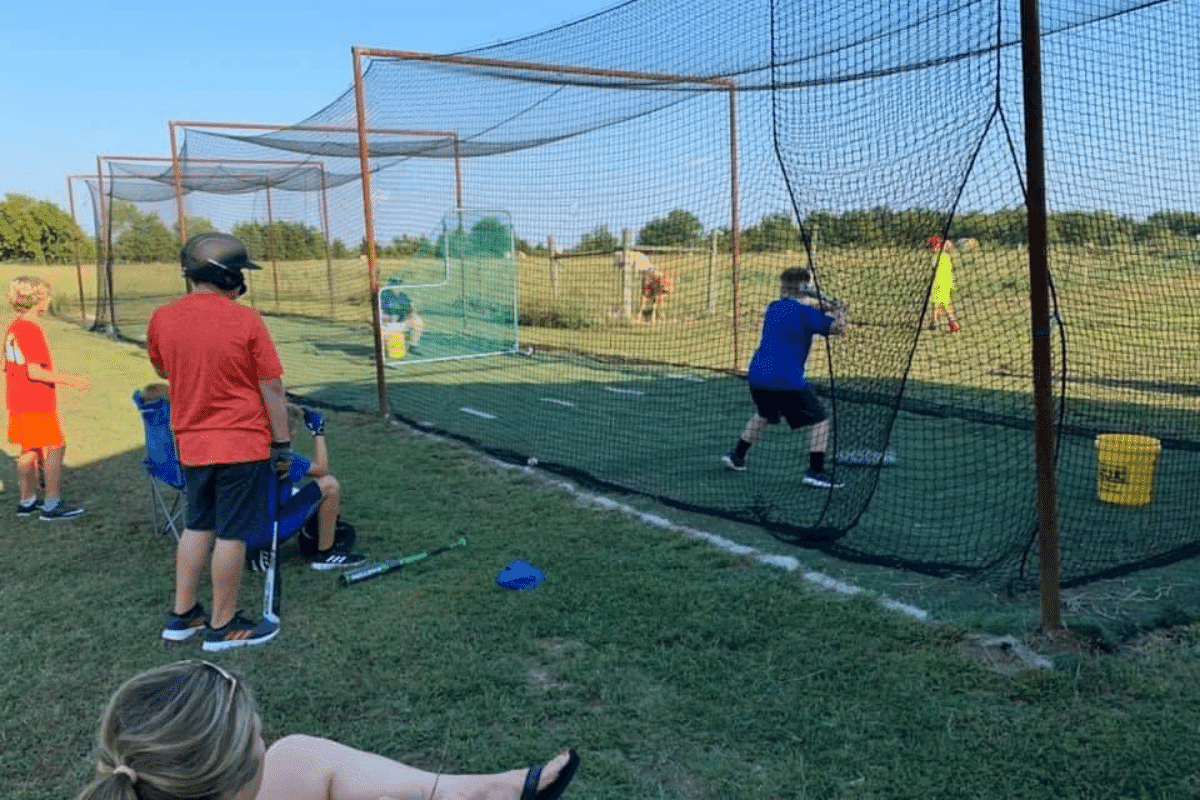
Keep it short and positive — 20–30 minutes, mostly tee and soft toss, machine speed low enough to finish balanced. The goal at this age is a repeatable, athletic swing and a love of hitting, not exit velocity.
High school (13–18)
Build 45–60 minute sessions with real structure: tee → toss → machine → situational. Add velocity gradually and spend real time on two-strike and opposite-field work, which is where high-school at-bats are won.
Adult / men's & women's league
Efficiency matters — a focused 30–45 minute session once or twice a week keeps your timing sharp. Warm up thoroughly (adult obliques don't forgive cold swings) and prioritize seeing live speed on the machine.
Softball
The fundamentals are the same, but set the machine for the flatter, riser-and-drop movement of fastpitch and use a softball-appropriate cage. Slappers should dedicate rounds to their footwork and contact point.
Practicing as a group? Coaches and travel-ball teams can book bigger blocks at team practice facilities, and you can filter specifically for baseball or softball cages.
Using the right bat
Cage work only helps if you're swinging a bat you can actually control. Too heavy and you drag the barrel and drop your hands; too light and you lose feel. As a rough guide, most youth players swing a bat where the length in inches minus the weight in ounces (the "drop") falls between -8 and -12, moving to a -3 by high school and adult play under most bat rules. Take a few dry swings — if you can hold a balanced finish and control the barrel, the weight is right. For a full chart by age and height plus league rules, see our bat sizing guide.
Common batting cage mistakes to avoid
- Swinging for the fence every pitch — max-effort hacking builds bad habits and hides timing problems.
- No plan — walking in and hitting a bucket with no drill, cue, or round structure wastes the session.
- Machine set too fast — if you can't finish balanced, you're training to survive, not to hit.
- Skipping the tee — the tee is where mechanics get fixed; jumping straight to the machine just grooves whatever you walked in with.
- Quantity over quality — 40 focused swings beat 150 tired ones. Rest between rounds.
Batting cage practice FAQ
- How long should a batting cage session be?
- For most players, 30–60 minutes is the sweet spot. Youth players do well with 20–30 focused minutes; high-school and adult players can use 45–60 minutes with structured rounds. Once swing quality drops off from fatigue, stop — tired reps groove bad habits.
- How many swings should I take in a batting cage?
- Roughly 60–120 quality swings across a session, broken into rounds of 8–12 with rest between them. The exact number matters less than the quality: every swing should have an intent (a cue, a target, or a situation). Fewer focused swings beat a rushed bucket.
- What pitching machine speed should I use?
- Start at a speed where you can finish balanced and drive the ball, then work up. A good rule: if you're lunging or just making contact to survive, the machine is too fast. Progress speed gradually as your timing sharpens rather than starting at your max.
- How often should I take batting practice?
- Two to three focused sessions per week maintains and builds timing for most players, with rest days in between. In season, quality and freshness matter more than volume; in the offseason you can add mechanical and tee work. Consistency over months beats occasional marathon sessions.
- Is a batting cage good for beginners?
- Yes — a cage is one of the best places to learn, because it delivers consistent, repeatable pitches so a new hitter can groove a swing without chasing wild balls. Beginners should lean on the tee and slow front toss first, then add machine speed as their contact and timing improve.
- What should I bring to a batting cage?
- A bat sized for you, a batting helmet (always wear one for machine work), batting gloves, and athletic shoes or cleats where allowed. Many CageList listings note whether a pitching machine, tees, L-screens, and balls are provided, so check the listing details before you go.