How to Build a Sag-Free Batting Cage: Cable Height, Tensioning & the Pitched Roof
The #1 DIY batting cage complaint is a sagging net. Here are the field-tested fixes — cable height, spacing, tensioning, and the pitched-roof trick — so your ceiling stays where you built it.
Last Updated: August 2026
A sagging net is the single most common complaint from people who build their own batting cage — and the good news is it comes down to a few fixable causes. The net droops in the middle, the ceiling ends up lower than the net you ordered, or the cables rub the poles and wear holes. Every one of those traces back to how the cables are hung and tensioned.
This guide gives you the field-tested fixes — the same ones a veteran cage installer uses on his own builds. When you are ready to train or earn, browse cages on CageList or list your own.
The three fixes that cure sag
Tension from the ends with turnbuckles
Steel cable, pole-to-pole, pulled tight with turnbuckles you can re-tension as the net settles. Skipping the turnbuckles — tying rope straight to the post — is the #1 shortcut that guarantees sag.
Hang the cables wider than the cage
About a foot wider than the cage width on each side. This keeps the net off the poles (no rub, no holes) and lets it hang square instead of pinching inward.
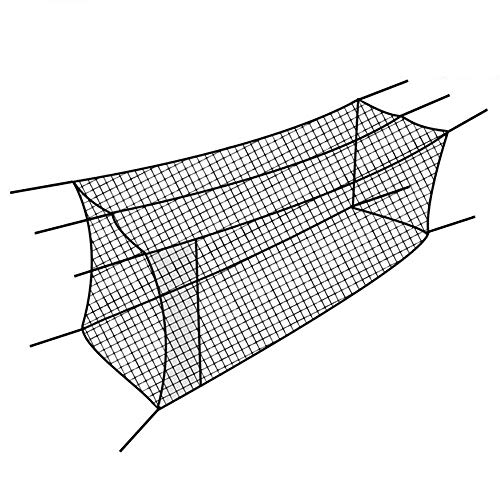
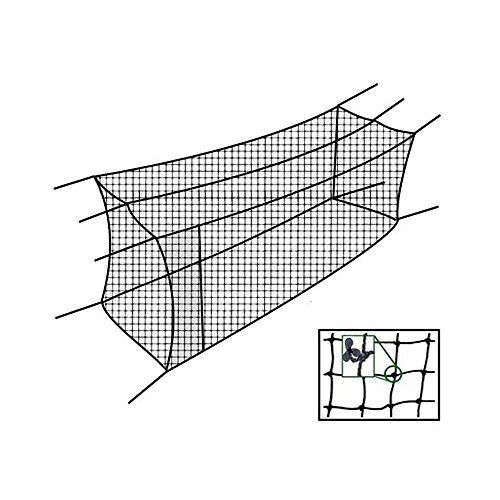
Raise the center cable — the pitched roof
Set the center top cable 1–2 ft higher than the two side cables so the ceiling forms a shallow peak. It holds the middle up, adds usable space, and lets hitters watch their line drives fly.
Diagnose your sag
| Symptom | Root cause | Fix |
|---|---|---|
| The whole ceiling droops in the middle | The center of the net has no support and the cables were set too low. A cable that looks like it is at 10' sags 6"–5' once the net's weight loads it. | Run a center top cable (not just two side cables) and raise it 1–2 ft above the sides — the pitched-roof shape — then tension all three from the ends. |
| The net rubs the poles and wears holes | The cables were hung too close together — right at the cage width — so the net swings into the steel on every hit. | Hang the cables about a foot wider than the cage on each side so the poles sit 5–6 ft off the net. |
| It sagged fine at first, now it's low | The net stretched and settled, or the poles leaned in because the footings are too shallow. | Take up the slack at the turnbuckles. If the poles themselves are leaning, the footings are the problem (see the depth rule below). |
| The ceiling ended up shorter than the net I ordered | Nobody accounted for cable sag plus ground overlap. A '12-ft net' hung on cables that sag to 8' leaves an 8-ft cage you can't hit or pitch in. | Order net height = usable height + cable sag + 1–2 ft ground overlap, and tension correctly so the cables sit where you planned. |
Build it sag-free from the start
Plan for sag when you order the net
Decide your usable ceiling height first, then add cable sag and a 1–2 ft ground overlap. This is the single number most DIY builds get wrong.
Set rigid poles in deep footings
Cables can only pull as hard as the poles can resist. Bury roughly 30% of the pole's above-ground height in concrete — a 12-ft cage wants a 3–4 ft footing. Shallow footings let the cable tension walk the poles inward over time.
Run three top cables, center one raised
Two side cables plus a raised center cable (the pitched roof). Pre-drill the eyebolt holes in the poles before you stand them — drilling 15 ft up a ladder later is dangerous and miserable.
Tension pole-to-pole with turnbuckles
Pull each cable tight and leave the turnbuckles with travel left so you can take up slack as the net settles. A come-along or ratchet strap helps close the gap enough to thread the turnbuckle.
Hang the net on carabiners, then re-tension
Clip the net to the cables with snap links every 1–2 ft so it can be pulled back to mow or beat a storm. After a week of settling, climb up and tighten the turnbuckles once more.
The cable-sag math nobody warns you about
A steel cable strung across a cage does not stay where you set it. A cable that looks level at 10 ft can settle 6 inches to 5 feet once the weight of the net loads it. Build a “12-foot cage” on cables that sag to 8 ft and you get an 8-foot cage nobody can hit or pitch in. Order your net height as usable height + cable sag + 1–2 ft of ground overlap, and tension the turnbuckles so the cables actually sit where you planned.
Frequently asked questions
Why does my batting cage net sag in the middle?
Almost always one of three things: the cables were set too low, they were hung too close together (right at the cage width), or there is no center cable holding the middle up. The net's own weight pulls a cable that looks level down by inches to feet. The fix is a raised center cable, cables hung about a foot wider than the cage, and proper end-to-end tensioning with turnbuckles.
How high should I hang the cables on a 12-foot batting cage?
Account for sag before you pick a number. A cable that measures 10' unloaded can settle to 8–9' once the net hangs on it. Hang the side cables high enough that, after sag and a 1–2 ft ground overlap, you still have your target usable height — and set the center cable 1–2 ft higher than the sides.
What is a pitched-roof batting cage?
It means the center top cable is mounted 1–2 ft higher than the two side cables, so the ceiling forms a shallow peak instead of a flat span. It reduces sag, adds usable space up top, lets hitters watch their line drives, and lowers the chance of a ricochet coming back at the person feeding the machine.
Netting & Cage Kits Built to Stay Tight
Sag starts with the net and hardware. These knotted-polyester nets and complete cage kits hold their shape and re-tension cleanly — the opposite of the cheap poly that stretches out in a season.
Affiliate disclosure: As an Amazon Associate, CageList earns from qualifying purchases.

Ready to train or earn?
Find a cage near you or list your backyard cage and start earning.