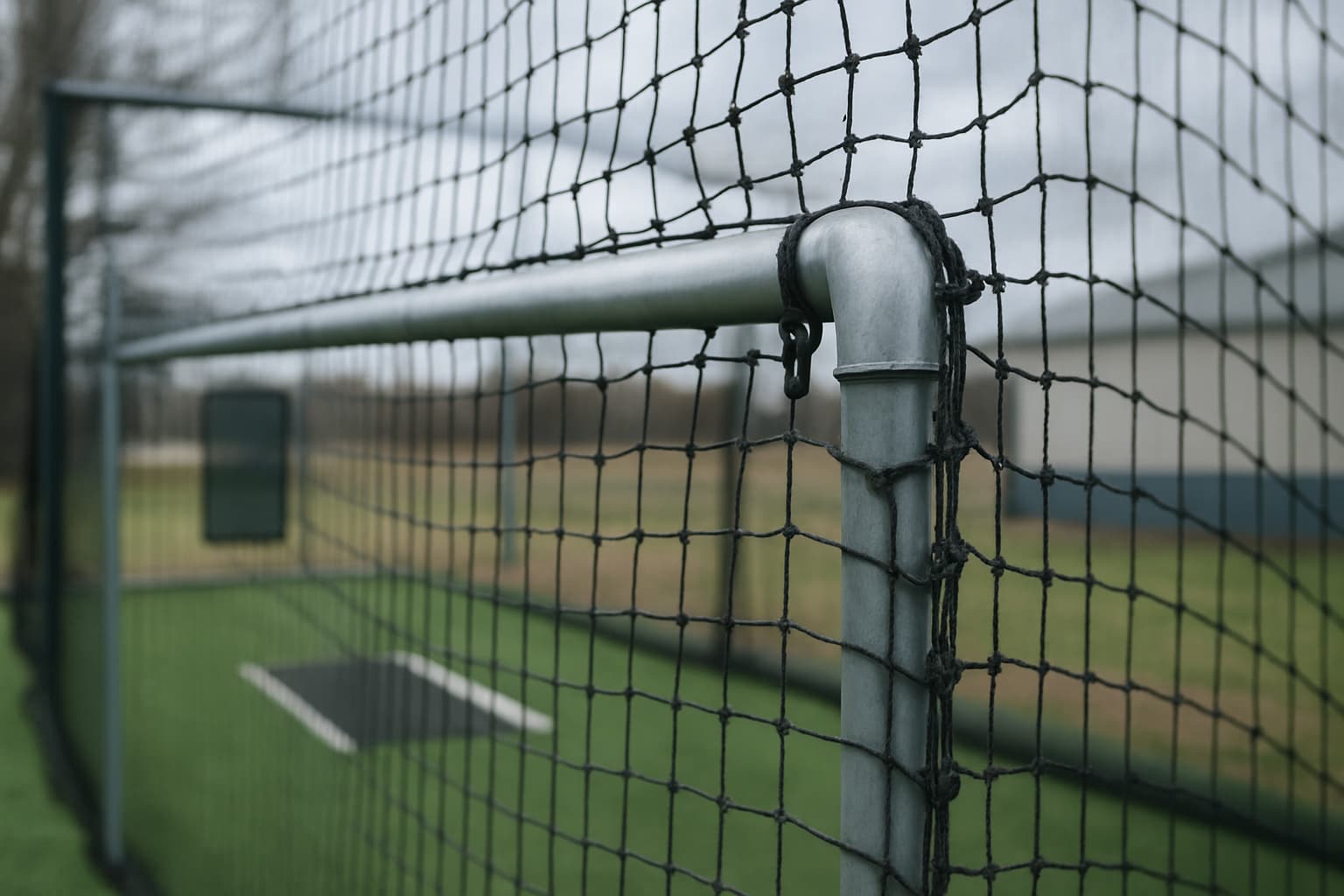
The most common backyard cage mistake isn't buying cheap netting — it's buying a cage that doesn't fit the yard or the player. Here's exactly how much space a batting cage needs, what each dimension actually does, and what to do when your yard comes up short.
The Standard Sizes and Who They Fit
Length: Cages typically come in 35, 55, and 70-foot lengths. A 35-footer handles tee work, soft toss, and short front toss — right for players up to about 10. A 55-footer supports full front toss and machine work at youth speeds and is the sweet spot for most families. The 70-footer gives a full pitching distance for 60'6" simulation and comfortable machine placement for high-school velocity.
Width: 12 feet is the practical minimum for a hitter to stride and swing freely; 14 feet feels dramatically less claustrophobic and keeps net wear down because fewer balls hit the sides at sharp angles.
Height: 10 feet works, 12 feet is better — taller players finish high, and machine work produces line drives that ride the ceiling of a 10-foot net. Our cage height guide goes deeper on this trade-off.
The Space Around the Cage Counts Too
Plan for more than the net's footprint. You want 2–3 feet of clearance on each side so the net can flex on impact without hitting fences or walls (taut-against-obstacle netting fails years early), room at the back for the machine or feeder to sit behind an L-screen, and a safe entry path that doesn't cross the hitting lane. As a rule of thumb, add 6–8 feet to the cage's length and 4–6 feet to its width when you measure the yard.
Measuring Your Yard Honestly
Run a tape from your intended backstop point and check three things: total available length including clearance, level ground (more than a few inches of fall across the footprint means grading costs — factored into our full cost breakdown), and overhead obstructions. Tree limbs and service lines over the footprint are disqualifying until resolved. Check your property's setback rules too; many municipalities require structures to sit several feet off the fence line.
When the Yard Is Too Small
A yard that can't fit 35 feet still has options. Pop-up nets and compact hitting cages handle tee work and soft toss in as little as 10–15 feet — we cover the best of them in our small-space nets guide. And for full-length machine work, renting fills the gap precisely: private full-size cages on CageList book by the hour, so a small-yard family can do daily tee work at home and book a full cage nearby for weekly velocity sessions. That hybrid costs a fraction of forcing a too-short build.
Layout Cheat Sheet: Three Yards, Three Answers
The 40-foot yard: a 35-ft cage fits with required clearances. Orient it along the longest fence line, put the entry at the feeder end, and accept that this is a tee-and-toss cage — which covers most of youth development anyway. The 65-foot yard: the 55-ft cage slots in with room for a machine behind an L-screen. Mind the width: if the usable corridor is under 16 feet, step the cage width down to 12 and bank the clearance. The 80-foot-plus yard: the full 70-footer fits, and the question flips to orientation — north-south alignment keeps low sun out of the hitter's eyes at the times kids actually practice, a detail that matters more than any spec. In all three cases, chalk the full footprint including clearances on the grass and walk it before ordering anything; ten minutes with a can of marking paint has cancelled more bad cage purchases than any guide.
Frequently Asked Questions
What's the minimum useful cage size?
Roughly 35 ft long × 12 ft wide × 10 ft high for real swings off a tee and soft toss. Below that, use a hitting net rather than a cage.
Is 55 or 70 feet right for a teenager?
55 ft works for machine and front-toss training. If you want true pitching-distance simulation for a high schooler, you need the 70-footer.
How close to my fence can the cage sit?
Leave 2–3 ft of net flex clearance regardless of code, and check local setback rules — several feet from property lines is a common requirement.
What if my yard slopes?
Under ~3 inches of fall across the footprint, you can shim posts. Beyond that, budget for grading or a partially raised base.
Get the numbers
Get your free batting cage cost estimate
Enter your email and we'll send you an itemized build breakdown — frame, netting, turf, lighting, and install — plus what a cage like yours could earn if you rent it out.
No spam, unsubscribe anytime. Prefer the interactive tool? Open the full cost calculator.
Already have a cage?
Rent it out when you're not hitting
Players, parents, and coaches near you are looking for cage time. Listing is free, you set your own price and hours, and you approve every booking.
Related Guides
View all articles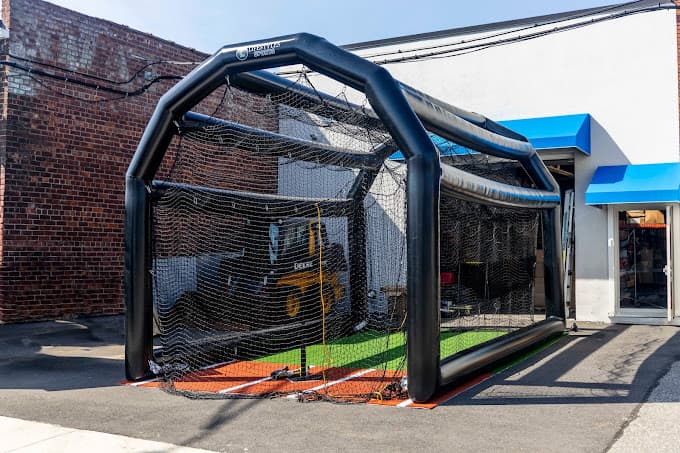
Build a Batting Cage
Inflatable Batting Cages: What They Cost, and Whether They Pay for Themselves
Inflatable batting cages run from $1,500 party units to $10,000 branded commercial builds, and only one manufacturer publishes a real price. What each tier costs, why $3,999 is not the price of a cage, and the booked hours it takes to pay one off.
Build a Batting Cage
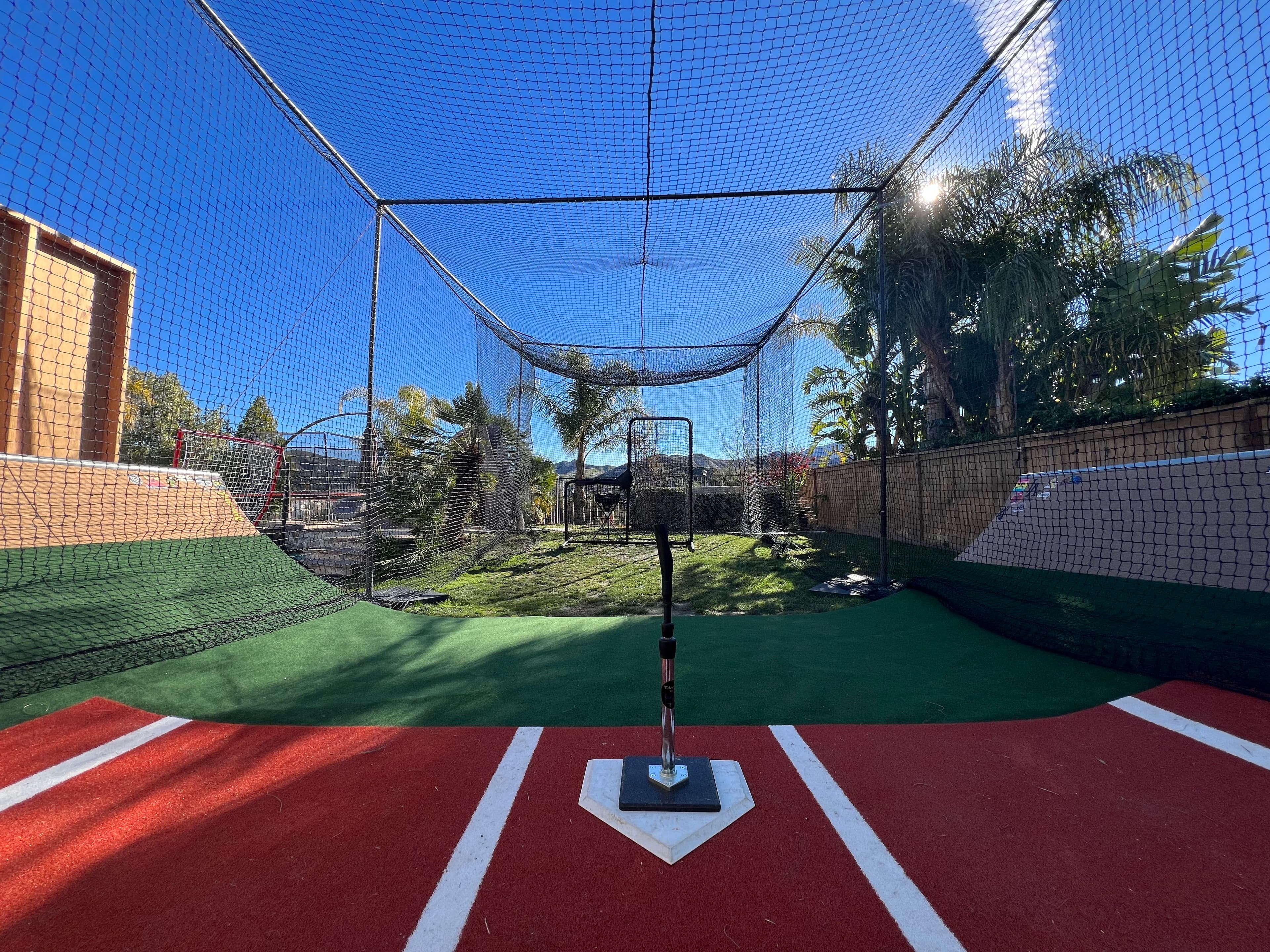
27 Types of Batting Cage: A Photo Field Guide to Every Backyard Setup in America
Barn conversions, driveway slivers, retractable tunnels, ranch cages and climate-controlled outbuildings. A photo field guide to 27 kinds of batting cage, built from 214 real bookable listings on CageList, with what each one costs and who it is for.

Build a Batting Cage
Backyard Batting Cage Kits, Compared: What You Really Get at Each Price (2026)
Every price tier of backyard batting cage, honestly compared — the companies, the netting grades, the realistic lifespan, and what a cage that survives real hitters (or paying renters) actually needs.
Run a travel team? Get your free page.
Baseball or softball. Claim a free directory page, post tryouts, and share cagelist.com/@yourteam with families.
Find your league
Free directories of real leagues and clubs near you — then book a batting cage to get your reps in before opening day.
1,000 organizations


Join the backyard batting cage community
Talk builds, gear, hosting and player development with cage owners, coaches, parents and baseball families.