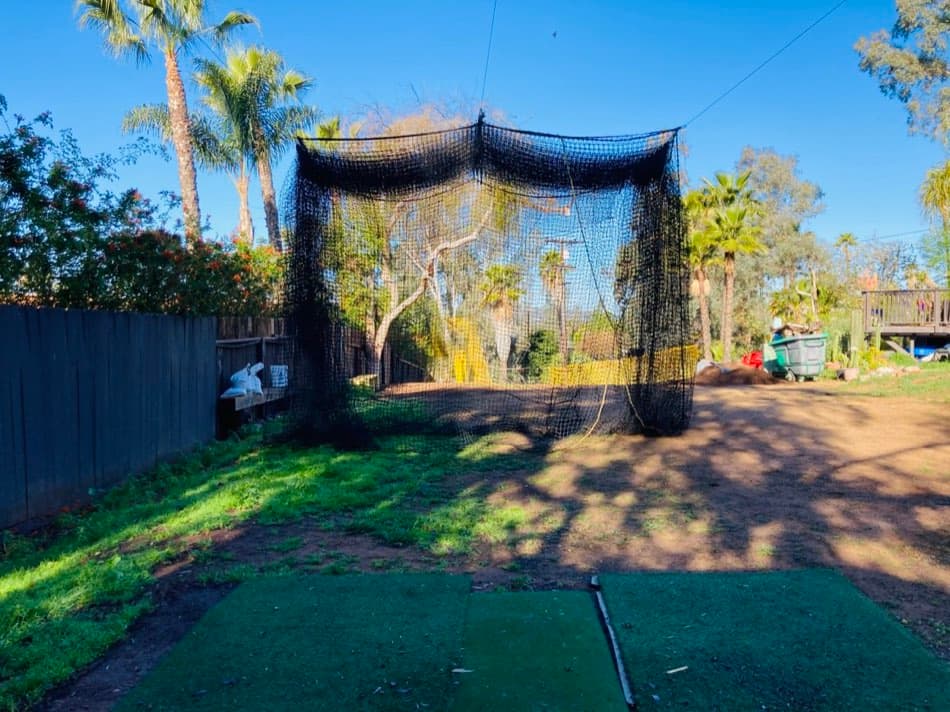
When I was learning how a quality batting cage actually gets built, an installer with 50-plus custom builds under his belt sat me down and told me the questions I should be asking before I put money into one. I wrote them on a sticky note. That note is the reason CageList tells the truth about netting instead of the marketing version — so here are his questions, with the answers that matter.
Product and vendor mentions here are recommendations, not official partnerships. We tell you what holds up and why.
1. Is the steel Schedule 40 thick-wall, or thin-wall?
One line on that note read "did you use 40-gauge thin-wall or thick-wall steel?" — and the real spec behind it reframed the whole thing.
There is no "40 gauge." The spec you want is Schedule 40, thick-wall, round-stock steel, 3 to 4 inches in diameter, set in concrete footings. Thin-wall fence-post-style poles at cage height bend inward the first time kids hang on the net or a real storm rolls through. If a frame kit will not tell you the wall thickness and schedule of its poles, that is your answer.
Ask: What schedule and wall thickness are the poles, and how deep do they get set?
2. What is the netting actually made of?
This is the one everybody gets backwards. "Poly" is a trap word:
- Polyethylene (poly, HDPE) is the cheapest, lightest, shortest-lived netting — extruded plastic that bakes and melts in the sun. Fine for young kids and a season or two. It is what fills a $300 kit that is full of holes by fall.
- American polyester is the quality standard: UV-treatable, re-dippable, and it holds up outdoors for years. It is the build-it-right material indoors or out.
If a listing just says "high-quality poly netting," ask which polymer. There is a real difference between polyethylene and polyester, and the price gap is smaller than you would think.
Ask: Is this polyester or polyethylene?
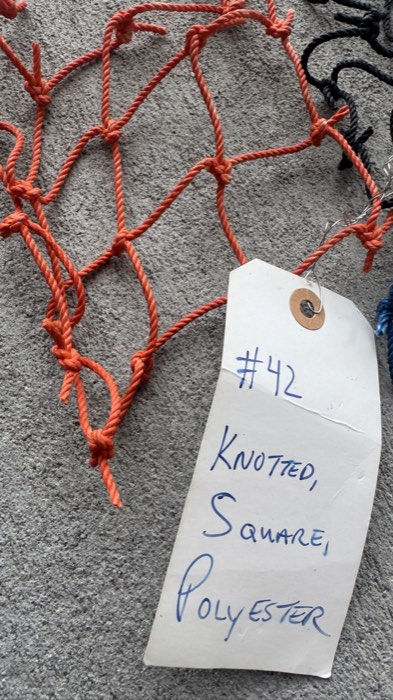
3. What grade, and is it knotted and square?
Netting is graded by twine size: the higher the number, the thicker and longer-lasting.
- #42 American polyester is the standard for a real backyard cage taking full swings.
- #60 and #96 are the heavy college and pro grades — minimal blow-back, 20-year life.
- Thin grades like #21 and #24 are youth-only; #24 starts forming holes in about a year.
And always square, knotted netting, never diamond or knotless. Diamond mesh is fishing net; it is not treated for a baseball cage in the sun.
Ask: What grade is it, and is it square-knotted?
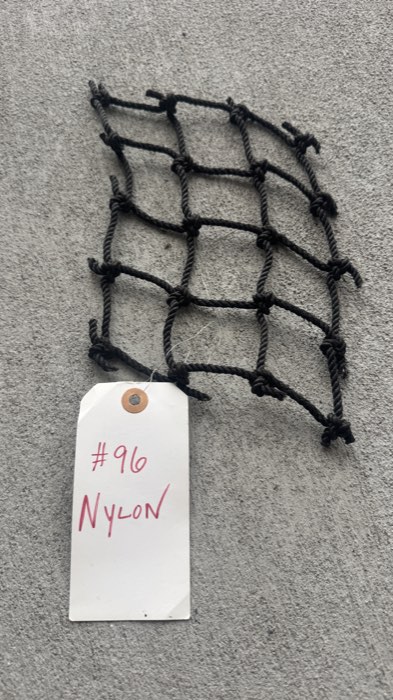
4. How long will the net actually last?
My note said "how long do you want the net to last — 5, 10, 15, 20 years?" and that is exactly how to shop it. A cheap net is a yearly expense; quality polyester is a one-time buy you can re-treat. Make the seller commit to a number. "It will last a while" is not an answer.
Ask: Is this a 1-year, 5-year, or 20-year net?
5. Are the poles far enough from the net?
Balls hit the net and the net swings back — blow-back. If the poles sit too close, the net rubs the steel and wears holes exactly where it contacts, and you get dangerous ricochets. A pro sets the poles well off the netting (5 to 6 feet) so the net can breathe.
Ask: How much clearance is there between the poles and the net?
6. Will it sag?
Sag is the silent killer of a home cage. Cables that look like they are at 10 feet can sag a foot or more once loaded — and suddenly your 12-foot cage is 8 feet and nobody can pitch in it. Proper tensioning (turnbuckles, tight cables, solid anchors) and enough net to overlap the ground are what prevent it.
Ask: How is it tensioned, and how much net overlaps the ground?
7. Who is hanging it, and is that safe?
The dangerous part of a cage is not the design, it is the install: ladder work 10 to 20 feet up, tensioning hardware. A quality net is heavy enough that it takes 3 to 5 people to hang safely. If you are not comfortable up a ladder, that is the moment to hire a pro.
Ask: Am I set up to do this safely, or should I get a builder?
Where this leaves you
If you are building it yourself, our DIY build guide walks the whole thing start to finish, and the colored-netting guide covers why color is usually the better net, not just the prettier one. If you would rather have it done right, get a quote from a batting cage builder near you.
Built it right? Rent it out on CageList and let it pay for itself. New here? Start with the whole picture.
FAQ
What netting is best for an outdoor batting cage?
UV-treated American polyester in a #42 or heavier grade, square-knotted. Polyethylene (poly) is cheaper but bakes and melts outdoors — it is a youth or short-term net, not a build-it-right one.
What kind of steel should batting cage poles be?
Schedule 40, thick-wall, round-stock steel, 3 to 4 inches in diameter, set in concrete footings — not thin-wall fence posts, which bend inward over time.
How long should a batting cage net last?
A cheap polyethylene net may last a season or two; a quality polyester net lasts 5 to 20 years and can be re-treated. Ask the seller to commit to a lifespan number.
Is knotted or knotless netting better for a batting cage?
Square-knotted. Knotless and diamond mesh is fishing net and is not the right build for repeated baseball impact in the sun.
Get the numbers
Get your free batting cage cost estimate
Enter your email and we'll send you an itemized build breakdown — frame, netting, turf, lighting, and install — plus what a cage like yours could earn if you rent it out.
No spam, unsubscribe anytime. Prefer the interactive tool? Open the full cost calculator.
Already have a cage?
Rent it out when you're not hitting
Players, parents, and coaches near you are looking for cage time. Listing is free, you set your own price and hours, and you approve every booking.
Related Guides
View all articles
Build a Batting Cage
Best Batting Cage Netting by Climate: Sun, Humidity, and Cold
The net that lasts in Arizona sun is not the net that survives Florida humidity or an Ohio winter. A climate-by-climate guide to batting cage netting that actually holds up.
Build a Batting Cage
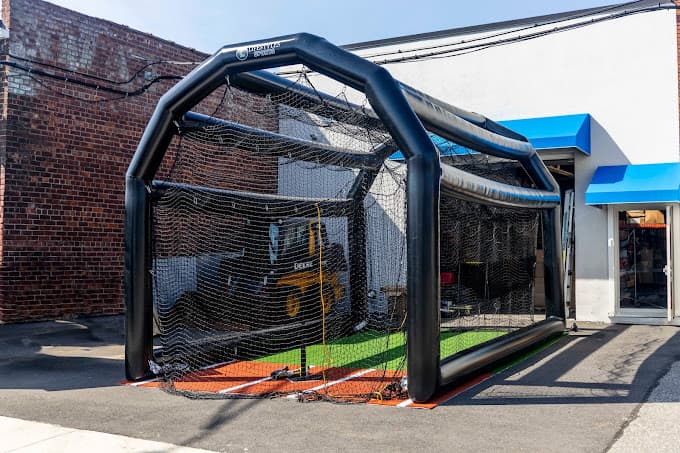
Inflatable Batting Cages: What They Cost, and Whether They Pay for Themselves
Inflatable batting cages run from $1,500 party units to $10,000 branded commercial builds, and only one manufacturer publishes a real price. What each tier costs, why $3,999 is not the price of a cage, and the booked hours it takes to pay one off.
Build a Batting Cage
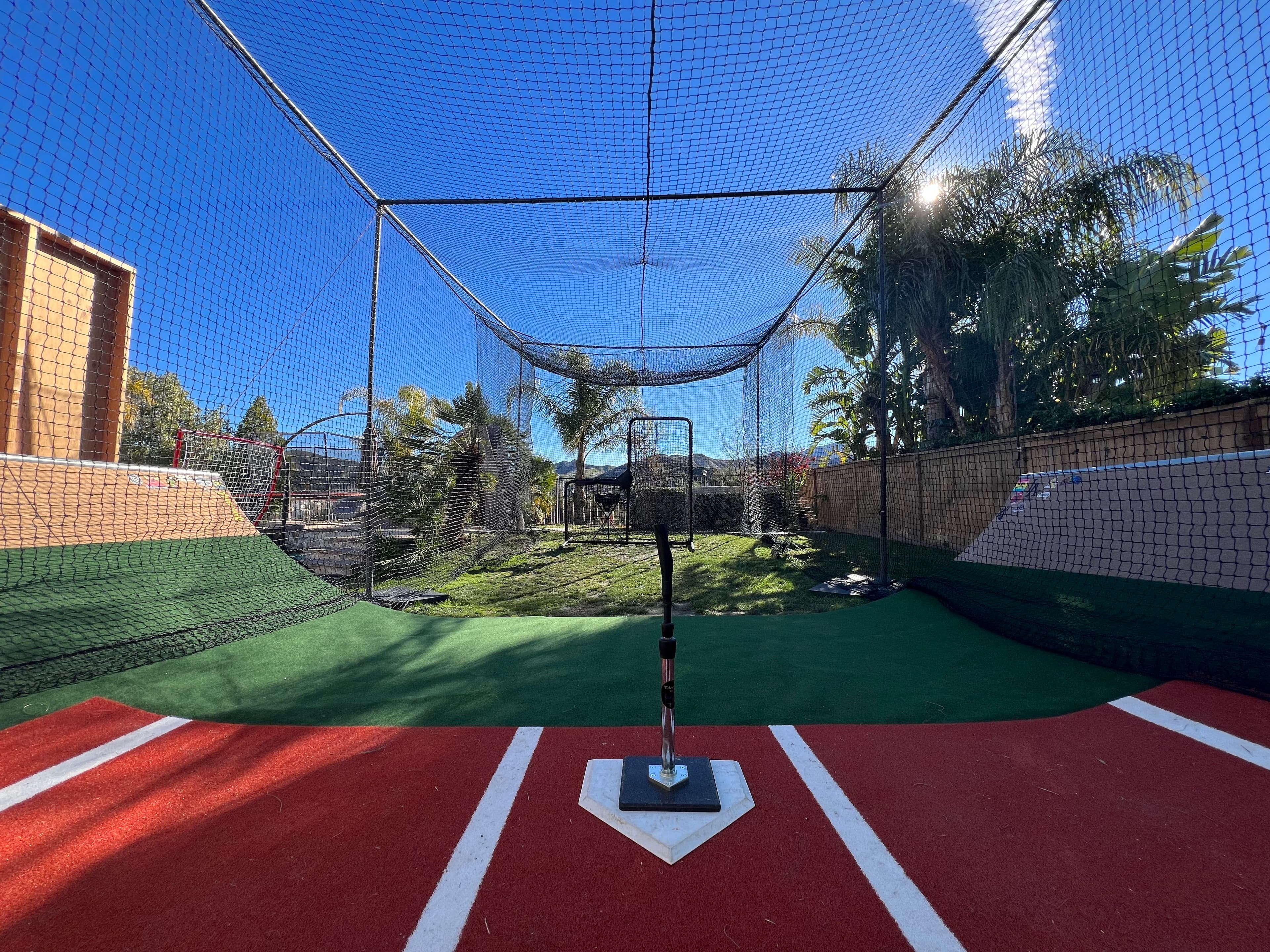
27 Types of Batting Cage: A Photo Field Guide to Every Backyard Setup in America
Barn conversions, driveway slivers, retractable tunnels, ranch cages and climate-controlled outbuildings. A photo field guide to 27 kinds of batting cage, built from 214 real bookable listings on CageList, with what each one costs and who it is for.
Run a travel team? Get your free page.
Baseball or softball. Claim a free directory page, post tryouts, and share cagelist.com/@yourteam with families.
Find your league
Free directories of real leagues and clubs near you — then book a batting cage to get your reps in before opening day.
1,000 organizations


Join the backyard batting cage community
Talk builds, gear, hosting and player development with cage owners, coaches, parents and baseball families.