Black is for contrast, not durability.
The only reason to build a black cage is seeing a white ball against it. That's a visibility preference, not a strength rating — black netting is no more UV-durable than any other color of the same grade.
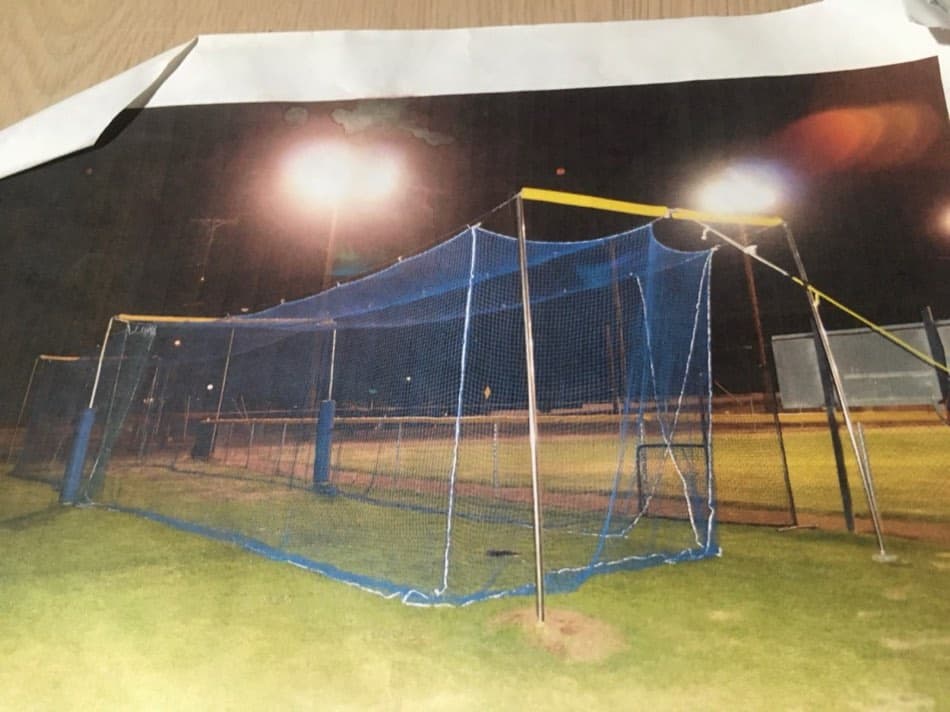
Everyone builds a black cage. Almost nobody knows they didn't have to — or that color is usually the better net. The wow-factor upgrade most builders never realized they had.
Updated August 2026
Almost everyone builds a black cage — and almost nobody knows they didn't have to. Colored batting cage netting isn't a novelty or a downgrade. Green, blue, yellow, red: the treated, higher-grade polyester is usually the net that gets color in the first place, which makes color one of the clearest quality tells a buyer has. It's the wow-factor upgrade most builders never realize is on the table.
Here's how to see past the default, read grade and material like an installer, and pick a cage that turns heads and lasts.
The black-cage default comes from one real need — seeing the ball — that has nothing to do with how long a net lasts. Four things the black-by-default habit gets wrong:
“Most people think you need a black cage to see the white ball. You can see the ball no problem with the walls painted dark.”
The only reason to build a black cage is seeing a white ball against it. That's a visibility preference, not a strength rating — black netting is no more UV-durable than any other color of the same grade.
The bargain black netting most people picture is polyethylene — extruded recycled plastic that bakes and melts in direct sun, then pops a hole when a ball finds the weak strand. It looks like the safe default and is actually the shortest-lived net you can buy.
With the surrounding walls or backdrop kept dark, a high-grade polyester net reads clean in green, blue, or red. "White is for cricket" — for baseball, color is a design choice, not a visibility tax.
The treated, higher-grade polyester is what gets dyed in the first place. The commodity black stuff stays black. So in practice, a colored net is often the quality tell — not a downgrade.
Straight from the installer who's hung them all — what each color actually does in a real backyard cage.
The installer's own pick.
In high-grade polyester, green holds its color through years of full sun — and it settles into a backyard's landscaping instead of standing out. A favorite for a cage that looks like it was meant to be there.
The premium look.
Trimmed in white ropes, blue reads premium — the look people associate with pro facilities. A crowd favorite for a cage that doubles as a backyard centerpiece.
The wow factor.
"Yellow = wow factor." It's the one that stops people mid-scroll and gets a backyard cage noticed — the most attention-grabbing option on the wall.
The patriotic build.
A red, white, and blue tri-color cage — One installer sold four of these into the Nashville area alone. A standout for teams, academies, and anyone who wants the cage to make a statement.
Still valid — done right.
Black is a fine choice when you want maximum ball contrast. Just ask for tar-dipped polyester, not polyethylene: the tar makes black the strongest net of all. Never settle for cheap black "poly."
Skip it for baseball.
"White is for cricket." White netting is the standard for that sport, not this one — against it a baseball is hard to track. Leave it off the list for a hitting cage.
Netting is graded by twine size — the higher the number, the thicker and longer-lasting the net. But the bigger call is material. Get the twine gauge in the right range, then make sure it's the right fiber, knotted square.
A light youth net. Fine for early players, and colored polyester beats cheap black here every time.
The build-it-right backyard grade. American polyester at #42 lasts 5+ years even in full sun and holds up to high-school and college bats.
What colleges and pros use. Heavier twine, minimal blow-back, roughly a 20-year net.
The heaviest big-league grade. Money-no-object durability for the highest-traffic cages.
American-made polyester is the material for a net that lives outdoors. It's UV-treatable, can be re-dipped and repainted, and stretches a real cage's life into the 5-to-20-year range. It's also the only material that can be restored once it starts to weather.
A cheap listing that says "high-quality poly" almost always means polyethylene — the brittle, shortest-life netting that bakes and melts in the sun and can't be restored. Always ask which polymer you're buying before you pay.
For baseball, choose square knotted netting — the knots lock each intersection and take hard line drives for years. Knotless diamond mesh is really untreated fishing net built for overseas operations, not US sun or batted balls. Knotted square beats woven square, and both beat diamond.
Color and quality travel together for a simple reason: the treatment that makes a net last is the same process that gives it color. Here's what a quality colored net is actually buying you.
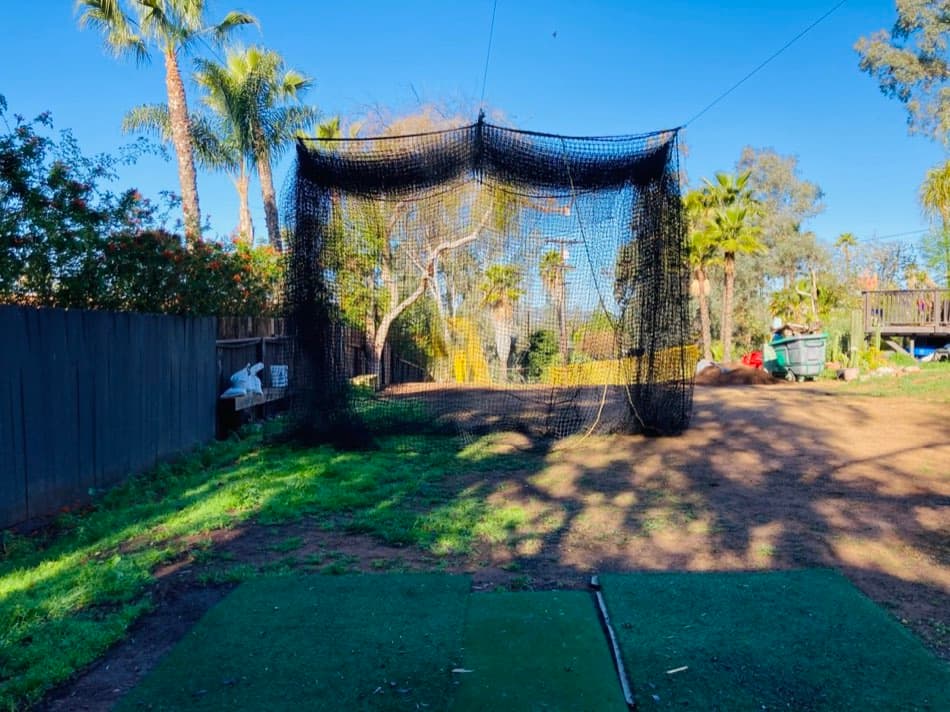
Treated colored polyester starts as a white net, then gets triple-dipped in color and UV treatment. That process is what makes it hold up — and it's applied to the higher grades, not the commodity stock.
Black polyester is tar-dipped, and the tar adds real durability — making it the strongest net of the bunch. Polyethylene can't hold tar, which is why cheap black netting can't match it.
A quality polyester net lasts 5 years in harsh sun and up to 20 in easier conditions or indoors. Netting is the main wear item on a cage; the frame lasts far longer, so buying the net right once is what protects the whole investment.
Polyester can be re-treated, repainted, and double-dipped over its life. Polyethylene can't be brought back once it weathers — so the up-front material choice decides whether you ever get a second life out of the net.
This is the part almost no buyer knows. Treated colored netting isn't a stock item you grab anywhere — there is essentially one US source, plus its East-coast sister operation. Knowing that is half of buying it right.
Kingman, Arizona
Essentially the only US manufacturer of treated colored netting. They start with a white untreated net, you pick a color — black, blue, green, red, orange, yellow, or tan — and it's triple-dipped and treated for the brutal Southwestern sun. Their colors are built not to fade.
Cocoa, Florida
West Coast Netting's East-coast operation. For buyers east of the Mississippi it's typically the better route — custom colors, assembled builds, and lower shipping than ordering across the country.
A quality colored cage is a wow-factor asset that draws players — and pays you back every time someone books it.