Loading...
Batting cage netting: buy the right one once
The cheap, thin net is the one that breaks, and a torn net is a safety problem. For a family backyard cage buy #42 at the minimum. For a pitching machine, a team, a rented cage or a hard hitter with a metal bat, buy #60.
Updated October 2026
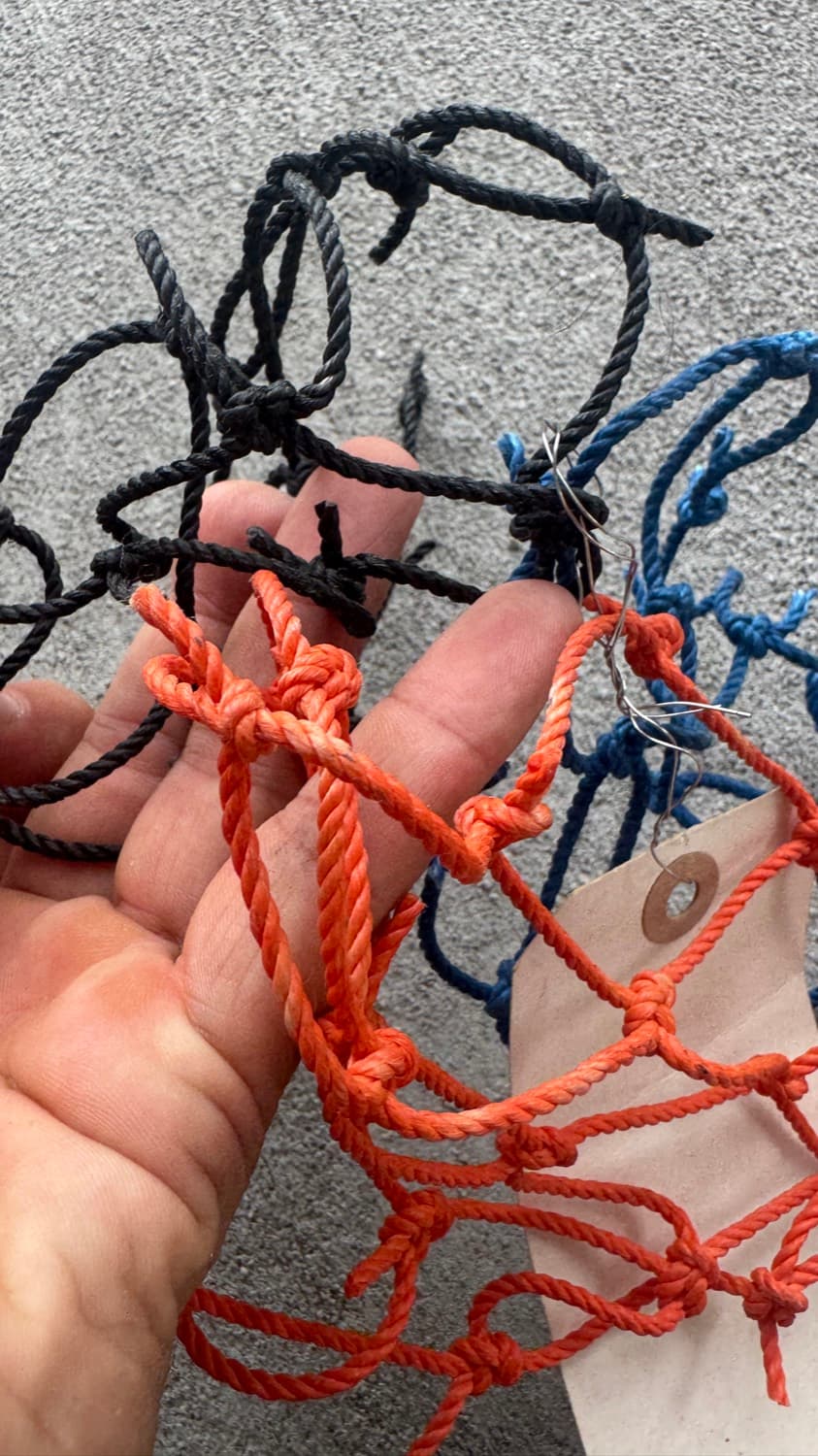
What the # number means
The number is the twine size. A bigger number is thicker, heavier twine, which stops harder hits and lasts longer, and costs more. Every manufacturer grades a little differently, and the same number means different things in different materials, so compare grades inside one material.
Light use only
Best for
A small or portable cage, a young child, a few swings a week. Soft toss and tee work.
Know this
Wears out fastest. Installers see holes starting in about a year of regular use, and sooner under older hitters or a machine.
Minimum for a family backyard cage
Best for
A permanent backyard cage for a family, youth players, and moderate daily use.
Know this
Fine for a family. Under daily rental use, or a strong hitter with a metal bat every week, expect it to wear faster than it would at home.
The one to buy for machines, teams and rentals
Best for
Pitching machine work, teams, high school and up, rented cages, and hard hitters with metal bats. That includes strong 12-year-olds, who hit harder than most parents expect.
Know this
Costs more up front. It is the grade that keeps its shape, stops balls cleanly, and does not become a safety problem mid-session.
Heavy commercial
Best for
Big training facilities and anywhere a net takes constant, hard use all day.
Know this
More net than a backyard needs. Worth knowing it exists so you can tell what a facility is hanging.
Why thin nets fail
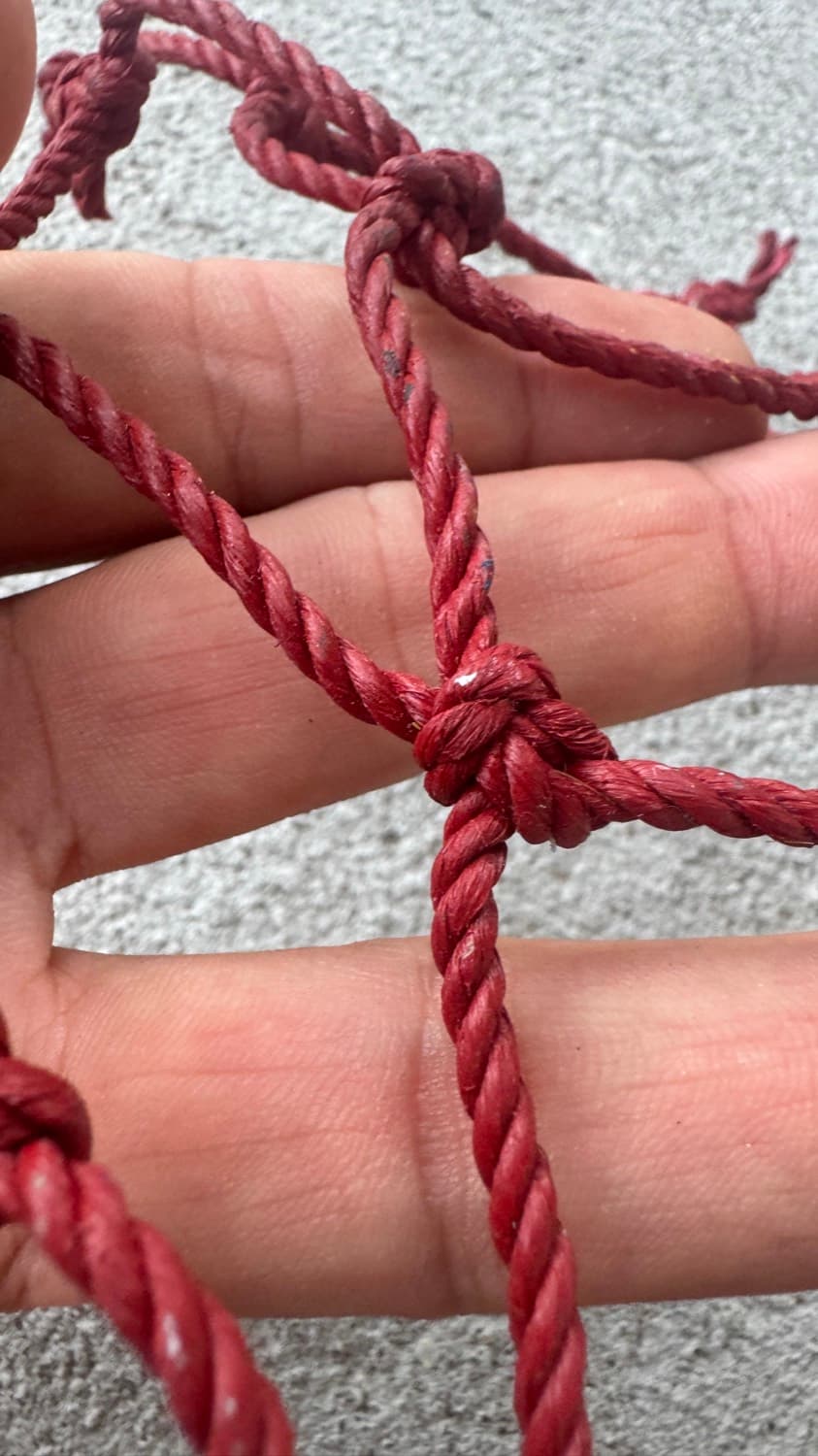
A torn net is not a cosmetic problem. A hole lets a ball out at the speed it came off the bat, toward a window, a driveway or a person standing nearby. Four things wear a net out, and a thin one loses to all of them.
- 01
Ball speed
A ball off a bat or out of a machine puts real energy into a few strands of twine. Thin twine takes that hit at the same spot over and over, until one strand lets go and the hole spreads.
- 02
Metal bats
A metal bat sends the ball back harder than a wood bat, and older players square it up more often. A net that was fine for a ten-year-old with a tee is not the same net for a 15-year-old with a machine.
- 03
Sun and UV
Sunlight breaks twine down from the outside in. Cheap, untreated twine goes brittle and chalky, and it can look fine until the first hard ball finds it. The harsher your sun, the faster this happens.
- 04
Rubbing on hardware
Holes form where the net touches poles, cable clips, rocks and dirt. Thin twine frays at those points first, long before the middle of the net gives out.
Material, build and climate
Twine size sets how strong a net is. Material and sun decide how long it stays that strong.
- PolyethyleneBudget material
- The cheapest and lightest option, made from extruded plastic and twisted into strands. Sun bakes it, and it cannot be restored once it wears. Thin polyethylene is the net in most cheap listings. Heavier twine in the same material (the #42 and #60 nets in the shop below) is a very different product from a #21.
- NylonSolid, best indoors
- A real step up and a legitimate choice indoors, where there is no UV. Grading is not apples to apples across materials: installers treat a #30 nylon as roughly a #42 polyester.
- PolyesterThe quality standard
- Treatable and long lived. Good American polyester netting can be re-treated and UV-dipped again over the years, and a #42 polyester net commonly lasts five years or more even in strong sun.
Watch the word "poly." A listing that says "high quality poly netting" almost always means polyethylene. Ask which material it is, and ask whether the twine is UV treated.
What a well-made net looks like
Square and knotted. Knotted square mesh holds its shape when a ball hits it. Diamond mesh is fishing net and does not belong on a cage.
Stitched ropes. Ropes sewn to the net along the corners and top center hang better and sag less than loosely tied ones.
A weighted bottom rope. It keeps the net flat against the ground and out of the wind.
Sun and climate
The right net in Arizona is not the right net in Ohio. Color does not change how long a net lasts; the treatment does.
- Desert Southwest (TX, NM, AZ, desert CA)
- The hardest UV in the country
- Polyester treated for strong sun, ideally double dipped. Cheap black polyethylene is the net that gives out first here.
- Humid South (Florida, Gulf Coast)
- Sun plus moisture
- UV-treated, square-knotted net. Do not let it sit wet against hardware.
- Cold North (Midwest, Northeast)
- Snow load more than sun
- Quality net on a cage you can drop tension on or take down for winter. Never seal a net away wet.
- Indoors (garage, barn, pole building)
- Abrasion, not sun
- Nylon or polyester, square-knotted, hung with a little slack so balls die in the net.
Curious about color? Read why a colored net is often the better net.
Size it and hang it right
Length by width by height, in feet. Pick the size for the work you will actually do in the cage.
- The standard backyard cage: 55 long, 14 wide, 12 high. Room for a real swing and a short toss.
- The size for full-speed pitching machine work. The extra 15 feet gives the ball room to travel and gives the hitter a real look at it.
- Half-length nets for a tighter space or a shorter lane. Fine for tee and soft toss work, not a substitute for full length.
Still working out your budget? Run the batting cage cost calculator.
Installation basics
- Build the frame firstA square, well-anchored frame or cable system holds the net up. A net hung on a loose frame sags, and a sagging net lowers the ceiling over the pitcher.
- Keep poles off the netSet poles roughly five to six feet away from the net where you can. Holes form where net meets hardware, so the less contact, the longer it lasts.
- Let the edge touch down, not the whole netOrder a foot or two extra so the bottom edge lies on the ground and balls cannot roll out. Keep the rest of the net clear of dirt, rocks and anything sharp.
- Tension it evenlyHang it snug and even from the top cables. Loose spots flap in wind and rub through twine.
- Plan for the peopleA quality net is heavy. Installers say it takes three to five people to hang one well, so line up help before delivery.
- Mind the animalsRabbits chew nets at night to reach the grass on the other side. In some yards that means lifting the bottom edge at night.
Frame, cable and turf choices live in the full build guide.
When to replace a net
Walk the net and look closely. Replace it if you find any of these.
- 1
Any hole a ball could pass through, or twine that is cut or frayed at a hole's edge.
- 2
Twine that feels dry, brittle or chalky, or color that has faded badly. That is sun damage, and it does not come back.
- 3
Strands that pull apart or knots that slip when you tug them.
- 4
A net that sags under its own weight even with the cables tight.
- 5
Wear spots where the net has been rubbing a pole, clip or the ground.
- 6
Balls coming back farther than they used to, or any ball getting through.
Check the net after storms and at the start of each season. If it is a rental cage, check it before every session. A net that fails mid-session is a refund, a repair and a safety problem all at once.
Shop JUGS netting
These are the nets we sell. JUGS describes them as twisted, knotted, black polyethylene in heavy twine. Match the number to how the cage will be used.
- plus $95 shipping
JUGS #1 Standard Net, #27
70' x 14' x 12'
Light and youth use. The entry point, and the one that wears first.
View net - plus $120 shipping
JUGS #1 Standard Net, #42
70' x 14' x 12'
Family backyard cages and youth leagues.
View net - plus $195 shipping
JUGS #1 Standard Net, #60
70' x 14' x 12'
Machine work, teams, rentals, and hard hitters.
View net - plus $120 shipping
JUGS Backyard Net, #42
65' x 11' x 11'
Cut for JUGS' backyard frame family. A tighter cage at a lower price.
View net
CageList is an authorized JUGS dealer. These nets ship direct from the manufacturer, who handles returns and warranty. Prices shown were current when this page was last updated; the store page is always the final word.
Questions parents ask
What does the # number on batting cage netting mean?
It is the twine size. A higher number means thicker, heavier twine, which lasts longer and stops harder hits. Every manufacturer grades a little differently, and the number also means different things in different materials, so compare grades within the same material.
What size netting do I need for a backyard batting cage?
#42 is the minimum for a family backyard cage. Choose #60 if you will use a pitching machine, host a team, rent the cage out, or have older players hitting with metal bats. #24 and #27 are for small, portable or light youth use only.
Is #60 netting worth the extra cost?
For machine work, teams, rentals and hard hitters, yes. The cheaper net wears out sooner, so you pay for the net and the labor to hang it again, and a worn net is a safety problem while it is still hanging.
How long does batting cage netting last?
It depends on grade, material, sun and how hard it is hit. Installers see thin #24 nets start to hole in about a year. A #42 polyester net commonly lasts five years or more at a family cage. Rental or team use wears a net faster than a family does, so buy one grade up.
What size should a batting cage net be?
55 x 14 x 12 feet is the standard backyard size. Use 70 x 14 x 12 feet for full-speed pitching machine work. 35 foot half nets suit tight spaces and tee work.
Is polyethylene netting safe for a batting cage?
Heavier twine in polyethylene, such as #42 and #60, is a different product from a thin #21. Thin polyethylene is the cheapest net and the shortest lived. Whatever the material, check that the twine is UV treated, replace it when it shows wear, and buy the grade that matches how hard the cage is used.
When should I replace my batting cage net?
Replace it when you find holes, brittle or chalky twine, slipping knots, sag that will not tension out, or wear where it rubs hardware. Do not patch a net you are not sure about.
Keep going
- Five questions about your cage, and we point you to the right net and kit.
- Frame, cable, turf and lighting, from first post to first swing.
- Why color is usually the quality tell, and where treated colored net comes from.
- Add up the net, frame, turf and labor before you buy anything.
- Portable nets, full cage nets and complete kits compared.