Knotted or knotless? What gauge? Net-only or a complete kit? Read netting like a builder and buy the right cage the first time, from a portable practice net to a full 55-foot tunnel.
Updated July 2026
The net is the part of a batting cage you can't cheap out on. It's what keeps balls in, neighbors happy, and the cage safe to use for years. But "batting cage net" covers everything from a sixty-dollar pop-up to a heavy-duty tunnel that survives machine BP daily. This guide shows you how to read netting like a builder, pick the right format, and buy once.
Planning the whole project? Pair this with our batting cage build guide for dimensions, permits, and cost. Here we focus on one thing: getting the net and frame right.
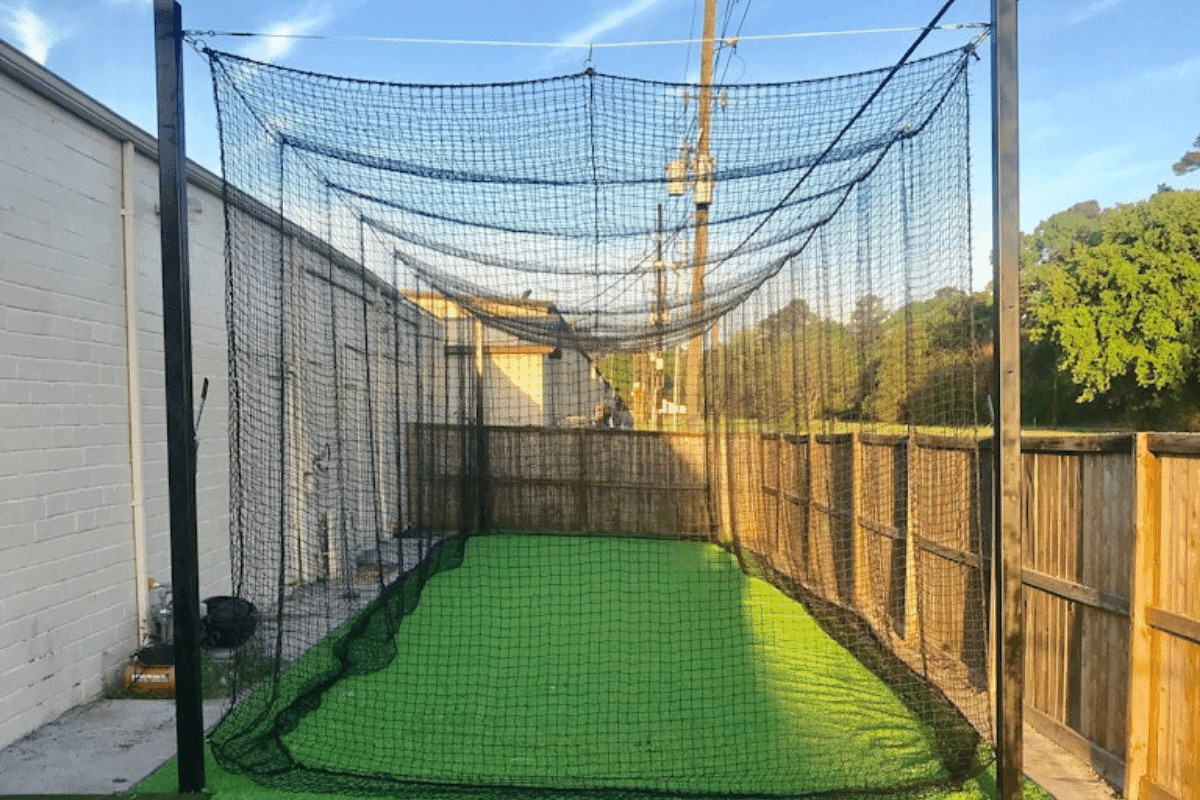
Net gauge and frame separate a cage that lasts from one that sags.
First, pick your format
Before comparing prices, decide which of these three you're actually buying. It's the fastest way to stop comparing a pop-up net against a full cage kit.
Portable practice net
Best for: Tee work, soft toss, and front toss in the yard or at the field.
A 7x7-ish pop-up or sock net that sets up in minutes and stores flat. It won't contain full-speed machine BP or wild swings, but for solo reps and warmups it's the most net per dollar and the easiest to move.
Best for: Owners who already have poles or a cable frame, or can source them.
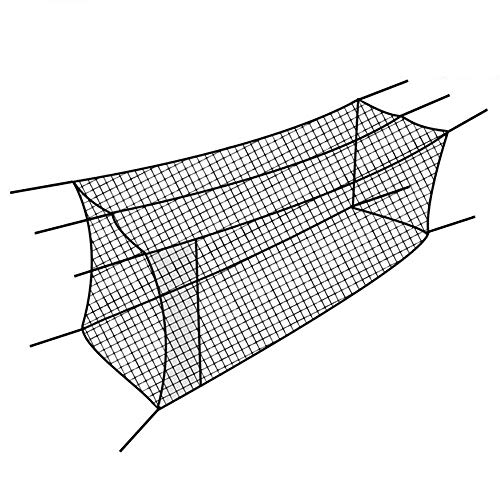
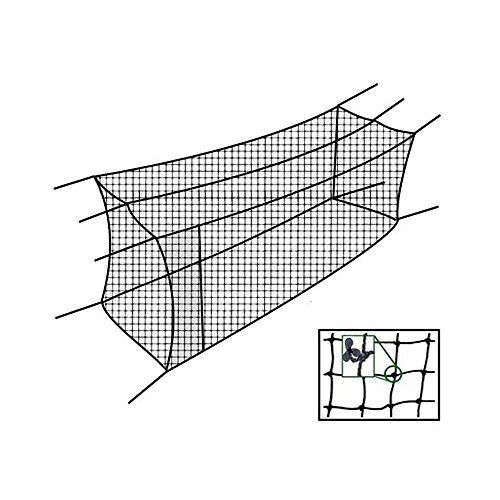
Just the tunnel net, sized to your cage (commonly 35–70 ft). You supply the structure. Best value per square foot of protection if you're building the frame yourself, but you have to get the size and hang right.
Examples: Cimarron heavy-duty cage nets in 30–70 ft lengths.
Complete kit (frame + net)
Best for: Anyone who wants one box, minimal sourcing, and a faster build.
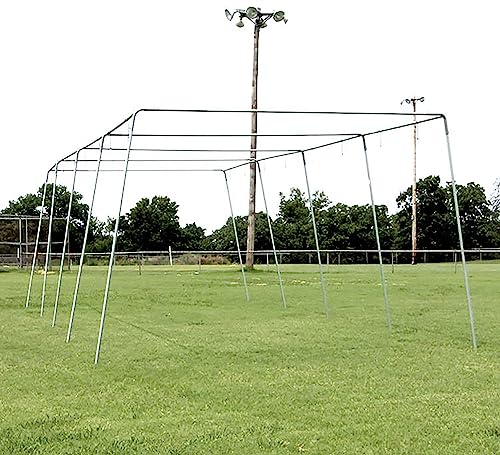
A net plus the frame or corner hardware to stand it up. Complete collapsible kits are the simplest path to a real backyard cage; corner-kit-plus-local-poles setups save money if you're comfortable buying conduit and cutting it to length.
Examples: Skywalker 40 ft complete cage, Cimarron 55 ft net + frame corner kit, Cimarron Deluxe commercial frame kit.
How to read a batting cage net
Four specs decide whether a net lasts two seasons or ten. Get these right and the brand matters a lot less.
Twine gauge (the # number)
Netting is graded by twine thickness: #21 is light-duty (youth, occasional soft toss), #36 is the youth all-around sweet spot (in polyester), and #42 American polyester is the standard once high-school or college bats and machine speeds are involved. #60 and up is commercial. Higher number = thicker twine = longer life. If a machine or big kids will use the cage, don't go below #36.
Knotted vs. knotless
For baseball, always choose square knotted netting. The knots lock each intersection and take hard line drives for years. Knotless (woven diamond) netting is really untreated fishing net built for overseas fishing operations, not US sun or batted balls; it's the one construction to avoid. Square knotted beats woven square, and both beat diamond every time.
Material: polyester, nylon, and cheap poly
This is the decision buyers most often get wrong. American polyester is the quality standard for a net that lives outdoors. It's UV-treatable, can be re-dipped and repainted to last for years in the sun, and tar-dipped black polyester is the strongest of all. Nylon is strong and a fine indoor material (a #30 nylon runs close to a #42 polyester), but it soaks up water and fades outdoors. Beware the 'poly' trap word: a cheap listing that says 'high-quality poly' means polyethylene (HDPE), the shortest-life, most brittle netting. It's okay for light youth use, but it bakes and melts in the weather and can't be restored. For a backyard cage that stays up in the weather, favor UV-treated polyester; save nylon for covered or indoor cages.
Netting grades compared
The same four grades our cost calculator prices, side by side. Lifespan swings hard with sun exposure, so both indoor and outdoor are shown. Complete-net budgets are for a standard 70-ft tunnel.
Grade
Twine
Material
Lasts (indoor / outdoor)
Per sq ft
Complete net (70′)
Economy
#18–#21 poly
Polyethylene
2–3 yrs / 1–3 yrs
$0.10–$0.18
$300 – $539
Standard
#36 knotted
Polyester
5–7 yrs / 4–6 yrs
$0.20–$0.32
$599 – $959
Professional
#42 knotted
American polyester
8–10 yrs / 6–8 yrs
$0.32–$0.50
$959 – $1,498
Commercial
#60 knotted
Heavy polyester
10–12 yrs / 8–10 yrs
Batting cage net FAQ
What kind of net is best for a batting cage?
For a permanent outdoor backyard cage, UV-treated American polyester is the standard: #36 for youth, stepping up to #42 once a pitching machine or high-school/college hitters are involved. Nylon is fine for covered or indoor cages; skip cheap polyethylene for anything but light youth use. Choose square knotted netting, and avoid the lightest #21 for anything beyond youth soft toss.
What does the # number mean on batting cage netting?
It's the twine gauge: how thick each strand is. #21 is light-duty, #36 is a common backyard standard, #42 is heavy-duty for older players and machine speeds, and #60+ is commercial. A higher number means thicker, more durable netting that lasts longer.
Do I need the whole kit or just the net?
If you already have poles or a cable/suspension frame, buy the net only. It's the best value. If you want the simplest path to a standing cage, a complete kit (frame + net) is worth it. A middle option is a net plus a corner kit, where you supply locally-bought poles to save money.
How much does a good batting cage net cost?
Portable practice nets run roughly $60–$230. Full cage nets and complete kits range from a few hundred dollars into the four-figures for heavy-duty, larger, or commercial-grade setups. Gauge, length, and whether a frame is included drive most of the price. See current pricing on the picks below.
How long do batting cage nets last?
It depends on twine gauge and whether the cage is indoors or out. Outdoors, a light economy net may last only 1–3 years, a #36 standard 4–6, a #42 professional 6–8, and a #60 commercial 8–10. Indoors, out of the sun, each lasts longer. See the grade comparison table above for the full breakdown. Netting is the main wear item on a cage, so budget to replace it eventually while the frame lasts far longer; good tensioning and taking the net down in harsh off-seasons both extend its life.
Nets Worth Buying
Portable practice nets and full cage nets pulled live from the CageList gear store, from a quick pop-up for soft toss to heavy-duty tunnel netting.
Affiliate disclosure: As an Amazon Associate, CageList earns from qualifying purchases.
A comfortable backyard cage runs 55–70 ft long, 12–14 ft wide, and about 12 ft high; youth setups can work at 35–55 ft. Measure your usable space and leave a few feet of clearance around the net for access and so batted balls don't bounce back off the frame.
$0.42–$0.55
$1,258 – $1,648
Prices are materials-only, per square foot of total net surface (sides + ends + top). A standard 70-ft tunnel is roughly 3,000 sq ft of netting.