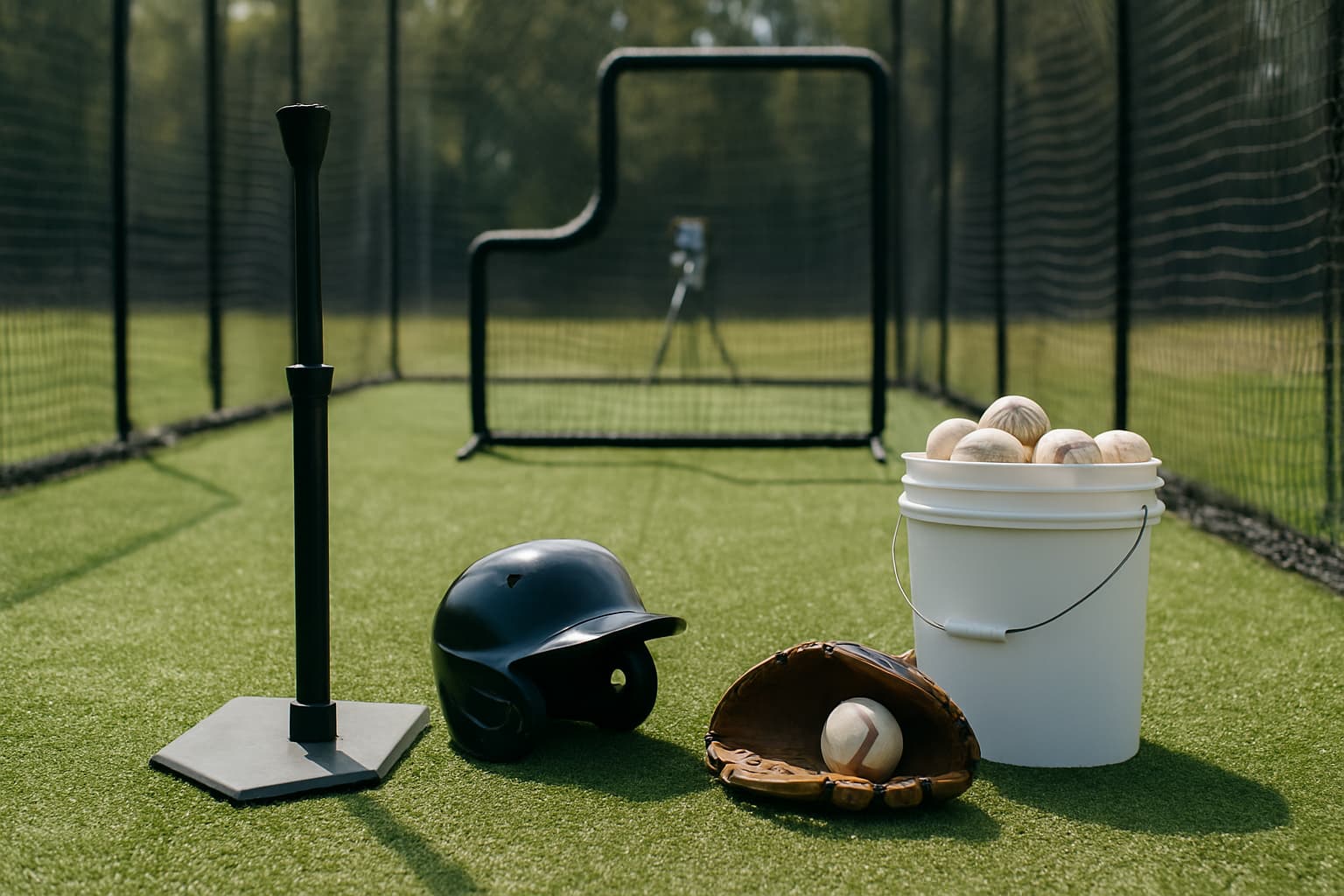
Ask ten baseball people which pitching machine to buy and you will get ten answers — usually whichever brand they happened to grow up with. We wanted to do better than that. This is the guide we wish we had when we were outfitting our own cages: an honest, up-to-date breakdown of every kind of pitching machine, what each one is genuinely good at, and how to match one to the hitter who will actually stand in against it.
We build CageList because we love this game and want more players — kids and adults — getting quality reps. The pitching machine is the single most important piece of equipment in any cage. Let's get your decision right.

New for 2026: three-wheel machines that used to be facility-only have come down in price, and a new category of limited-flight "vision" trainers (like MaxBP) has changed how serious hitters build pitch recognition at home. Both trends are reflected in the picks below. Read our full MaxBP review, pricing breakdown, and alternatives.
The Quick Answer
If you just want a recommendation, here is where most people land:
- Best overall for serious players and cages: Sports Attack Hack Attack — the three-wheel standard the pros use.
- Best for youth and mixed ages: Junior Hack Attack or JUGS BP3 — real spin, gentler speeds, lighter to move.
- Best budget auto-feeder for solo reps: Heater Sports Pro — plug it in and hit until your hands hurt.
- Best for pitch recognition and vision: MaxBP — small balls at game speed that train the eyes, not just the swing.
- Best arm-style workhorse: First Pitch — simple, rugged, and hard to kill.
The right answer depends on who is hitting, how fast, and how much you want to spend. The rest of this guide walks you through it — and the shoppable pitching machines in the CageList gear store are all linked with current pricing.
First, How We Think About Pitching Machines
Before you compare brands, understand the five things that actually determine whether a machine is right for you. Nail these and the brand almost picks itself.
1. Wheel count
This is the biggest divider. Single-wheel and arm-style machines throw straight fastballs and are the most affordable and durable. Two-wheel machines add the ability to throw breaking balls and adjust left/right location. Three-wheel machines throw every pitch type with realistic spin and, on the best ones, let the hitter see the ball come out of the wheels the way they would off a real arm. More wheels means more realism — and more money.
2. Speed range
A machine that tops out at 45 mph is perfect for an eight-year-old and useless for a high schooler. One that only throws 70+ will terrify a beginner. Match the range to the hitter, and favor machines with a wide, easily adjustable range if more than one person will use it.
3. Ball compatibility
Some machines throw real leather baseballs, some are built for dimpled machine balls, and some use lightweight lite-flight balls for tight spaces. Feeding the wrong ball is the fastest way to wear out wheels or get inconsistent pitches. We cover this in depth in our guide to pitching machine balls.
4. Feeding and automation
A hand-fed machine needs a second person or a lot of walking. An automatic feeder drops a ball every 5–10 seconds so a solo hitter can take uninterrupted rounds. If you train alone, an auto-feeder (or a machine with one available) is close to mandatory.
5. Portability, power, and space
Commercial three-wheel machines are heavy and need a standard outlet or a battery pack. Arm-style machines are lighter but bulkier to store. Measure your tunnel and confirm your power source before you buy — a great machine you can't set up is money wasted.
The Types of Pitching Machines
Arm-style (single wheel or spring arm)
The classic. A rotating arm or single wheel launches the ball with a visible, timing-friendly motion. Rugged, affordable, and great for straight fastballs and fungo-style work. Limited on breaking balls and top-end velocity. First Pitch is the best-known brand here.
Two-wheel
Two counter-rotating wheels let you dial in fastballs, curveballs, and sliders, plus location. A strong middle ground on price and capability, popular with coaches who want breaking balls without the top-tier cost.
Three-wheel
The gold standard for realism. Three wheels produce true spin on every pitch type and — on machines like the Hack Attack — leave the ball visible through the release so hitters can time it. This is what serious travel, high school, college, and pro hitters train on.
Limited-flight and vision trainers
A newer category. Machines like MaxBP fire small, golf-ball-sized balls at game-equivalent speeds over short distances. They are less about swing mechanics and more about pitch recognition, tracking, and hand-eye coordination — and they fit in a garage. A brilliant complement to a full-size machine, not a replacement.
Pitching Machines by Budget
Prices move, but the tiers are stable. Here is roughly what each budget buys in 2026:
| Budget | What you get | Best for |
|---|---|---|
| Under $500 | Auto-feeding single-wheel or lite-flight machines, ~20–50 mph | Youth players, solo backyard reps, tee-ball to Little League |
| $500–$1,500 | Better single/arm-style, some two-wheel; real balls, wider speed range | Serious youth and middle-school hitters, home cages, vision trainers |
| $1,500–$3,000 | Two- and three-wheel machines, breaking balls, 70–80+ mph | High school hitters, coaches, small facilities |
| $3,000+ | Commercial three-wheel machines, full pitch menu up to ~100 mph | Travel programs, academies, rental cages, advanced players |
The Machines Worth Knowing in 2026
Sports Attack Hack Attack
The industry standard. Three-wheel design delivers 20–100 mph with realistic spin on fastballs, curves, sliders, and changeups, and the open frame lets hitters see the ball out of the wheels. No warm-up, and commercial-grade durability that runs for a decade-plus.
Best for: travel ball, high school through pro, coaches running lessons, any cage targeting serious hitters. Keep in mind: premium price, and overkill for very young players who need slow, soft pitches.
Junior Hack Attack
The same three-wheel technology tuned for youth. Throws baseball or softball from roughly 20–70 mph, lighter and more portable than the full model.
Best for: youth-focused and mixed-age setups where you want one machine to grow with the player. Keep in mind: it won't reach the top-end velocity advanced high school and adult hitters eventually want.
JUGS BP3
A three-wheel machine with a loyal following. Throws baseballs and softballs with easy pitch selection and the dependable JUGS feeding system, and it's known for holding up to heavy use.
Best for: youth through high school, coaches who like the JUGS ecosystem, cages that want a reliable three-wheel workhorse. Keep in mind: top speed sits below the full Hack Attack, so elite velocity work is limited.
ATEC Casey Pro 3G
One of the most trusted machines in serious baseball. The two-wheel Casey Pro 3G is used every day by Major League clubs and top college programs — a 30–100 mph range, dual concave wheels for tight ball control, and micro-adjustments that change speed and pitch type instantly. ATEC's newer M2 is the current-generation sibling aimed at programs and facilities.
Best for: academies, facilities, and advanced hitters who want pro-grade, coach-friendly adjustments. Keep in mind: premium price tier — decide between it and a three-wheel Hack Attack on feel, ball system, and dealer support.
First Pitch (Original / Baseline / XL)
The arm-style workhorse. Simple, extremely durable, and a favorite of budget-minded facilities and schools. Throws real balls with consistent fastballs and, on some models, breaking pitches.
Best for: high-volume straight-fastball reps, schools, and cages that value ruggedness over pitch variety. Keep in mind: less pitch realism than a three-wheel machine.
Iron Mike (arm-style commercial machines)
The workhorse of commercial cages and family fun centers. Iron Mike's mechanical arm shows a real windup and release, so hitters get authentic timing, and the hopper-fed design pitches continuously for hours — which is why coin-op cages run them all day. They throw both real baseballs and dimpled balls; many high-volume centers choose dimpled “SOFTUF” balls for durability and safety, but that is an operator preference, not a limitation of the machine.
Best for: commercial batting cages, fun centers, and high-volume facilities that want a near-indestructible, continuous-feed machine with real arm-timing. Keep in mind: big, heavy, and semi-permanent — a facility fixture, not something you move between tunnels.
Heater Sports Pro
The value champion for home use. An automatic feeder drops a ball every few seconds, and adjustable speeds up to about 45 mph make it ideal for youth and developing hitters getting daily reps alone.
Best for: families, backyards, and solo practice on a budget. Keep in mind: lighter build and lower top speed than commercial machines — it's a trainer, not a facility centerpiece.
MaxBP
The vision trainer. Fires small balls at game-equivalent speeds to build pitch recognition, tracking, and barrel accuracy in a tight space. Used by college and pro hitters as a supplement to full-size machine work.
Best for: pitch recognition, reaction training, and small-space setups. Keep in mind: it trains the eyes and hands, not full game-swing mechanics — pair it with a standard machine.
SKLZ and entry lite-flight machines
Manual and lightweight electric machines built for the youngest players. Inexpensive and easy, but limited in speed, realism, and durability.
Best for: tee-ball and first-time hitters. Keep in mind: most players outgrow them within a season or two.
Match the Machine to the Player
Coaches and facilities should size to their fastest and most demanding hitter, then dial down — a machine can always throw slower, but it can't throw faster than its ceiling.
Ball Types Matter as Much as the Machine
The best machine throwing the wrong ball still throws badly. Dimpled machine balls last longest and pitch most consistently; real leather balls feel truest but wear wheels faster; lite-flight balls are safest in tight or crowded spaces. Always match the ball to what your machine is designed for — full details in our pitching machine balls guide.
Space, Power, and Safety
Confirm three things before you buy. Space: most machines need at least a 55–70 ft throwing distance for realistic timing; short tunnels favor lite-flight or vision trainers. Power: commercial machines want a dedicated outlet or a rated battery pack — check the amperage. Safety: use an L-screen or protective screen for the feeder, keep the on-deck area clear, and never load or clear a jam without turning the wheels off first.
Maintenance and Longevity
A quality machine lasts 10–15 years with basic care.
- Clean the wheels after heavy sessions — ball residue causes inconsistent spin and velocity.
- Check wheel pressure monthly — uneven pressure makes the ball curve unpredictably.
- Store it covered — UV and moisture degrade rubber wheels faster than actual use.
- Service annually — most manufacturers sell service kits for $50–$100; a yearly tune-up prevents the failures that generate bad reviews.
For CageList Hosts: The ROI Angle
If you rent your cage, the machine is your product. A cage with a quality pitching machine books at meaningfully higher hourly rates than one without, and it attracts the coaches, travel teams, and serious players who book repeatedly. On a setup charging $50–$100 an hour, a mid-range machine pays for itself in a few dozen bookings.
Run the numbers on your own cage with the ROI calculator, and see how a machine fits into a complete build in our rent-ready cage setup guide and pricing guide.
Frequently Asked Questions
What is the best pitching machine for youth players?
For 6–9 year olds, an auto-feeding lite-flight or entry machine at 20–40 mph builds contact without fear. For 10–13, step up to a real-ball machine like the Junior Hack Attack or JUGS BP3 that can grow with them.
Are three-wheel machines worth the extra money?
If the hitter is high-school level or above, or if you rent your cage, yes — the realistic spin, visible release, and full pitch menu are what serious training requires. For casual youth reps, a two-wheel or arm-style machine is plenty.
Can one machine throw both baseball and softball?
Many three-wheel machines (Hack Attack, Junior Hack Attack, JUGS BP3) switch between baseball and softball with a quick adjustment. If your household or facility needs both, confirm dual-sport capability before buying.
How fast should a machine throw for high school hitters?
Look for a ceiling of at least 75–90 mph, ideally with breaking balls. Perceived velocity also depends on distance — moving the machine closer simulates higher effective speed for reaction training.
Do I need a machine that throws curveballs?
Not to start. Fastball timing and consistent contact come first. Once a hitter is comfortable, breaking-ball and pitch-recognition work (a two- or three-wheel machine, or a vision trainer like MaxBP) becomes the next level.
How much should I spend?
Spend based on the hitter's level and how often it'll be used, not on the highest number you can afford. A $400 auto-feeder that gets used daily beats a $3,000 machine that intimidates a beginner into leaving it in the garage.
The Bottom Line
For most families and single-tunnel cages targeting a broad market, the Junior Hack Attack or JUGS BP3 is the sweet spot — real three-wheel training that serves a wide age range. For a premium setup aimed at travel ball and advanced hitters, the full Hack Attack is the standard for good reason. On a budget or training solo, a Heater auto-feeder gets you daily reps today, and a MaxBP sharpens the eyes no full-size machine can.
Buy quality, match it to the hitter, maintain it, and the machine becomes the reason players come back — and the reason they tell every baseball family they know.
Own a cage? List it free on CageList and put your machine specs front and center. Just looking to hit? Find a batting cage near you and get to work.
Build a better cage setup with the right equipment
Compare cage upgrades with practical advice for nets, turf, pitching machines, balls, and safety gear.
Related Guides
View all articles
Batting Cage Equipment
SKLZ Pitching Machine Review: Worth It at $80?
The SKLZ Pitching Machine is one of the cheapest real auto-feed machines on the market. Here is an honest look at what $80 gets you, the rest of the SKLZ lineup, and how it compares to Heater Sports Crusher and Personal Pitcher Pro.
Batting Cage Equipment
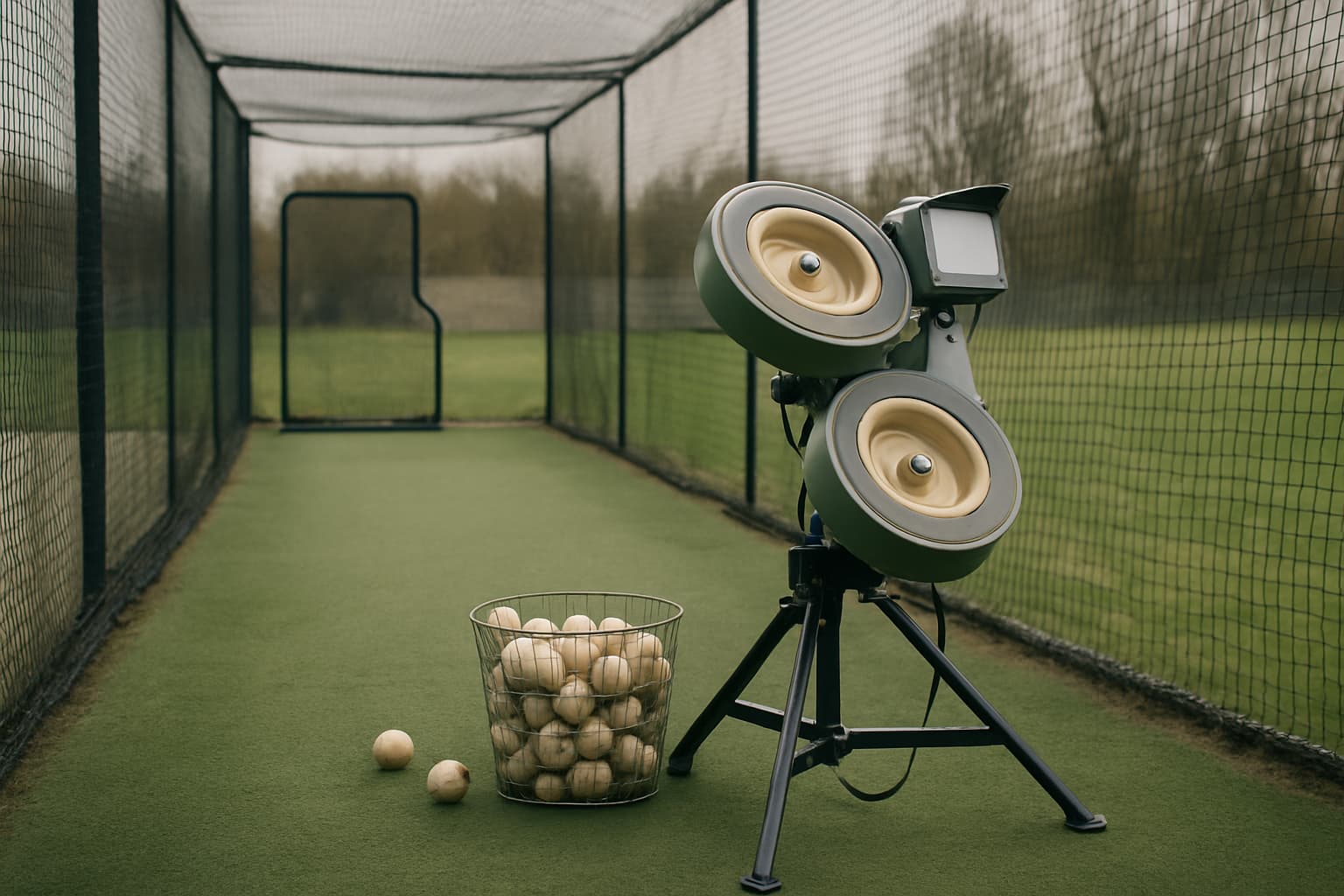
Heater Sports Pro Pitching Machine Review: The Best First Machine?
The Heater Sports Pro is one of the most common first pitching machines. Here is what its ~$500 price actually gets you, and how it compares to Louisville Slugger's Blue Flame and the Zooka ZS740.
Batting Cage Equipment
JUGS BP3 Review: The Pitching Machine That Actually Earned Us a Sale
The JUGS BP3 is the first pitching machine that earned CageList a real, confirmed commission. Here is what makes it different — Grip-Tite tires, automatic changeup switching, one-dial pitch selection — and how it compares to Hack Attack.
Run a travel team? Get your free page.
Baseball or softball. Claim a free directory page, post tryouts, and share cagelist.com/@yourteam with families.
Find your league
Free directories of real leagues and clubs near you — then book a batting cage to get your reps in before opening day.
1,000 organizations
Join the backyard batting cage community
Talk builds, gear, hosting and player development with cage owners, coaches, parents and baseball families.