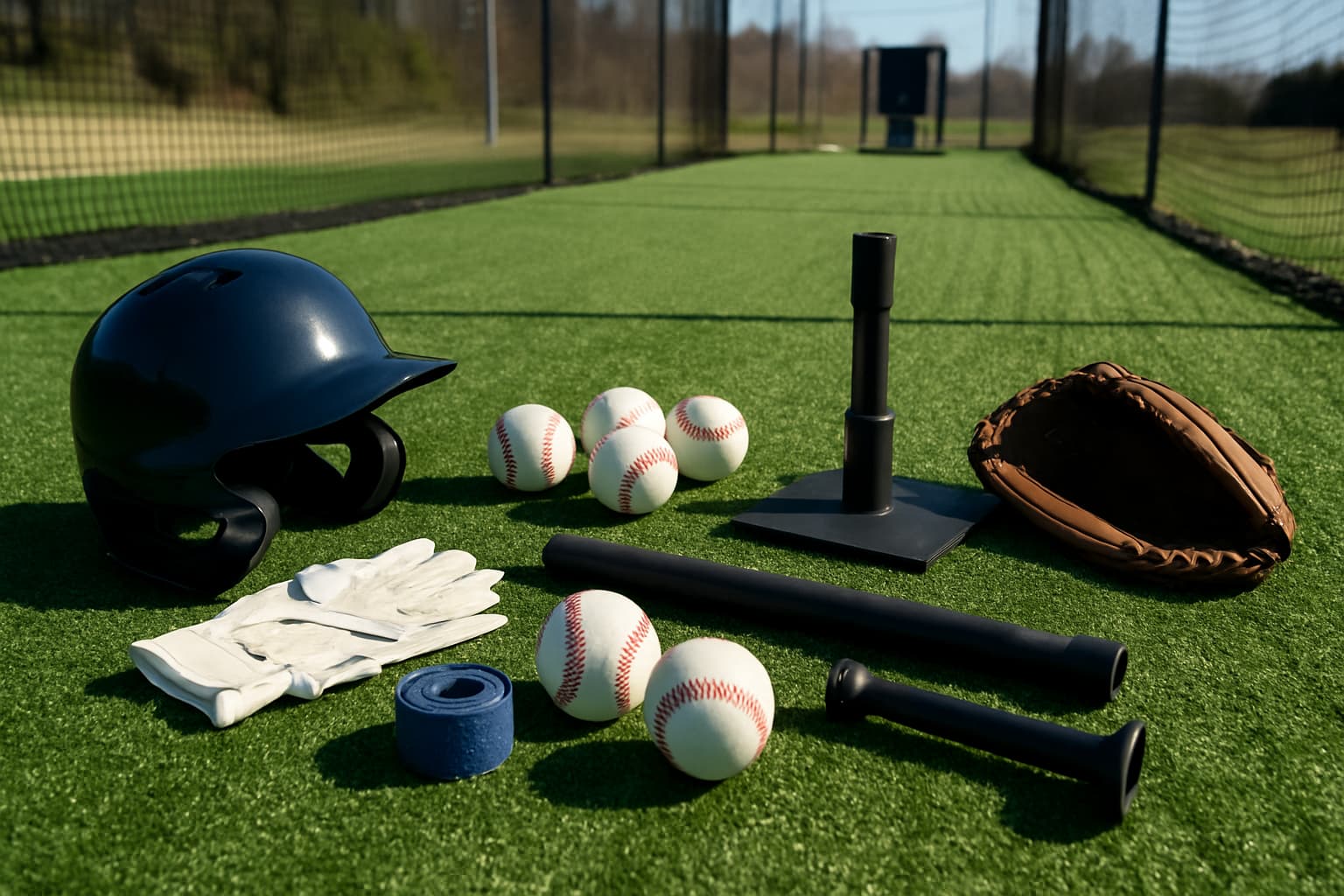
At around $80, the SKLZ Pitching Machine is one of the cheapest auto-feeding machines you can buy — cheap enough that it is worth asking honestly whether it actually works or whether you are better off spending a bit more. Here is what it does, where it falls short, and how the rest of the SKLZ lineup fits around it.
What You Actually Get for $80
The SKLZ Pitching Machine holds around 26 to 30 soft training balls and auto-feeds a new pitch roughly every 5 seconds at speeds up to about 30 mph. It is lightweight, battery-powered, and simple enough that a young hitter can set it up without help. It is built for one job: giving a beginner repeated, predictable reps to learn timing, not for simulating a real pitcher.
That is genuinely useful for the right hitter — a first-time player who has never faced anything but soft toss from a parent benefits from the consistency a machine provides, even a modest one. It is not a machine a travel-ball hitter will outgrow slowly; they will outgrow it fast.
The Rest of the SKLZ Lineup
SKLZ sells more than one machine, and they solve different problems:
| Machine | Speed | Ball Type | Best For |
|---|---|---|---|
| SKLZ Pitching Machine | Up to ~30 mph | Soft training balls | Absolute beginners, first exposure to a machine |
| SKLZ Catapult | 15–50 mph | Regulation baseballs or 9" plastic balls | Soft toss AND fielding/pop-fly practice in one unit |
The Catapult is the more versatile of the two — its adjustable height and distance, plus the option to use real baseballs, make it useful past the point a beginner outgrows the base model. If you think your hitter will want more than basic timing work within a season, the Catapult is worth the difference.
Affiliate disclosure: As an Amazon Associate, CageList earns from qualifying purchases. Some links in this post are affiliate links — if you buy through them, CageList may earn a commission at no extra cost to you.
How It Compares to Other Budget Options
SKLZ is not the only machine at this price tier. The Heater Sports Crusher sits at a similar ~$100 price point but trains a different skill — it is a close-range hand-eye coordination machine using mini balls, more comparable to MaxBP's category than SKLZ's soft-toss auto-feeder. If you want more speed range and pitch variety than the base SKLZ offers without jumping to a three-wheel machine, the Personal Pitcher Pro covers 15 to 95 mph equivalent for roughly $150 to $450 depending on package — see our full MaxBP review and reaction-trainer comparison for how that category breaks down.
The Bottom Line
The SKLZ Pitching Machine does exactly what a $80 machine can reasonably be expected to do: give a true beginner consistent, predictable reps to learn timing. It is not built to last for years of serious use, and reviewers are honest about that trade-off. If your hitter is just starting out, it is a fair way to find out whether machine reps help before spending real money on a Heater Sports Pro, JUGS BP3, or Hack Attack. See the full pitching machine buyer's guide for how every tier compares, or our Heater Sports Pro review for the next real step up.
Want to try before you buy anything at all? Book cage time near you and see what a real machine feels like first.
FAQ
Is the SKLZ Pitching Machine durable? Reviewers report mixed durability at this price point — treat it as a starter tool with a realistic one-to-two-season lifespan, not a long-term investment.
SKLZ Pitching Machine vs. Catapult — which should I buy? The base model is cheaper and simpler; the Catapult costs more but works with real baseballs and doubles as a fielding trainer, which makes it the better buy if your hitter will use it for more than basic timing work.
Is 30 mph too slow to be useful? For a true beginner learning to track and time a pitch, yes it is useful — the value is in repetition and consistency, not simulating game speed.
What is the next step up from SKLZ? The Heater Sports Pro (~$500) offers real auto-feed and higher speeds; see our Heater Sports Pro review for the full breakdown.
Build a better cage setup with the right equipment
Compare cage upgrades with practical advice for nets, turf, pitching machines, balls, and safety gear.
Related Guides
View all articles
Batting Cage Equipment
Heater Sports Pro Pitching Machine Review: The Best First Machine?
The Heater Sports Pro is one of the most common first pitching machines. Here is what its ~$500 price actually gets you, and how it compares to Louisville Slugger's Blue Flame and the Zooka ZS740.
Batting Cage Equipment
JUGS BP3 Review: The Pitching Machine That Actually Earned Us a Sale
The JUGS BP3 is the first pitching machine that earned CageList a real, confirmed commission. Here is what makes it different — Grip-Tite tires, automatic changeup switching, one-dial pitch selection — and how it compares to Hack Attack.
Batting Cage Equipment
Hack Attack vs. Junior Hack Attack: Which Sports Attack Machine Should You Buy?
Sports Attack sells two versions of its three-wheel Hack Attack machine. Here is the real difference in price, speed, and who each is built for — plus how Hack Attack compares to ATEC, JUGS BP3, and Spinball Wizard.
Run a travel team? Get your free page.
Baseball or softball. Claim a free directory page, post tryouts, and share cagelist.com/@yourteam with families.
Find your league
Free directories of real leagues and clubs near you — then book a batting cage to get your reps in before opening day.
1,000 organizations
Join the backyard batting cage community
Talk builds, gear, hosting and player development with cage owners, coaches, parents and baseball families.