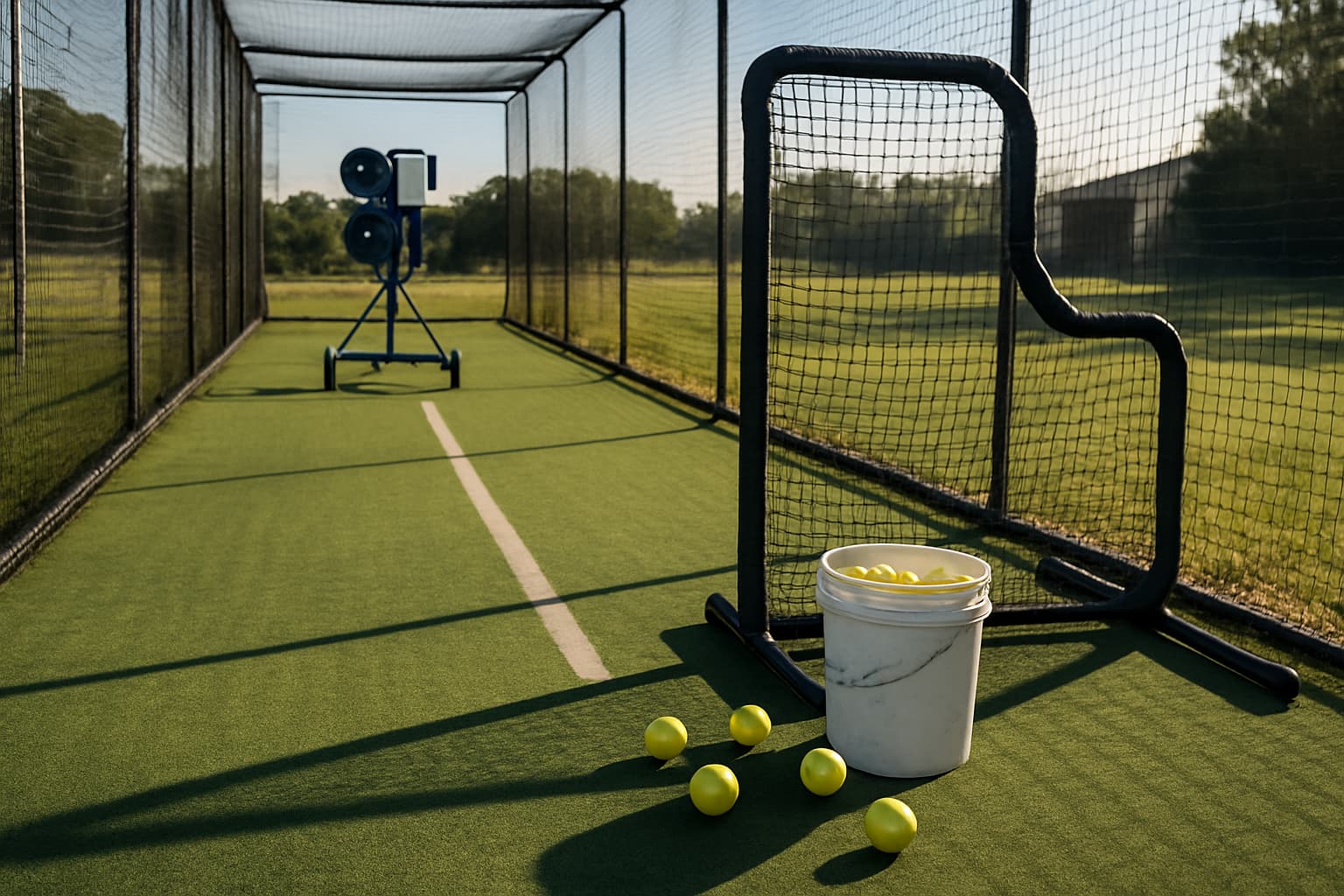
The balls you feed a pitching machine matter as much as the machine itself. The wrong ball wears the machine, throws inconsistently, gets chewed up fast — and, in the cold, can crack an expensive bat. This is the full breakdown: which ball to use for your situation, and why.
Which Ball for Your Situation
Start here. Find the row that matches how and where you hit, then read the sections below for the details.
| Your situation | Use this ball | Why |
|---|---|---|
| Standard cage, high-volume reps | Dimpled machine balls | Seamless surface grips the wheels the same way every pitch and survives thousands of cycles. |
| Composite bat (especially under 60°F) | Foam or Lite-Flight | Hard dimpled balls can crack a cold composite barrel; softer balls protect the bat. |
| Wood or aluminum bat | Dimpled machine balls | No cold-crack risk on these bats — dimpled gives you the truest, most durable feed. |
| Noise-sensitive neighborhood | High-density foam | The sharp crack is what carries; foam is roughly 60% quieter, a dull thud instead. |
| Small space or youth | Lite-Flight | Limited-flight and low sting — safe in a garage, a short net, or with younger hitters. |
| Real game feel | Real leather | Flies and sounds like the game. Use machine-grade leather in a wheeled machine, or any leather in an arm-style machine or front toss. |
Which Ball for Your Machine
The ball has to match the machine, not just the hitter. Feed the wrong one and you burn through wheels, throw inconsistent pitches, or never get the ball to feed at all. Here is what the common machines actually take.
| Machine | Feed it | Why |
|---|---|---|
| MaxBP (Original, Pro Plus) | MaxBP golf-size training balls only | Not a regulation-ball machine. MaxBP throws 42 mm golf-ball-sized wiffle balls to train hand-eye coordination. |
| JUGS BP3 (3-wheel) | Dimpled, Lite-Flite, or machine-grade leather | JUGS builds the Pearl leather ball with reinforced seams specifically so leather survives a wheeled machine. Standard game balls still shred. |
| Hack Attack / Junior Hack Attack | Regulation leather, dimpled, wiffle, softer practice balls | Sports Attack supports real leather here. Avoid synthetic leather, which wears fast and leaves residue on the wheels. |
| Heater Sports | Match the ball to your model | Heater sells Lite balls for its Lite-ball machines and leather machine balls for its Real Baseball machines. They are not interchangeable, so check which model you own. |
| SKLZ Catapult (soft toss) | Regulation baseballs or 9-inch plastic balls | Soft toss, not a wheeled machine, so there is no wheel wear to manage. Plastic balls are the pop-fly option. |
No Machine? Start Here
You do not need a pitching machine to get quality reps, and the ball rules get simpler without one, because there are no wheels to protect.
- Tee work: anything goes. Leather, dimpled, or foam. The ball is not moving, so durability is the only question. Dimpled lasts longest outdoors.
- Front toss and hand soft toss: real leather for game feel, or foam if you are indoors, close to the house, or working with younger hitters.
- A soft-toss machine sits between the two. Regulation balls work and there is no wheel to wear out. See the soft toss machine guide if you are deciding whether one earns its space.
Still choosing a machine? Start with the pitching machine buyer’s guide, then come back here and match the ball to whatever you land on.
Dimpled Machine Balls
The seamless, dimpled polyurethane ball is the workhorse for most wheeled machines. The smooth, uniform surface grips the wheels consistently for repeatable speed and location, and it holds up to thousands of cycles. JUGS Sting-Free dimpled machine balls are the common standard for baseball cages.
- Best for: wheeled machines, high-volume cage work, wood and aluminum bats.
- Why: consistency and durability; won’t shred like leather against the wheels.
- Watch out: dimpled balls are dense and hard. That’s a problem for composite bats in the cold — see Bat Safety below.
Real Leather Baseballs
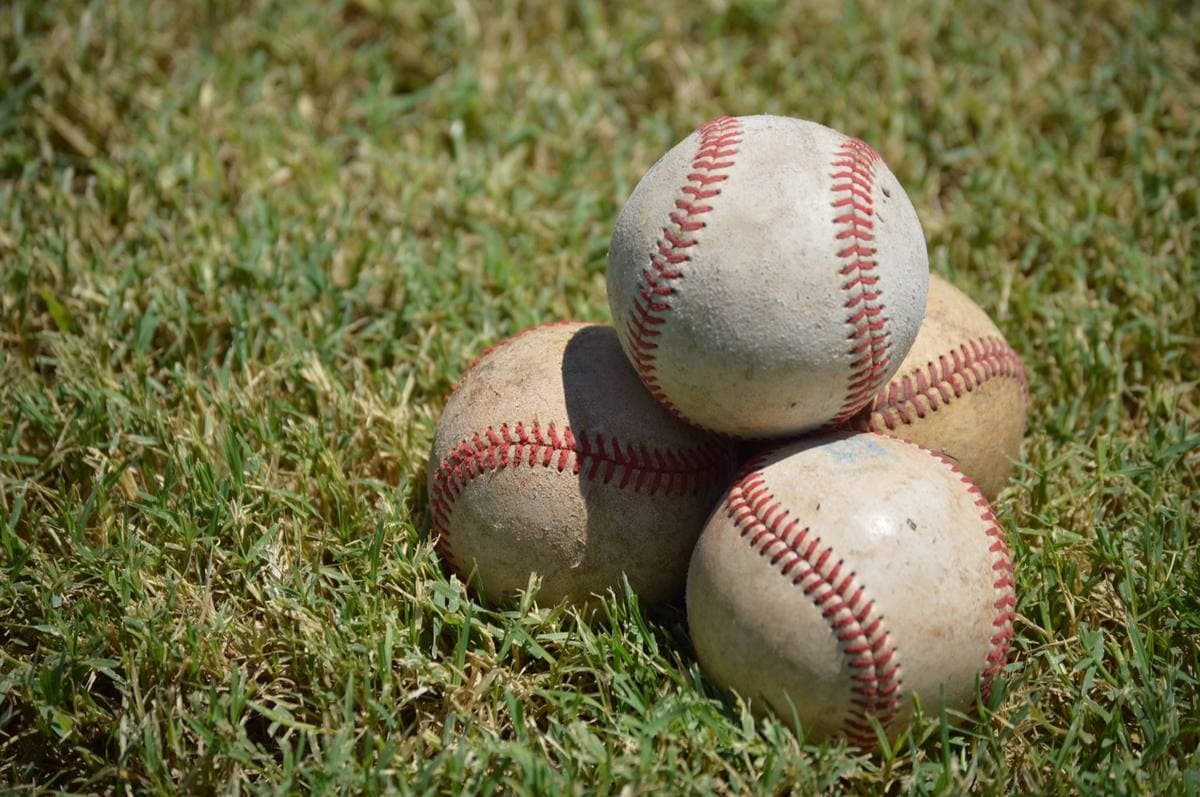
Real balls feel and fly like the game, which is great for realism — but seams and leather wear quickly in wheeled machines and can throw inconsistently as they scuff. They’re best in arm-style machines, which are gentle on them. A dozen Rawlings leather practice baseballs covers most arm-machine and front-toss work.
Lite-Flight and Foam Balls
Lightweight Lite-Flight and foam balls are built for tight spaces, younger hitters, and indoor work where a full-speed real ball isn’t safe or practical. They reduce velocity and sting while still letting hitters work on timing and contact. JUGS Lite-Flite balls are the classic limited-flight option, and dense Taterball high-density foam balls keep a surprising amount of real-ball pop while staying quiet and bat-safe.
- Best for: youth, small spaces, indoor and garage setups, composite bats, and noise-sensitive yards.
- Why: soft enough to protect bats and hitters, light enough to be safe in a short net.
Bat Safety: Dimpled Balls and Composite Bats
What makes a dimpled ball durable — a dense, hard cover — is exactly what makes it risky for one kind of bat. On wood and aluminum (alloy) bats, dimpled balls are a non-issue; those bats shrug off dimpled reps year-round.
Composite bats are the exception. A composite barrel is a resin-and-carbon-fiber weave that turns brittle in the cold. Below roughly 60°F, hitting hard dimpled balls again and again can crack or “spider” the barrel — and most composite bat warranties specifically exclude both cold-weather use and dimpled cage balls. That’s an expensive bat retired early over the wrong ball on a cold day.
- Cold day or composite bat? Feed foam or Lite-Flight, or switch to real leather.
- Save the dimpled balls for wood, aluminum, and warm sessions.
- Let a composite bat warm up indoors before the first swing.
Keeping the Peace: Noise and Foam Balls
The loud part of cage work usually isn’t the machine — it’s the crack of a bat on a hard ball, and that sharp report is what travels to the neighbors. High-density foam balls trade that crack for a dull thud, roughly 60% quieter, while still giving hitters real pop and true flight off a machine.
For a backyard cage near property lines, that’s often the difference between a setup you can use after dinner and one that generates complaints. Foam is also the friendliest choice for early mornings, indoor garages, and shared walls. If noise is your constraint, high-density foam balls are the neighborhood answer.
Machine Wear: Protect Your Wheels
Two habits protect a wheeled machine more than anything else.
Respect the seams. A standard game baseball’s raised seams act like a saw against spinning wheels. Run a dozen through and you will groove the wheels and shred the balls. That is exactly why machine-grade leather exists: balls like the JUGS Pearl use low-profile, reinforced seams built to survive wheel contact. So the rule is not “no leather in wheeled machines.” It is no game balls in wheeled machines. Save those for the field and feed the machine dimpled or machine leather.
Never mix ball types in the same hopper. A wheeled machine is calibrated to one ball’s weight, diameter, and surface. Mix dimpled, foam, leather, and Lite-Flight together and every pitch grips differently — speed and location wander, and the wheels wear unevenly. Pick one ball for the session and stick with it.
Grab-and-Go Kits
If you’d rather not overthink it, pick the kit that matches your setup. Build any of these from the balls in the CageList gear store.
- Standard-Cage Kit: a few dozen dimpled machine balls and a wheeled machine. The default for high-volume baseball reps on wood or aluminum bats.
- Quiet-Neighborhood Kit: high-density foam balls. About 60% quieter, backyard-friendly, still real pop off the bat.
- Composite-Bat / Cold-Weather Kit: foam or Lite-Flite balls, so a cold composite barrel survives the winter.
- Small-Space / Youth Kit: JUGS Lite-Flite with the bucket. Limited flight, low sting, garage-safe.
- Real-Game-Feel Kit: real leather baseballs in an arm-style machine. Truest feel, and easy on the wheels.
How Many Do You Need?
Buy enough to fill the hopper and keep a session moving — a dozen or two for casual use, several dozen for facility-style volume so you’re not constantly collecting between rounds.
Playing Softball?
Everything above is written for baseball. The logic carries over: dimpled for high-volume wheeled work, leather for game feel, foam and limited-flight for tight spaces and younger hitters. But the ball is a different size. A baseball is 9 inches around; softballs are 11 or 12 inches depending on the level, so the two are never interchangeable in the same machine. The three-wheel machines are sold as dedicated baseball or softball models rather than switching between them, so buy the one that matches your player. If you are shopping machines, start with the softball pitching machine guide.
The Bottom Line
Dimpled balls for wheeled machines on wood or aluminum bats, real leather for arm machines, and foam or Lite-Flight for youth, tight spaces, composite bats, and quiet yards. Match the ball to the machine, the bat, and the neighborhood, and everything — balls, wheels, and bats — lasts longer. Browse machine balls in the CageList gear store →
Keep exploring on CageList
- Compare batting cage quality tiers
- Learn how to hit off a pitching machine
- Try batting cage drills
- Find a cage to test your setup
How to choose equipment that actually helps hitters
Good batting cage equipment should make reps safer, more repeatable, and easier to organize. The trap is buying the flashiest item before solving the basics: a safe hitting lane, dependable balls, protective screens, a tee, enough space, and a setup that matches baseball or softball distances. Equipment should support the hitter’s practice plan, not distract from it.
For families, durability and ease of setup matter. For teams and facilities, consistency matters more: gear needs to survive frequent use, move quickly between groups, and reduce downtime. For CageList hosts, equipment also affects guest confidence. If a listing clearly explains what is included, players can show up prepared and book the right session length.
CageList equipment lens
Before buying, ask whether the item improves swing volume, safety, feedback, or convenience. If it does not clearly improve one of those, it may be a nice-to-have rather than a priority. The best equipment choices also photograph well and make a listing easier to understand.
FAQ
Should beginners buy advanced training gear?
Usually not first. Beginners benefit most from a tee, safe balls, a clear routine, and enough cage time to repeat good movements.
How do I know if equipment is worth it?
Rent or visit cages with similar equipment when possible, then buy the items that actually change the quality of practice.
Find a CageList cage where you can test equipment and get more reps.
Before you buy
If possible, try similar equipment in a real cage before purchasing. A product that sounds useful online may feel unnecessary once the hitter gets moving, while a simple item like a better tee, safer screen, or more durable ball can improve every session. CageList helps players see what good setups include before they spend.
Build a better cage setup with the right equipment
Compare cage upgrades with practical advice for nets, turf, pitching machines, balls, and safety gear.
Related Guides
View all articles
Batting Cage Equipment
SKLZ Pitching Machine Review: Worth It at $80?
The SKLZ Pitching Machine is one of the cheapest real auto-feed machines on the market. Here is an honest look at what $80 gets you, the rest of the SKLZ lineup, and how it compares to Heater Sports Crusher and Personal Pitcher Pro.
Batting Cage Equipment
Heater Sports Pro Pitching Machine Review: The Best First Machine?
The Heater Sports Pro is one of the most common first pitching machines. Here is what its ~$500 price actually gets you, and how it compares to Louisville Slugger's Blue Flame and the Zooka ZS740.
Batting Cage Equipment
JUGS BP3 Review: The Pitching Machine That Actually Earned Us a Sale
The JUGS BP3 is the first pitching machine that earned CageList a real, confirmed commission. Here is what makes it different — Grip-Tite tires, automatic changeup switching, one-dial pitch selection — and how it compares to Hack Attack.
Run a travel team? Get your free page.
Baseball or softball. Claim a free directory page, post tryouts, and share cagelist.com/@yourteam with families.
Find your league
Free directories of real leagues and clubs near you — then book a batting cage to get your reps in before opening day.
1,000 organizations
Join the backyard batting cage community
Talk builds, gear, hosting and player development with cage owners, coaches, parents and baseball families.