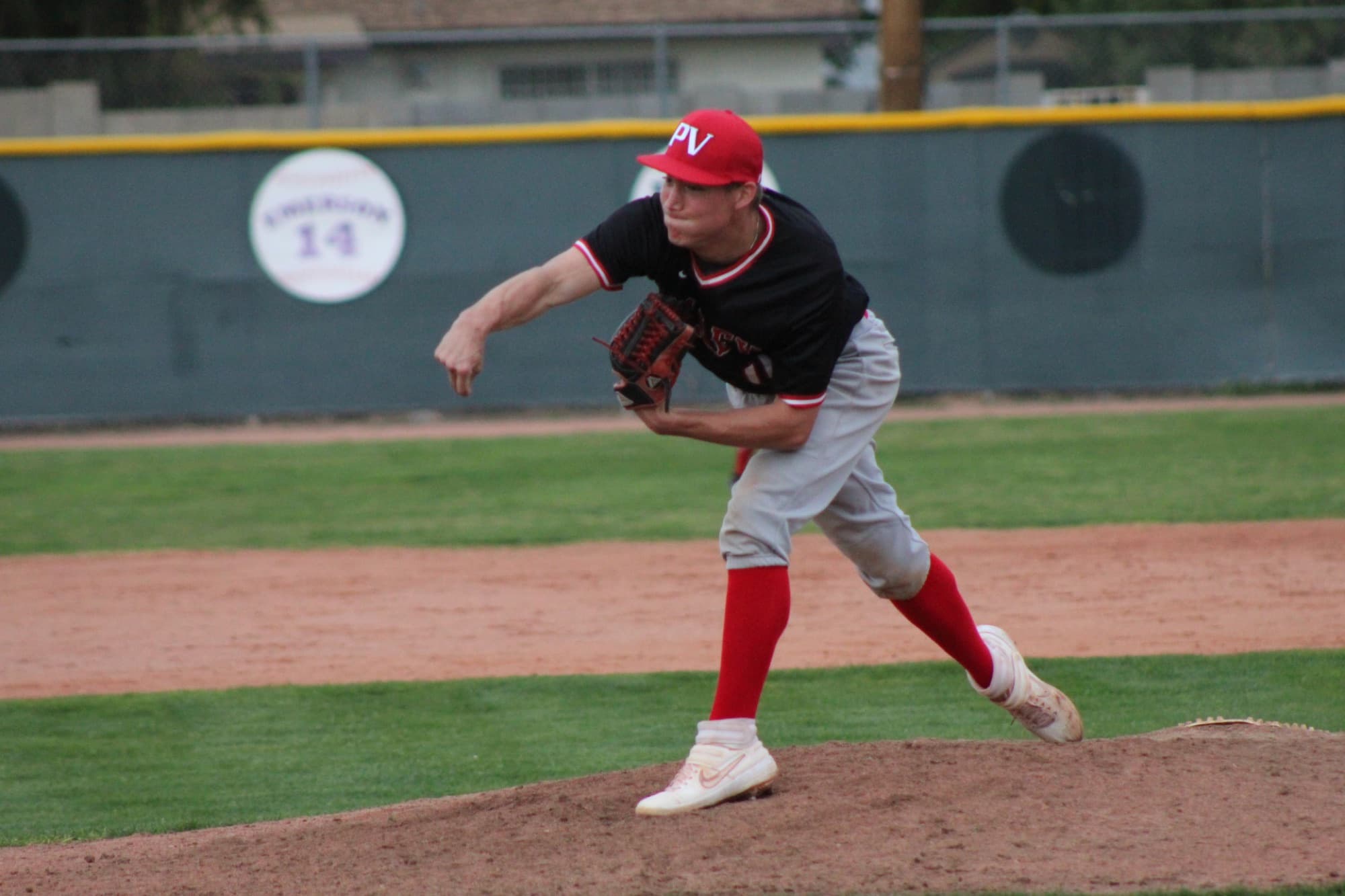
Your son is in ninth grade and plays well. Someone at the field says "the recruiting window opens junior year," someone else says college coaches already have his name. Nobody hands parents a calendar, and nobody explains that "college baseball" is four or five different associations with different rules. This guide lays out the path grade by grade, explains the levels, and gives you questions to ask coaches. Each section links the source it relies on, and rules were current as of 2026-10-19.
The levels: who plays where
College baseball is not one league. Here is what each association says about itself, as of 2026-10-19.
NCAA Division I
The NCAA's Division I page calls it the highest level of NCAA competition and lists more than 360 member schools. Division I offers athletic scholarships, including full rides.
NCAA Division II
The Division II page lists more than 290 member schools. It says athletics scholarships are partial and are combined with academic or need-based aid to build a student's funding plan. For most families, that means a Division II offer is one piece of a package, not a bill paid in full.
NCAA Division III
The Division III page calls it the NCAA's largest division, with more than 420 member schools. The NCAA's page does not describe how aid works there, so ask each Division III coach and the financial aid office what a real package looks like for your son.
NAIA
The NAIA describes itself as serving small colleges and universities, with 250 institutions and 20 conferences. Every athlete has to register with its eligibility center, PlayNAIA, which also cites about $1.3 billion in scholarships across NAIA schools.
NJCAA
The NJCAA is the National Junior College Athletic Association, the association for junior colleges. NJCAA rules and aid vary by school and sport, so ask each program directly. If a junior college is on your list, get the current rules from the school's athletic department in writing.
One thing is easy to miss: the levels are not a ladder you climb in order. A strong Division III or NAIA program can be a better fit than a Division I bench spot, and a two-year school can be a real route to a four-year one. If your son is leaving a program later, our guide to the college baseball transfer portal covers what happens next.
What the Division I calendar actually looks like
The NCAA publishes a recruiting calendar for each sport. The 2026-27 Division I baseball calendar (updated July 30, 2026) lists these windows:
- Contact periods: August 1 to 16, 2026, September 11 to October 11, 2026, and March 1 to July 31, 2027.
- Quiet periods: August 17 to September 10, 2026, and October 12, 2026 to February 28, 2027.
- Dead periods: November 9 to 12, 2026, January 7 to 10, 2027, May 31 to June 7, June 19 to 21, and July 3 to 5, 2027.
- Recruiting shutdowns: November 24 to 29 and December 22 to 27, 2026.
The calendar defines a contact period as the time authorized athletics staff may make in-person, off-campus recruiting contacts and evaluations. A dead period bars in-person contacts and evaluations and campus visits. A shutdown bars every form of recruiting, including calls and correspondence. The calendar does not tell you which grade a given window applies to. Treat any "coaches can call you starting on this date" claim you hear as unconfirmed until a coach or a school compliance office says it in writing.
Calendars for Division II, Division III, NAIA and NJCAA baseball differ, so ask each program for its dates.
Grade by grade
These steps are judgment from a coaching view, not NCAA rules. The rules are the ones sourced above.
Freshman year: build the base
Focus on grades and getting stronger. Pick up a position and play real innings. The NCAA Eligibility Center says students can register at any age and suggests a Profile Page as early as sixth grade and a certification account in eighth grade. You do not have to rush, but know the account exists. Division I and II recruits generally need the certification account.
Sophomore year: get seen and get organized
Start tracking core courses. The Eligibility Center's high school resources page lists the categories: English, mathematics, natural or physical science, social science, and world language, comparative religion or philosophy. Ask your counselor now which of your son's classes count. Start a simple video folder: one game, one batting practice round, one bullpen or fielding session.
Junior year: the main window
This is when most families start hearing from programs. Build a short list of schools across several levels, not just the ones you know from TV. Send a short email to coaches with a position, grad year, grades, a video link and a schedule. The NCAA notes that many school athletics sites have an interest questionnaire. Before a Division I school can invite a student on an official visit, offer him athletics aid or let him compete as a freshman, the student must pick a certification account and finish registration. Do that before it becomes the thing holding up a visit. A free recruiting page your travel team shares can do some of the work, see our note on a free recruiting page for your travel team.
Senior year: decide
Compare offers on the whole package: playing time, aid, academics, distance from home. Visit at least two campuses. Ask for terms in writing. The NCAA's recruiting page notes that signing dates vary by sport, and that four-year transfers are not subject to NCAA signing dates but must be in the NCAA Transfer Portal to sign.
Questions to ask college coaches
- Where would you see my son fitting in your roster, and how many players at his position are you recruiting this class?
- What does the aid package look like at your level, and how much of it is athletic versus academic or need-based?
- Is aid guaranteed for four years or reviewed each year?
- What do you want to see from him this spring and summer?
- What does a normal week look like in season and out of season?
- What is the graduation rate for your players, and what do they study?
- If things do not work out, what happens to his spot and his aid?
Take notes on every answer. Coaches change jobs, and promises that were never written down go with them.
Where travel ball fits
Many families assume a travel team is the recruiting plan. It is a piece of it. Our travel baseball sanctioning guide explains how organizations differ, which helps you judge what events your son will actually be seen at. Pick events with a reason, not a logo.
Why CageList exists
Families cannot see the path. A coach who has done this a dozen times knows which window matters and which email gets read. A parent on a first kid learns it from a group chat. CageList is built to make that path visible: directories for teams, academies and fields, and tools for coaches to run their programs. If you coach and want your players found, look at CageList for coaches. If you are a parent working through this now, start with our college baseball recruiting help page.
Frequently asked questions
When can Division I baseball coaches contact my son?
The NCAA's 2026-27 Division I baseball calendar lists contact periods, quiet periods, dead periods and shutdowns, but it does not state the grade a prospect must reach. Check with the coach or the school's compliance office and get the answer in writing.
Do I need to register with the NCAA Eligibility Center?
The NCAA Eligibility Center says students may register at any age, and Division I and II both require a certification account. Division III does not require academic certification; domestic students there use a Profile Page.
Does Division III baseball give athletic scholarships?
The NCAA Division III page does not say. Ask each program what aid is available and have the financial aid office confirm it.
What is the NAIA?
It is an association of small colleges and universities, listed at 250 institutions and 20 conferences. Athletes register with the NAIA Eligibility Center, PlayNAIA.
Is junior college a real option?
The NJCAA is the National Junior College Athletic Association. Rules and aid vary, so get current details from the school before you decide.
Turn the talk into reps
Every one of these comes back to the same thing: getting on the field and putting in the work. Find cage time near you and go do it.
Related Guides
View all articles
Everybody Thinks the Umpire Is Bad
Without umpires, baseball does not exist. Isaac Hess on the one season he wore the mask, what the job pays, what a day looks like and what we say to the people in the gear.
8 min readRead
College Baseball Transfer Portal: What Parents Should Know
Your 17-year-old is not just competing against other 17-year-olds anymore. A former pro pitcher breaks down the transfer portal, the 34-man roster, NIL and JUCO, and what serious families should do about it.
16 min readReadWhat Nobody Tells You Before Your Kid's First Travel Season
You are not crazy, you're uninformed, and those are different problems. A former pro pitcher and 20-year private coach explains how a travel baseball program actually works from the inside, so you can set expectations before the season instead of after.
10 min readRead
Run a travel team? Get your free page.
Baseball or softball. Claim a free directory page, post tryouts, and share cagelist.com/@yourteam with families.
Find your league
Free directories of real leagues and clubs near you. Then book a batting cage to get your reps in before opening day.
1,417 organizations
 leagues in 49 statesAdult hardball near you: MSBL, NABA and independent leagues.Browse men's leagues
 leagues in 49 statesYouth baseball and softball leagues, organized by state.Browse little leagues
 programs in 41 statesTravel and club programs in your region. Find one, or list yours free.Browse travel teams
Join the backyard batting cage community
Talk builds, gear, hosting and player development with cage owners, coaches, parents and baseball families.