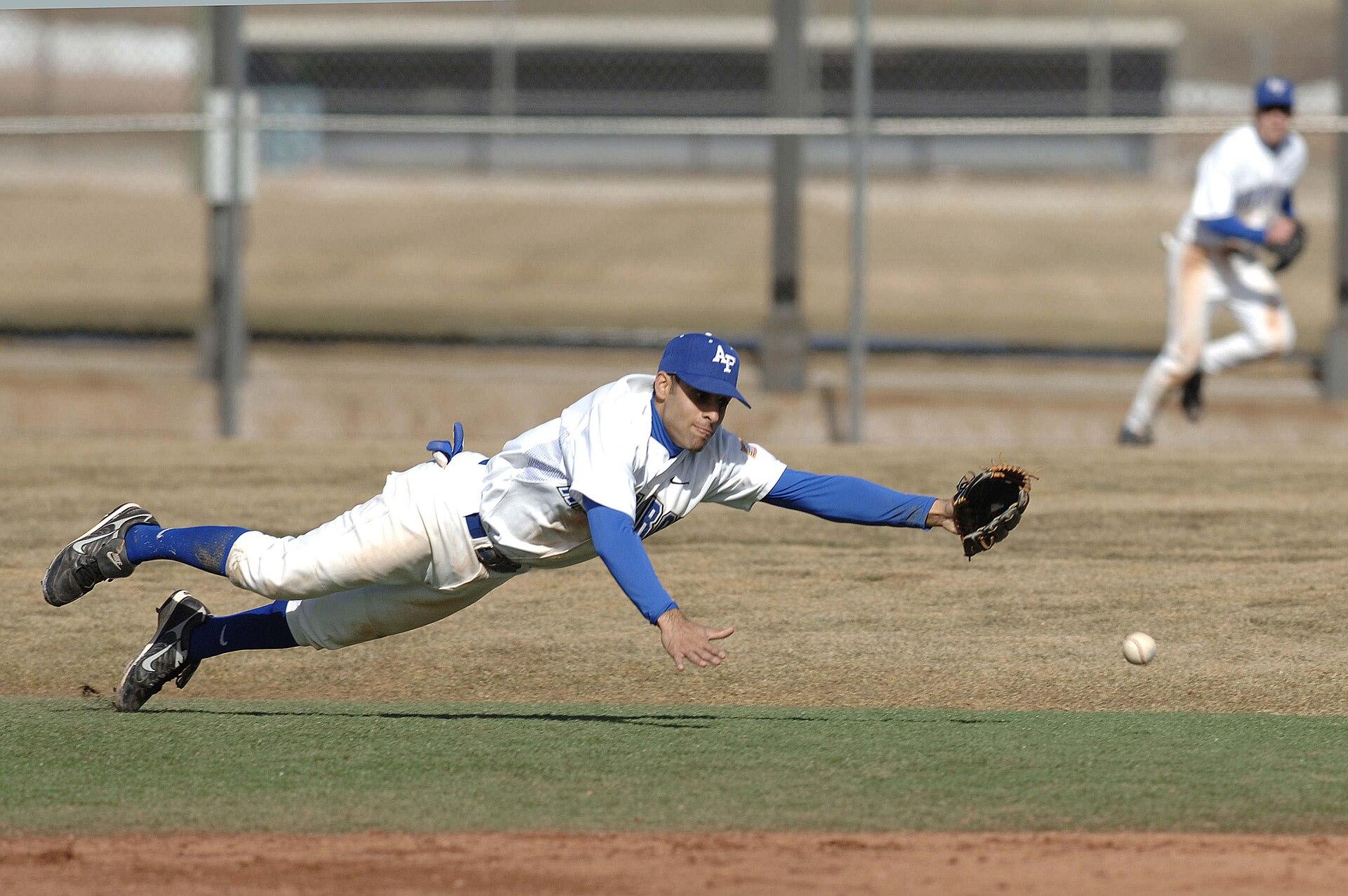
Your son comes home and says a coach from a school you have only half heard of is interested. You type "is [school] D1 baseball" into a search bar and get a mix of rankings, message boards and out-of-date lists. The good news is that the answer is a two-minute lookup on an official site, and once you know the five levels of college baseball, most schools sort themselves quickly. This is how to do it, and what each level means for roster spots and scholarship money.
The five levels at a glance
College baseball is not one league. It is five groups, run by four organizations, and the rules differ in ways that matter to a family.
- NCAA Division I: the top NCAA level. The NCAA says Division I athletes can receive athletics scholarships up to and including full rides.
- NCAA Division II: a partial-scholarship model. The NCAA says Division II offers partial athletics scholarships, which combine with academic or need-based aid.
- NCAA Division III: no athletics scholarships at all. Players can still get academic or need-based aid.
- NAIA (National Association of Intercollegiate Athletics): a separate association of about 250 institutions, with its own rules.
- Junior college: two-year schools. Most junior colleges play under the NJCAA, which has its own Division I, II and III. California community colleges play under a separate body, the California Community College Athletic Association (CCCAA, now styled 3C2A).
The word "division" means something different in each of these. NJCAA Division I is not the same thing as NCAA Division I, and a school that says it plays "Division I" without naming the association could mean either. Always ask which association.
How to look up any school yourself
Do not trust a recruiting list, a forum post or a search snippet for this. Go to the source.
- Start with the school's own athletics site. Find the baseball page. The conference name (for example the Mid-American Conference or the Patriot League) and the association are usually in the header, the footer or the "about" page.
- Confirm with the association. The NCAA publishes a member directory with a search tool for its schools. The NAIA lists its member schools at naia.org, and the NJCAA explains its divisions, and links its member directory, at njcaa.org.
- Check the sport, not just the school. A school can be Division I in some sports and a different level in others, and some schools sponsor baseball at a different level than their football team. The baseball page is the one that counts.
- Watch for recent moves. Schools do change divisions and conferences. A list from three years ago may be wrong, so use a page that is current.
That is the whole method, and it takes about two minutes. To show how it works, here are three examples. Three schools parents search for most are Ball State (Mid-American Conference), Wofford (Southern Conference) and Holy Cross (Patriot League). Each conference's own baseball page lists the school as a baseball member, and you can confirm the division in the NCAA member directory: Mid-American Conference, Southern Conference and Patriot League. Check the current year before relying on it, because schools do move.
What changes from level to level
Scholarships
The NCAA says Division III schools do not offer athletics scholarships. Division II offers partial awards. Division I allows scholarships up to and including full rides, though the NCAA notes that most athletics scholarships are partial, so families often stack athletics money with academic awards and need-based aid. For NCAA Divisions I and II combined, the NCAA says schools give more than $4.3 billion in athletics scholarships a year to over 208,000 athletes.
The NAIA caps a baseball team at 12 full grant equivalencies, and the school can split that across any number of players. That means a team can give a lot of players a small piece rather than a few players a full ride.
At the junior college level, the NJCAA's divisional structure page says Division I schools can give full athletic scholarships, Division II schools can cover tuition, books and fees, and Division III schools cannot give athletic scholarships. For California community colleges, ask each college what aid exists, because we did not find a primary source we could cite for the rules.
Roster size and the 2025 rule change
This is the area that has changed most recently. Under the House v. NCAA settlement, the NCAA's Division I rules no longer include sport-specific scholarship limits for schools that opt in. In their place, those schools follow roster limits, as the NCAA announced in June 2025. In the NCAA's legislative database, the baseball limit is 34 players, effective July 1, 2025.
Two cautions. First, the roster limit applies to schools that are in a defendant conference or chose to opt in, so a Division I school that did not opt in follows different rules. Second, this is a fast-moving area, and the NCAA has been amending its bylaws since the settlement. We checked the NCAA's database in November 2026. Before you make a decision around a specific number, ask the coach what that school's roster limit and scholarship plan are this year, and look at the current NCAA page.
What this means for a parent in plain words: the number of players a Division I program may carry is now a headline number, while how much of each player's cost the school pays is a decision made school by school. Ask for it in writing.
Recruiting
Recruiting calendars, contact rules and visit rules are set by the NCAA for its divisions, and the NAIA and NJCAA have their own. Our high school to college baseball recruiting timeline walks through the grades and the steps, and our college baseball recruiting help page covers where to start. A player who is a fit for Division II, NAIA or junior college is not a consolation prize. Each level has real players on real rosters, and fit matters more than the label. A player already on a college roster who is thinking about moving should read our college baseball transfer portal guide.
A few mistakes we see families make
- Assuming "D1" means a full ride. Division I allows full scholarships, but the NCAA says most athletics scholarships are partial. Ask what the number is.
- Mixing up the associations. NJCAA Division I and NCAA Division I are different things.
- Treating a travel ball logo as a rank. Your travel organization's sanctioning does not decide a college level. If you are sorting out the travel side, see our travel baseball sanctioning guide.
- Waiting for a coach to explain it. Coaches usually assume a family already knows the levels. Looking it up first lets you ask better questions.
Why CageList exists
Almost nobody explains this path to a family, and that is one of the reasons CageList exists. A parent can see a school's logo on a recruiting email, but not where it sits, what it pays or what the player's real options are. The path from a backyard cage to a college roster is real and has stages, but it is scattered across the NCAA, the NAIA, the NJCAA, travel organizations and individual coaches. If your kid is still building skills, the right next step is often a good coach. You can browse them on our coaches page.
Frequently asked questions
How do I find out if a school is D1 for baseball?
Check the school's athletics site for the baseball team's association and conference, then confirm in the NCAA member directory. Check the sport specifically, since a school's level can differ by sport.
Do Division III baseball players get athletic scholarships?
No. The NCAA says Division III schools do not offer athletics scholarships. Players can still receive academic scholarships, grants and need-based aid.
How many players can a Division I baseball team have now?
Under the House settlement rules, the NCAA's database lists a baseball roster limit of 34, effective July 1, 2025, for schools in a defendant conference or that opted in. Confirm the current number with the school, because the rules are still being adjusted.
Is junior college a good path to a four-year school?
Junior college baseball is run by the NJCAA, or by the CCCAA in California, and it is a legitimate route some players take before moving to a four-year school. In California the association is the CCCAA, now styled 3C2A.
Is NJCAA Division I the same as NCAA Division I?
No. They are separate associations with separate rules. Always check which association a school is talking about.
Turn the talk into reps
Every one of these comes back to the same thing: getting on the field and putting in the work. Find cage time near you and go do it.
Related Guides
View all articles
High School to College Baseball Recruiting Timeline
A grade-by-grade recruiting timeline for baseball parents, plus what NCAA D1, D2, D3, NAIA and NJCAA each mean and the questions to ask coaches.
7 min readRead
Junior College to MLB: What Two Cy Young Winners Show
Both 2026 Cy Young winners were unanimous and neither was a first-round pick. One came from a junior college, one from a mid-major. What families can take from that.
5 min readRead
Independent Pro Baseball: A Parent's Guide
What the independent leagues are, what MLB Partner League means, how players get in, and what a parent of a high schooler or college player should realistically know. Checked against league sources November 2, 2026.
7 min readRead
Run a travel team? Get your free page.
Baseball or softball. Claim a free directory page, post tryouts, and share cagelist.com/@yourteam with families.
Find your league
Free directories of real leagues and clubs near you. Then book a batting cage to get your reps in before opening day.
1,893 organizations
 leagues in 49 statesAdult hardball near you: MSBL, NABA and independent leagues.Browse men's leagues
 leagues in 49 statesYouth baseball and softball leagues, organized by state.Browse little leagues
 programs in 41 statesTravel and club programs in your region. Find one, or list yours free.Browse travel teams
Join the backyard batting cage community
Talk builds, gear, hosting and player development with cage owners, coaches, parents and baseball families.