As of October 2026, college baseball recruiting has changed. Rosters are capped at schools covered by the House settlement, and players who meet academic rules can move between schools and play right away. If your son is 14 to 18 and hopes to play in college, this is what changed, what it does to the math, and what is worth your time and money. Rules in this area move fast, so we date each one and link the source.
What changed, in plain terms
Transfers are easier and faster
On April 17, 2024 the NCAA Division I Council unanimously voted to let transfers be immediately eligible at their new school, whether or not they had transferred before, as long as they meet academic requirements. The Council's vote still needed approval, and the Division I Board of Directors ratified it on April 22, 2024. The Council announcement says an undergraduate must leave in good academic standing and meet progress-toward-degree rules at the new school.
Undergraduates still have to enter the portal inside a set window. For baseball in 2026, the NCAA's schedule lists a Division I window of June 1 to June 30, 2026. Baseball America's portal tracker described the portal as open to all players until July 1, so the edges of the window can look different depending on the source. Confirm current dates with a school's compliance office.
The House settlement replaced scholarship limits with roster limits
For years, Division I baseball schools could split a maximum of 11.7 scholarships among up to 32 players, according to KSL Sports. Starting July 1, 2025, new Division I rules carried out the House settlement. Per the NCAA, Division I rules no longer include sport-specific scholarship limits, and schools that opt in can offer scholarships to any athletes covered by the roster limits. The NCAA's rulebook database lists the baseball roster limit as 34 for schools in a defendant conference or schools that opt in to the settlement.
Two details parents miss. First, 34 is a ceiling on the whole roster, not only the scholarship players, and it applies only to schools in a defendant conference or that opt in to the settlement. Second, the NCAA says an athlete who loses a roster spot for roster management, performance or injury keeps the scholarship; it "cannot be revoked unless and until the student chooses to transfer." That protection is written for current athletes. The NCAA page does not say what a particular school will do when a player enters the portal, so ask about it directly and get the answer in writing.
Money is now part of the roster conversation
After the judge approved the settlement on June 6, 2025, Fox Sports reported that each school could share up to $20.5 million with athletes over the next year. That figure is not a baseball number, and we are not going to give you an average for baseball. Ask where any dollar figure came from before you plan around it.
The MLB draft is 20 rounds
MLB's own glossary says that under the 2022 to 2026 labor agreement the draft ends after 20 rounds. It also lists who is eligible: high school graduates who have not attended college, players who have completed at least one year of junior college, and four-year college players after their junior year or when they turn 21. That agreement covers the 2026 draft, so the format could change in the next one. We will not guess how. Check MLB's draft page before you plan around it.
What this means for the roster math a high school player faces
We are not going to invent a percentage here, because no one publishes a clean number for how many spots go to freshmen. The logic is simple, though. A coach with 34 spots must fill them with returning players, transfers and incoming freshmen. A transfer already has college at-bats or innings and film against college pitching. A freshman is more of a projection.
That does not close the door on high school players. It raises the standard. One way in for a freshman is to be ready to help now, or to bring a skill that is hard to replace: a big arm, real speed, a bat that clearly plays. Those come from development more than from another recruiting event.
Development by age: a rough timeline
Every kid grows on his own schedule, so treat these as ranges, not rules.
- 12 to 14: movement, throwing mechanics that will not wear out an arm, a simple repeatable swing, other sports, and learning how to practice on purpose.
- 14 to 16: strength and speed under qualified supervision, high-quality reps, arm care for pitchers, and understanding counts and approach. Hitters can start with our guide to reading a pitcher.
- 16 to 18: exposure starts to make sense now that there is a finished product to show. Pick events with purpose, ask coaches honestly where he fits, and keep training through the season.
Across all three stages the habits matter as much as the swing: taking coaching, handling a bad week, working when no one is watching.
It is also worth asking whether the money you spend is buying development or just appearances. Our post on big travel ball walks through that tradeoff, and what travel ball families spend on training puts numbers on it. If this is your first season in competitive baseball, the parent field guide covers the basics.
The junior college path is a real option
Junior college baseball (the NJCAA) used to be treated as a fallback. It can make sense for a player who is not yet ready to win a spot at a four-year school, because it gives him a place to play and keep developing. MLB's rules also make a player draft eligible after completing one year of junior college, which is earlier than a four-year player. Ask the coach about scholarship and eligibility details. And with the looser transfer rules, a player who does well can move up, which is exactly the profile described above.
What families should actually do
- Develop first. Put reps with feedback, strength work and sleep ahead of another weekend of exposure at 14.
- Choose a school he would attend without baseball. With transfers allowed to play right away and roster limits in place, a coach can leave, a roster can change and an injury can happen. The degree and the campus should hold up on their own.
- Think long term. College baseball lasts a few years; the career after it lasts decades. Grades and major are part of the plan.
- Do not treat the portal as a safety net. Baseball America expected several thousand Division I players to enter in 2026, and entering is not a guarantee of a new spot. Ask what happens to aid and playing time before anyone enters.
- Let him lead. By 16 or 17 he should be writing his own emails and talking to coaches. Your job is support and honest feedback.
Why CageList exists: families cannot see the path
Nobody hands you a map from a 14-year-old's swing to a roster spot. If you want a starting point, our college baseball recruiting help page lays out the process.
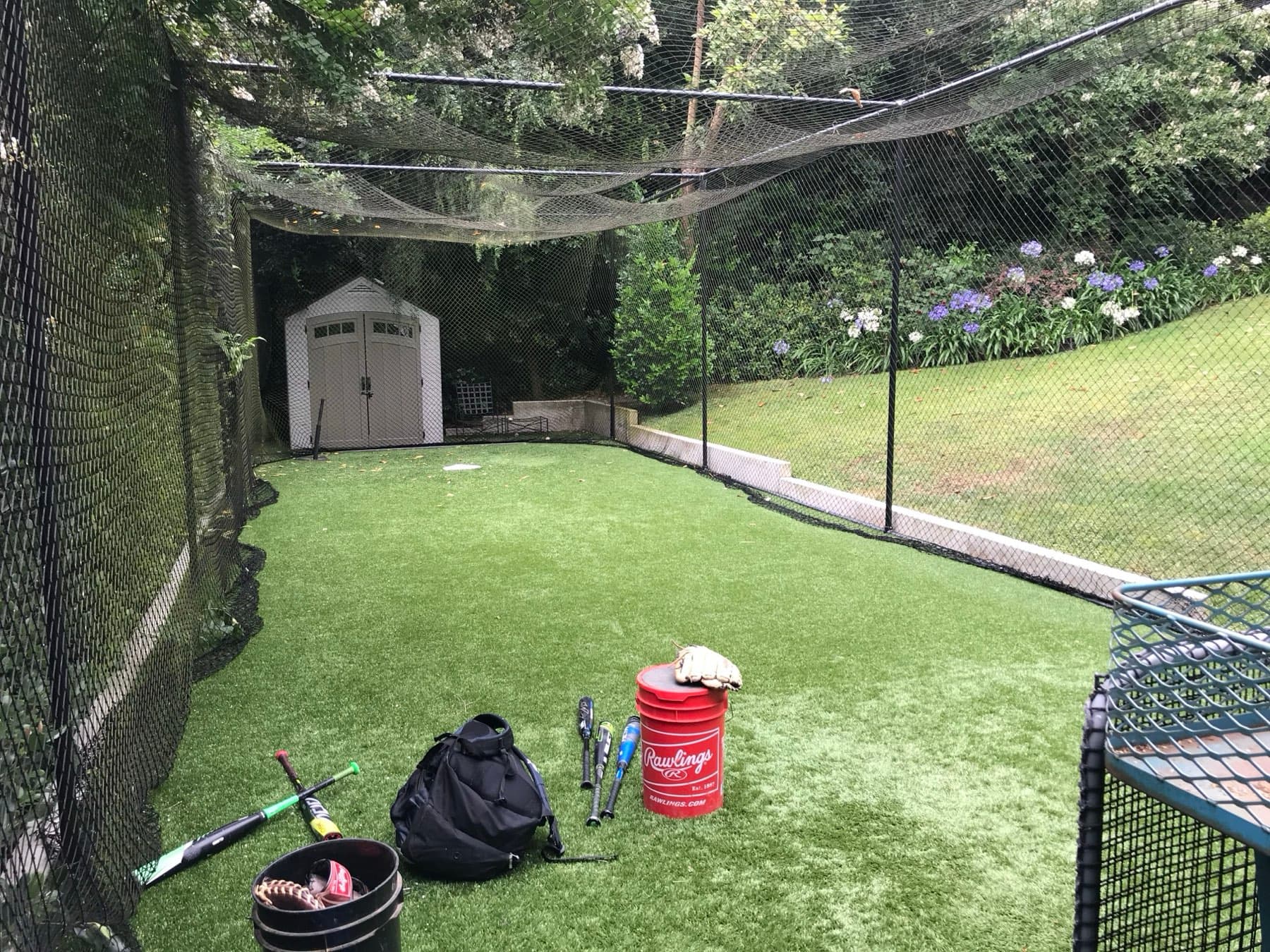
The reps are partly an access problem. School fields can be closed in winter, a team may practice only once a week, and the nearest facility can be booked or far away. That is the gap CageList is built to close: you can find a batting cage near you, including private cages that hosts rent by the hour, and find a coach so the reps come with feedback. It does not replace talent or effort, but it removes one barrier to showing up consistently.
Frequently asked questions
Can a college baseball player transfer more than once?
Since April 2024, when the Division I Council voted and the Board of Directors ratified it, Division I transfers are immediately eligible if they meet academic requirements, whether or not they transferred before. Undergraduates still use the sport's transfer window.
How big is a Division I baseball roster now?
The NCAA rulebook lists a roster limit of 34 for baseball at schools that are in a defendant conference or opt in to the House settlement. Scholarship limits by sport are gone, so a school that opts in can offer aid to any player covered by the limit.
Is junior college a good path?
It can be, for a player who needs time to develop and wants regular playing time. MLB makes a player draft eligible after one year of junior college. The right choice depends on the player, so talk with his coach.
Does the MLB draft still have 20 rounds?
As of October 2026, MLB says the draft ends after 20 rounds under the 2022 to 2026 agreement. That agreement runs through 2026, so check for updates.
What should my 15-year-old focus on?
Reps with feedback, strength work with qualified supervision, and learning the game. Exposure makes more sense once there is a clear player to show.
Turn the talk into reps
Every one of these comes back to the same thing: getting on the field and putting in the work. Find cage time near you and go do it.
Related Guides
View all articles
What Nobody Tells You Before Your Kid's First Travel Season
You are not crazy, you're uninformed, and those are different problems. A former pro pitcher and 20-year private coach explains how a travel baseball program actually works from the inside, so you can set expectations before the season instead of after.
10 min readRead
Big Travel Ball
Daddy ball only became an insult after travel ball became a business. A former pro pitcher and 20-year private coach on how youth baseball got industrialized, what it costs families who don't know the rules yet, and how to choose well anyway.
9 min readRead
MLB Lockout 2026: What It Means for Your Player
The MLB labor deal expires December 1, 2026. Here is what a lockout is, what happened in 2021-22, and what it does and does not change for your kid.
6 min readRead
Run a travel team? Get your free page.
Baseball or softball. Claim a free directory page, post tryouts, and share cagelist.com/@yourteam with families.
Find your league
Free directories of real leagues and clubs near you. Then book a batting cage to get your reps in before opening day.
1,416 organizations
 leagues in 49 statesAdult hardball near you: MSBL, NABA and independent leagues.Browse men's leagues
 leagues in 49 statesYouth baseball and softball leagues, organized by state.Browse little leagues
 programs in 41 statesTravel and club programs in your region. Find one, or list yours free.Browse travel teams
Join the backyard batting cage community
Talk builds, gear, hosting and player development with cage owners, coaches, parents and baseball families.