You are not crazy, you’re uninformed. Those are different problems.
You already know the car ride I'm talking about.
He went 0-for-3. He struck out looking on a pitch that was clearly outside — you saw it, everybody saw it — and then he sat the last two innings while a kid who has been worse all year played third. He's in the back seat with his hat over his face. You are gripping the wheel and running a speech in your head about the coach.
I want to tell you something that will not feel like comfort at first: almost nothing that happened today was about your son.
I don't mean that dismissively. I mean it structurally. There is a whole machine operating around that game that nobody explained to you, and the reason you are furious is not that you're a crazy parent. It's that you're making decisions inside a system whose rules were never written down for you.
So let me write them down. I've been on every side of this except yours — I played this game from nine years old through seven years as a professional, and I spent two decades coaching private lessons, mostly to kids between eight and thirteen. I've been the coach you're mad at. I've also been the guy those parents called at 9pm.
First: you are not crazy, you're uninformed. Those are different problems.
Baseball parents get a reputation for being the worst in youth sports. I don't fully accept that. I think baseball parents are the most emotionally exposed parents in youth sports, and it gets read as crazy.
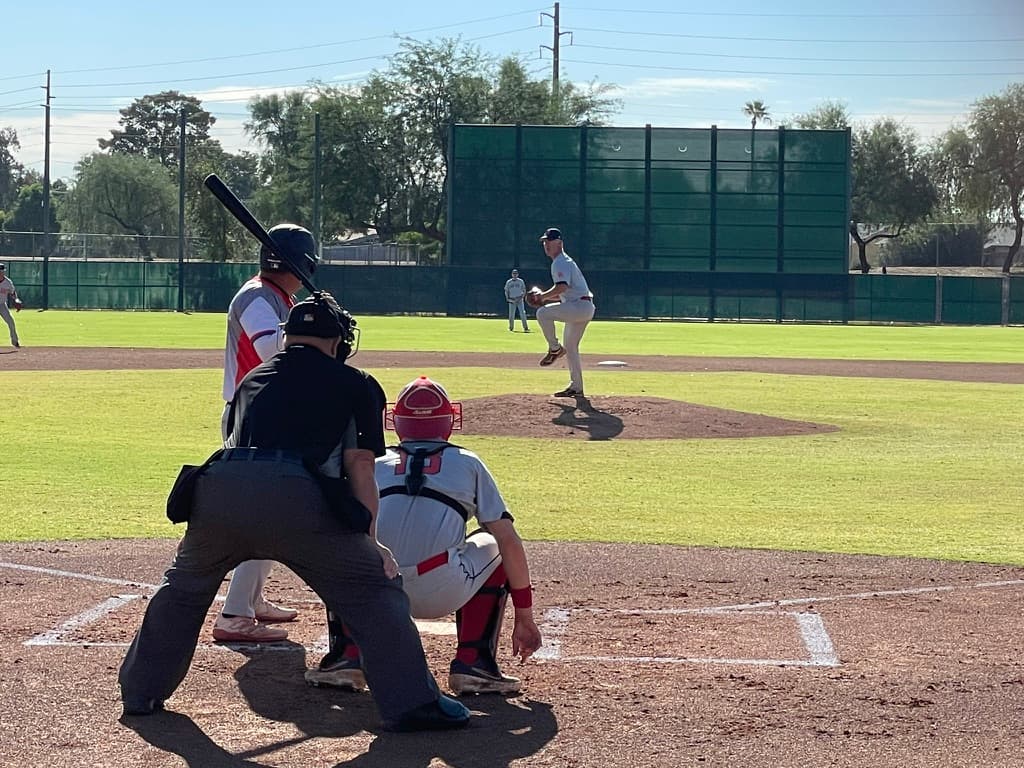
Here's why. In most sports, a bad day is diluted. A kid can have a rough soccer game and touch the ball forty times, and no single moment is isolated. Baseball does the opposite. It puts your child alone in a box, in front of everyone, and makes him fail publicly three or four times in a row. There is nowhere to hide and nothing to blame. You watch your kid's face after strike three and something in your chest genuinely hurts.
That reaction is love, and it's correct. The problem is what happens next. Because you have no framework for interpreting what you just saw, the pain has to attach to something — and the only visible target is the coach, or the lineup, or the other kid's dad.
Almost every "crazy baseball parent" story I know started as a parent who cared enormously and had no information.
How a program actually works, from the other side
Let me show you the coach's week, because it explains most of what confuses you.
Running a travel team is a small business, and a real one. Most coaches get into it for a reason I understand completely, because it was mine: who wouldn't want to coach baseball for a living? Baseball people don't weigh it against being a doctor or a lawyer. They weigh it against the job they already have, they run the numbers, and the numbers work — especially in the right area, with the right age group. When I started my own teams at 13U and 14U, I ran those numbers and got genuinely excited about doing what I love full time. That impulse is not cynical. It's usually the best thing about the person coaching your son.
What actually happens is that the work isn't the coaching. Somebody is collecting fees, paying tournament entries, chasing the two families who haven't paid, ordering uniforms that show up wrong, and answering a group text that never stops. And above all, somebody is trying to find practice space — which is, genuinely, the single hardest recurring problem in running a team, and the reason I ended up building CageList in the first place.
Most teams do not have a staff. One or two assistants is typical, and a coach who really knows what he's doing is often running the whole thing by himself.
Now add this: most coaches are excellent at baseball and were never taught the other half of the job. Nobody sat them down and said the parent relationship is 50% of running a program. They think they were hired to teach hitting. So they teach hitting, and they let everything else — expectations, communication, the reasoning behind decisions — go unspoken.
The tipping point nobody talks about
Here's a dynamic I've watched play out for twenty years, and understanding it will explain a lot of what you're experiencing.
Early on, a program needs you. A new team is recruiting, filling a roster, proving it exists. Coaches are responsive, warm, and available.
Then the program crosses a line. It wins enough, or lasts long enough, or gets a reputation, and suddenly more families want in than there are spots. The power in the relationship flips completely. Now the coach isn't selling — he's selecting. Calls get returned slower. Explanations get shorter. The tone changes, and you feel it, and you can't tell what you did.
You didn't do anything. The program's position changed.
I'm not defending it. A good organization communicates the same way at both stages, and the ones that don't tend to find out the hard way — it's a balancing act, and a reputation that took years to build can start unwinding fast once families begin talking to each other. But you should know the dynamic exists, because if you read a program's growing indifference as a personal judgment of your son, you will make decisions out of hurt that you'd never make out of information.
What's normal, and what's actually a red flag
This is the list I wish someone handed every family in September.
Normal, even when it stings:
- Your kid sits in a bracket game. Tournament baseball is not rec; innings get distributed to win elimination games.
- Your kid moves off shortstop. At 11U almost every good athlete is a shortstop. There are eight other positions and one of them fits him better at fifteen.
- The coach doesn't explain a lineup decision in the moment. He's mid-game, and the answer takes ten minutes.
- Your kid struggles for three weeks. That's baseball. Twelve-year-olds have slumps that look like collapse and end without explanation.
- A better player arrives midseason. Teams add. It's not a message about your son.
Actually a red flag:
- Nobody will tell you how playing time is decided, even when you ask directly and calmly, outside of a game.
- The financial picture is vague. You cannot get a straight answer on what the season costs all in.
- The coach's own kid plays a premium position through a visible, extended slump while a clearly better player sits. One or two games is noise. A season is a pattern.
- You're sold add-ons constantly — extra camps, extra showcases, extra teams — with urgency attached.
- Your son is being used up. Pitch counts ignored, or he throws in three games in a weekend. This is the only item on this list that is a genuine emergency. Leave.
- The coach talks about your eleven-year-old's college prospects with confidence. Nobody knows. Anyone claiming to know is selling.
If you can tell these two lists apart, you have already skipped past most of the pain in youth baseball.
How playing time is actually decided
Not by fairness, and not by talent alone. By a coach's read of five things at once: who gives the team the best chance in this specific game, who has earned it in practice recently, who is a safe defensive bet at that spot, who needs reps for the team's benefit in three months, and — honestly — who he trusts not to fall apart in the moment.
That last one is real and nobody says it out loud. Two kids of equal ability, one of whom visibly unravels after a mistake: the other one plays in the close game. Not as a punishment. Because the coach is trying to win a baseball game.
Which means the highest-leverage thing your son can work on is not his swing. It's how he looks in the ninety seconds after something goes wrong. Coaches are watching that constantly, and it is completely within your kid's control, and almost nobody tells families this.
The one thing you fully control: the car ride home
Every coach I know can identify, within about a month, which kids are getting the drive-home debrief.
They're the ones who stop taking risks. They check the stands after a bad at-bat. They start playing to avoid failing instead of playing to compete, and in a game built on failing seventy percent of the time, that is a slow-acting poison.
The best thing you can say in that car is almost nothing. "I love watching you play." Then let him bring up baseball if he wants to, and if he doesn't, get a burger.
If he does bring it up — if he says I never want to do that again — that's not the moment for a swing lesson either. That's the moment to ask what he wants to do about it. Because that particular sentence, from a kid who means it, is where every single player I've ever coached who actually got somewhere started. It has to come from him. You cannot install it, and every attempt to install it costs you a little of his ownership over the whole thing.
What you need to know — and why you can't just ask
Here is the trap. Everything below is information you genuinely need before you hand someone $2,000 and four months of your family's weekends. And you mostly cannot ask for it.
Walk into a tryout with six pointed questions and you have, fairly or not, marked yourself as a problem parent before your son has taken a swing. Coaches talk. You feel it the moment you start, which is why almost nobody does — and why parents end up inferring everything from tone and vibes instead of facts.
So read this two ways. As a parent: these are the things to infer from what an organization volunteers, how its page reads, and how it answers the one or two questions you do ask. As a coach: this is the list. Publish it. Answer all of it before anyone asks.
- What does the season cost, all in? Roster fee, tournament entries, uniforms, travel, gate fees. The best organizations quote one number for the season and absorb the rest, because nothing erodes trust like a $300 monthly invoice followed by "oh, and this weekend's tournament is another hundred, and it's an hour away." If a club has done that math in advance and shows it to you, that tells you more about how it's run than any pitch could. Here's what a season actually runs.
- Is this team competitive or developmental? Both are legitimate and they are completely different products. "We are trying to win, we want the best team we can put on the field, and that's how we run things" is an honest answer. So is "we will pull a kid at fifty pitches no matter the score, and we will lose games because of it." What ruins seasons is a club that won't say which one it is.
- How is playing time decided? Read this one carefully, because I'm going to disagree with the advice you usually get. A good coach probably shouldn't be litigating playing time with parents mid-season — that's how a program dies. What he should do is tell you the philosophy up front, in writing, before you commit, and then ask you to trust it for the length of the season. The transparency belongs at the start, not in the parking lot in June.
- What's the pitching policy? Counts, rest days, who tracks it, what happens in an elimination game. If this answer is loose, walk. This is the one item on the list that is about your child's body.
- Where do you practice, and what happens when it rains? The most underrated question in youth baseball, and the one that separates an organized club from a guy with a group text. A program that can name its indoor backup before you ask has thought about your time.
- What are you asking of us? Attendance, behavior, the commitment length. A club that expects something from you is usually a club that has thought about what it owes you.
Write down whatever you learn. In June, when you're upset, you will not remember what you were told in September — and half of all travel-ball conflict is a memory dispute about a conversation nobody recorded.
Commit to the season. Actually commit.
One more thing, and this is the part that cuts against where most parents' instincts go.
Tryout season has turned into shopping. Families take a kid to five or six tryouts, collect "offers," pick one, and then feel free to leave eight weeks later if it isn't fun. I understand the impulse. I think it's the single most damaging habit in youth baseball.
When you sign up, you are not buying a monthly subscription. A coach built a roster, a budget and a schedule around your son being there in July. When you walk in May, that hole doesn't close — it lands on twelve other families.
Barring something genuinely wrong — an unsafe situation, a coach who misrepresented the program — the answer is you finish the season. Four months. That is a conversation to have with your child before you sign, not a decision to make in a parking lot after a bad Saturday. Quitting midway teaches something, and it isn't the thing you want taught.
If a club did you dirty, that's real and you should leave. But "we didn't love it after three weeks" is not that, and the fix for it was doing your homework in April.
What your kid actually needs from you
Not a scouting report. Not an advocate emailing the coach. Not a better bat.
He needs you to be the one place in his life where his performance doesn't change the temperature. He is already getting evaluated by a coach, ranked against teammates, and — if he's on any kind of showcase track — assigned an actual number by an organization that profits from him chasing it. You do not need to be another evaluator. There are plenty.
And he needs perspective he can't generate himself at twelve: that nobody's twelve-year-old season predicts anything, that the kids who are best at twelve are frequently not the kids still playing at twenty-two, and that the only things reliably in his control are showing up, getting stronger, being someone people want in a dugout, and doing the work when it isn't fun. Push-ups are free. Character compounds. The rest is out of your hands and always was.
I'm not writing this from a lawn chair. I had Legg-Calvé-Perthes disease in my hip at seven years old and a total hip replacement at nineteen, and by every reasonable projection I had no business playing professional baseball. Nothing about my path was optimized. What got me there was process, some luck, and a mother who told me she trusted me when I turned down a scholarship to chase it.
So when a coach or a rankings service tells you what your eleven-year-old is going to be, hold it loosely. They don't know. I'm proof they don't know.
If you're looking for practice space, that's what we built. If you coach and you're tired of running dues through a spreadsheet, running a travel baseball or softball team on CageList is free. If you want the bigger picture of how travel baseball became an industry and what that costs families, I wrote about that separately in Big Travel Ball, my name for an industry that got big enough to run on its own incentives. If you're trying to understand who sanctions what, start here. And if you're the coach reading this and recognizing yourself, that piece is for you too.
Isaac Hess is the founder of CageList. He pitched professionally for seven years after a total hip replacement at nineteen and spent two decades coaching private lessons through MADE Baseball, mostly to players between eight and thirteen.
Big Travel Ball
One argument in three parts, from someone who has been the player, the coach and the owner.
3 parts, 27 min in all
 How youth baseball became an industry, and who pays for it.9 min readRead part 1
 The rules nobody wrote down for you: what is normal and what is a red flag.10 min readYou are here
 Five games in two days, and what that format does to young arms.8 min readUp next: read part 3
Turn the talk into reps
Every one of these comes back to the same thing: getting on the field and putting in the work. Find cage time near you and go do it.
Related Guides
View all articles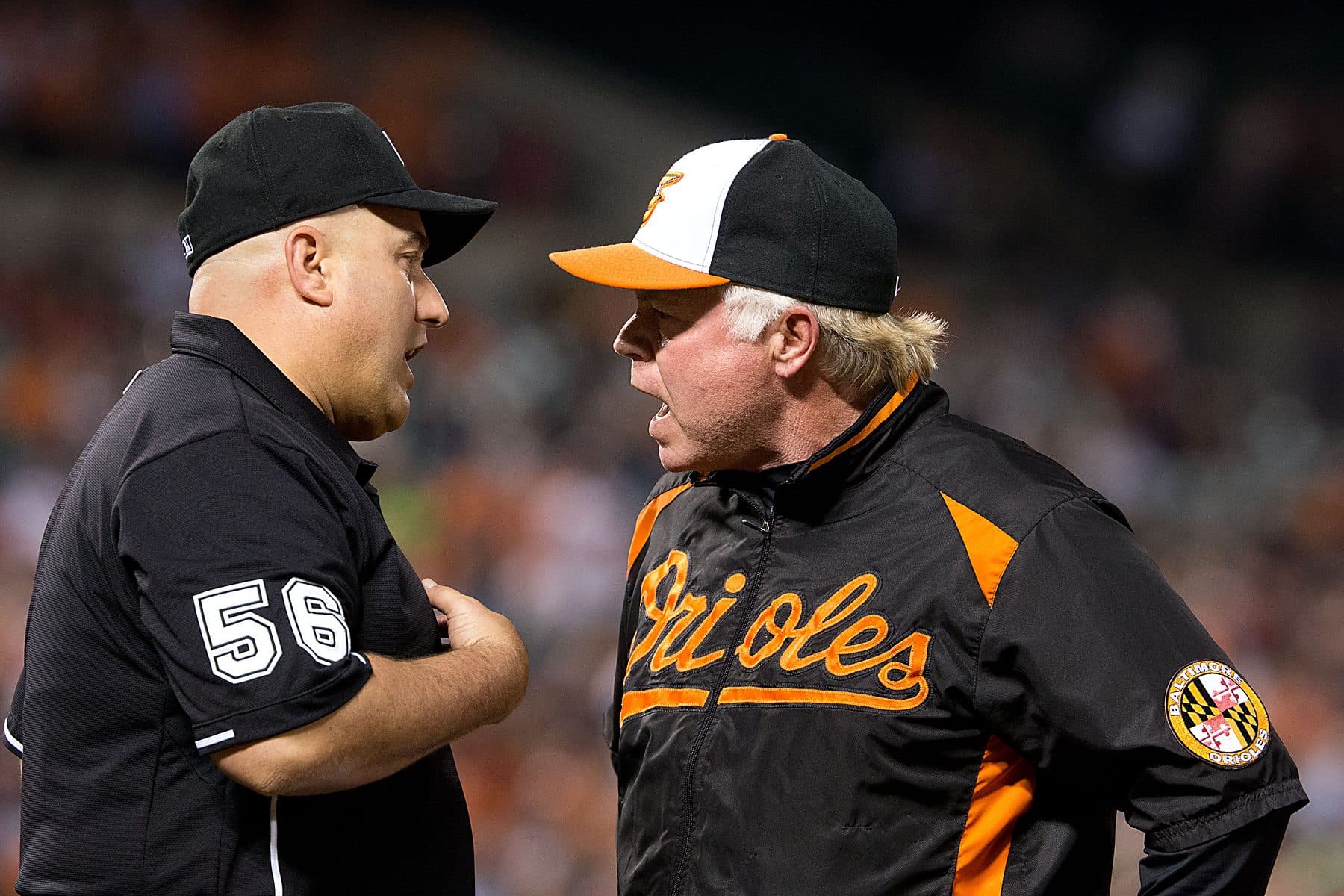
Run a travel team? Get your free page.
Baseball or softball. Claim a free directory page, post tryouts, and share cagelist.com/@yourteam with families.
Find your league
Free directories of real leagues and clubs near you. Then book a batting cage to get your reps in before opening day.


Join the backyard batting cage community
Talk builds, gear, hosting and player development with cage owners, coaches, parents and baseball families.