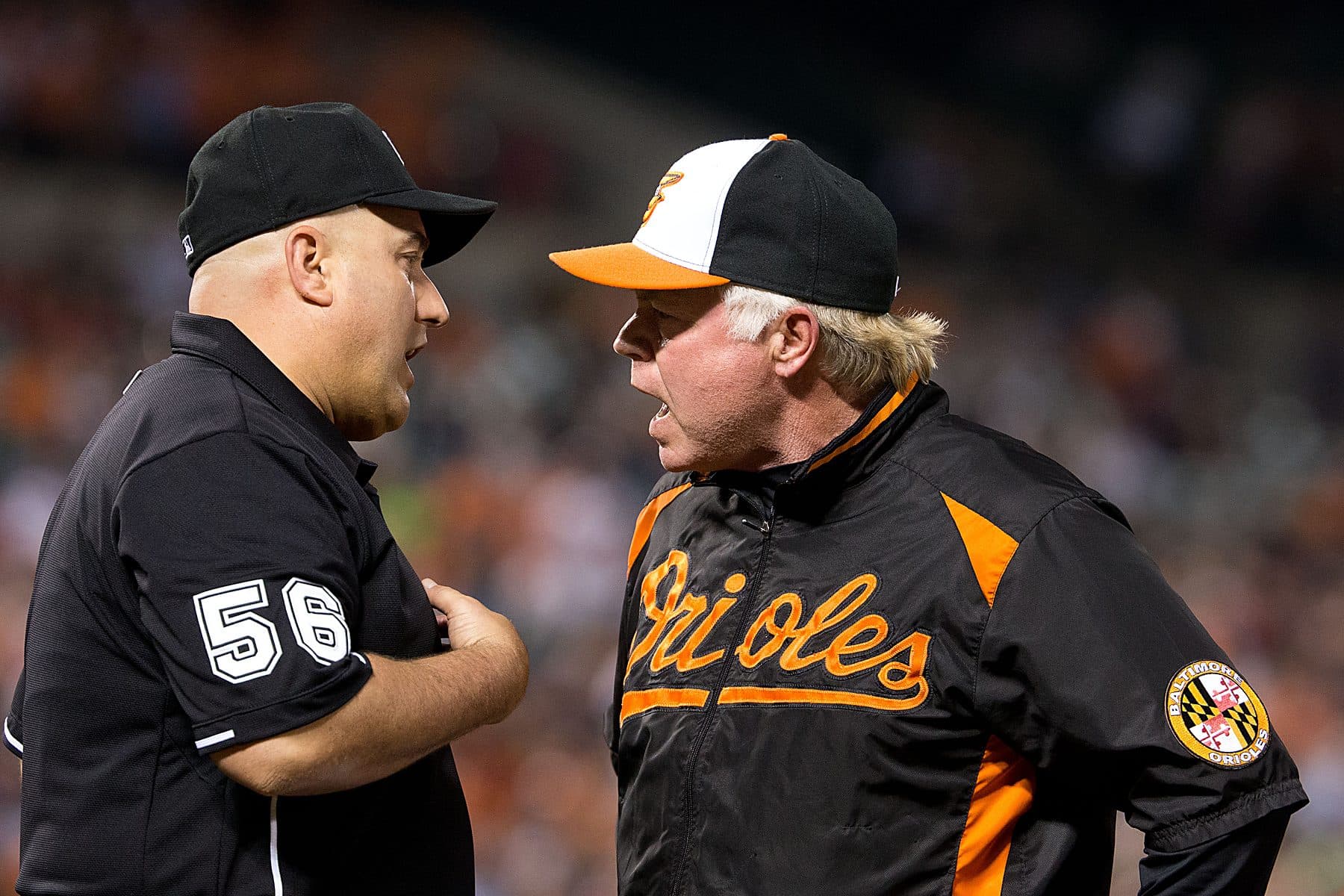
Part 2 of 3 in a series on the people who call the game. Part 1: Everybody Thinks the Umpire Is Bad.
You know the pitch. It was on the corner, or it was a hair off, depending on which dugout you are standing in. The umpire called it, and the parent next to you said a word you would not repeat in front of the kids.
Then the question everybody asks themselves: why did he give them that call?
Here is my honest answer after years in dugouts and behind a mound. The umpire is not a camera. He is a person, working a long day, who also has a view of how you just acted. That is not an excuse for a bad call. It is an explanation, and it is more useful than a roast.
If you missed part one, it starts with the line that without umpires, baseball doesn't exist, and it covers what the job is and what it pays. This one is about the calls.
There is no neutral eye, and the research says so
Start at the top. Major league ballparks have tracking cameras on every pitch. You would think that settles it. It does not, because the human is still the one deciding, and humans are shaped by context.
Researchers Hyung Jin Kim and Brayden King studied MLB pitches from 2008 and 2009. Umpires were 25% more likely to call a real ball a strike for a five-time All-Star pitcher than for a pitcher with no All-Star appearances, and 14% less likely to call a real strike a ball. The advantage was bigger on pitches near the edge of the zone. The same research estimates that each mistaken call in a pitcher's favor moves his team's chance of winning by about 0.3%. Small, but a game has a lot of pitches.
They also found a 3-0 count raised the odds of an over-called strike by nearly 20%. The count changes the call. The reputation changes the call.
There is also a 2024 study in Scientific Reports covering about 3 million pitches that found training umpires with incentives raised their accuracy but left their biases in place. Even when people got better, the tilt stayed.
I am not saying this to excuse anybody. I am saying that if the best umpires in the world, with cameras checking their work, still lean, then the volunteer at your kid's 10U game is leaning too.
Pressure from one side moves calls
This is football, not baseball, so take it as a hint and not a rule. A researcher at Skidmore studied more than 82,000 NFL plays, including about 1,400 close penalty calls near the sideline. Referees were more likely to call in favor of the team nearest the play. That is sideline noise moving a human being.
It would be strange if a seventeen-year-old umpire with two parents screaming at him were immune.
Game three
Here is something I saw with my own eyes.
On Sunday, October 11, 2026, I pitched five innings in a men's league game in Florida, then played first base. The umpire told me he started at 9:30 in the morning and would likely work until about 7:30 at night. Fifteen to thirty minutes between games. Florida heat and humidity. Barely any shade, a basic cap, no real break.
That is my observation, not a study. By the third game of a long day, in my experience, the zone gets a little wider, the patience gets a little thinner, and the mistakes get bigger. I cannot prove it. I have seen it.
Is there any science near it? A little. Economists studied more than 3 million decisions by 127 MLB home plate umpires across 26,356 games from 2008 to 2018. Umpires were more accurate on high-stakes calls, heavy early attention made later errors more likely, and breaks helped. Be careful here. That study looked at attention inside one MLB game. It did not study heat, and it did not study a third game in one day. What it suggests is that attention is something you run down, and that is as far as I will push it.
If you want fewer bad calls late in the day, give the umpire a break. Water. Shade. A tournament schedule that does not turn one person into a machine.
Respect moves calls, in my experience
Now the part I believe but cannot prove. In my experience, about three out of four close calls go to the team that was polite to the umpire.
Let me be straight about what that is. I do not keep a scorebook on it. There is no study. It is a feel from years of dugouts, and "close call" for me means a pitch or play that could have gone either way. A guess from my gut should not be printed as a statistic, so I am telling you it is a guess from my gut.
What research does show is nearby. Reputation moves calls, as above. Sideline pressure moves calls, as above. Nobody has measured politeness directly. My bet is that politeness is just another form of the same human thing.
Think about it from the plate. You have two benches. One is quiet and says "thanks, ump" at the end of an inning. The other chirps on every ball. On a pitch that is a coin flip, which way does a tired person lean?
One more thing I believe, and again this is belief, not data. Every baseball player knows the baseball gods are real. In my experience humility and doing the little things right tend to earn the close calls, from the umpire and from the game itself. The team that hustles, says thank you and plays the right way seems to get the benefit of the doubt more often. I wrote the longer version here: The Baseball Gods Are Real.
What actually happens when you argue
Little League's coaching guidance, an article it published from the Positive Coaching Alliance, is blunt. Do not argue. If you must talk, wait until between innings, ask permission, and speak calmly, quietly and privately. It also warns that a coach's groans and over-the-top reactions can incite a crowd to misbehave toward the umpires.
An argument almost never reverses a call. What it changes is the mood, and the kids are watching.
The robot question
I like the new challenge system, and I will say why. In MLB in 2026, human umpires still call balls and strikes, and a batter, pitcher or catcher can challenge. Each team gets two challenges a game, and you keep a challenge if you win it.
As a pitcher, I have had a lot of strikes called balls. I would like it black and white, like a ball going through a hoop. That is where the pro game is heading. But your kid's game does not have cameras. Your kid's game has a person, so what we do with the person matters.
What to teach your player instead
Four things worth teaching.
The five-second reset. After a call you hate, take one breath, look at the next sign, and play the next pitch. The call is gone. The next pitch is not.
Ask between innings, through the coach. If a question needs asking, it goes through the adult, at the right time, in a calm voice. That is the Little League rule above.
The election math. Here is how I think about it. A president who wins with 55% has won big. An umpire who gets 55 to 60% of the truly close ones right, five and a half or six out of ten, is having a good day. That is my way of thinking, not a measured rate. Teach your player never to expect even 50%, to expect misses, to keep a thick skin and keep playing better.
The car ride. On the way home, do not relitigate the umpire. Talk about the at-bats and the plays your kid controlled. A kid who learns to blame the umpire learns to blame.
Where I'm coming from, and what I can't tell you
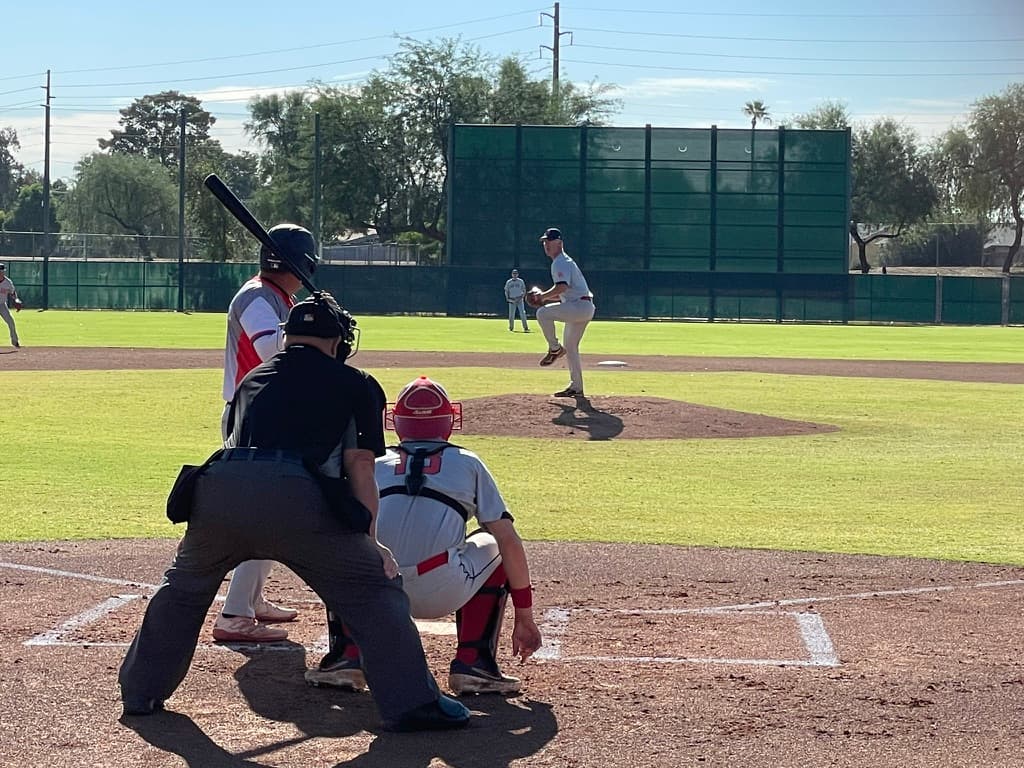
I am a coach, a former pro player, and for one high school season and a handful of Little League games at PV East in Arizona, an umpire. I was nervous every time. That season is why I give the person behind the plate more room than the stands do.
What I cannot tell you is how the zone feels from a full-time umpire's side at the end of a long season. And I cannot give you a number for the thing I believe most, that respect moves calls. Take that as my experience.
Why this matters for the game we are building
Teams that train together and play in the same league see the same umpires over and over. Rapport is easier when the league is local and the people in it know each other by name. That is the connected-game idea in plain terms: players, fields, coaches and the people who call the game, known to each other, beat strangers meeting at a tournament complex.
If you are looking for that kind of local game, start with travel teams, men's leagues or the field guide for baseball parents.
The last thing
Next time you disagree with a call, remember two things. A person made it, and your kid is watching how you respond. Part three is about what happens when we run those people off: who is going to umpire your kid's game?
Isaac Hess is a coach, a former pro player and the founder of CageList.
Cover photo: Keith Allison, CC BY-SA 2.0, via Wikimedia Commons.
Turn the talk into reps
Every one of these comes back to the same thing: getting on the field and putting in the work. Find cage time near you and go do it.
Related Guides
View all articles
Everybody Thinks the Umpire Is Bad
Without umpires, baseball does not exist. Isaac Hess on the one season he wore the mask, what the job pays, what a day looks like and what we say to the people in the gear.
8 min readRead
The Baseball Gods Are Real
Game 7 of the 2025 World Series came down to one stumble, one throw and one foot. Isaac Hess on why he believes the baseball gods give the calls to the people who earn them.
7 min readRead
I Was a Coach With Nowhere to Coach. So I Built CageList.
For years I gave baseball lessons in Los Angeles, and the hardest part was never the coaching. It was finding a place to do it. Isaac Hess on why he built CageList.
6 min readRead
Run a travel team? Get your free page.
Baseball or softball. Claim a free directory page, post tryouts, and share cagelist.com/@yourteam with families.
Find your league
Free directories of real leagues and clubs near you. Then book a batting cage to get your reps in before opening day.
1,421 organizations
 leagues in 49 statesAdult hardball near you: MSBL, NABA and independent leagues.Browse men's leagues
 leagues in 49 statesYouth baseball and softball leagues, organized by state.Browse little leagues
 programs in 41 statesTravel and club programs in your region. Find one, or list yours free.Browse travel teams
Join the backyard batting cage community
Talk builds, gear, hosting and player development with cage owners, coaches, parents and baseball families.