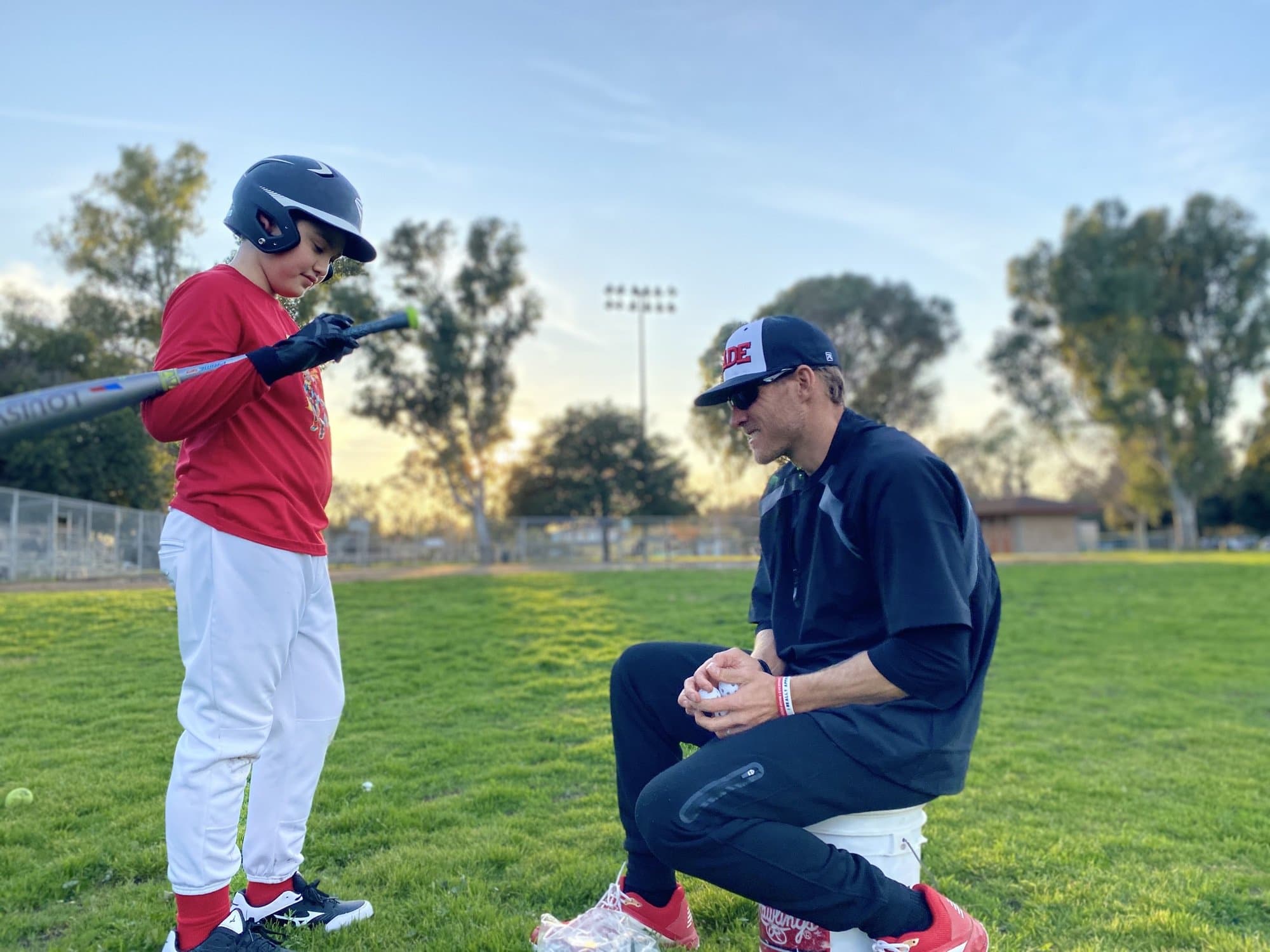
For years I gave baseball lessons in Los Angeles, and the hardest part of the job was never the coaching. It was finding a place to do it.
I ran most of my lessons out of Penmar Park. It has five fields, and I kept going back because I could almost always find a sliver of space. Almost. Some nights all five fields were booked by teams, and there was nothing to do but wait or go home. I was always at the park's mercy.
The facility wasn't the answer either
The other option was a facility. I did some lessons at Baseball Central, and I want to be fair to them: it was a real place with real cages. But the economics didn't work for me. The drive was about 40 minutes each way in traffic for roughly seven miles, every time, during the exact hours I was getting booked. Nothing guaranteed I'd get even two lessons in a day. Of the five or six lessons I got there, two cancelled on the same day. That's well over an hour on the road for a lesson that never happens.
So I kept going back to the park.
The good cages go to whoever has a hookup
Here's what I noticed once I started looking. The good cages were out there. They just went to people who knew somebody. A friend of mine who coached knew someone on the board at West LA Little League, so he got to use their cages. No listing, no price, no process. Just a relationship.
I don't blame the league. Most leagues run this way, because nobody has time to be the cage scheduler. But it's fine for him and no help to the next coach, or to the parent who just wants a place for their kid to hit on a Tuesday. Part of where the Little League side of CageList came from is that exact situation: cages that exist, and a way in that depends entirely on who you know.
I built my own business first
I didn't wait for someone to fix this for me. I built a good website and then marketed myself everywhere I could: search, a Google Business Profile, Yelp. I ran booking through Acuity Scheduling on a WordPress site, and every day I tested something and made the experience a little better for the parent on the other end.
It worked. I eventually did very well. But I was still dependent on the park. I had a business that could fill the schedule and no reliable place to put the schedule. A great calendar doesn't help if the fields are booked.
That daily habit of testing and improving is also why CageList has as much to it as it does. I don't know how to leave a rough edge alone.
The parents of 6-year-olds I had to turn away
Families with 6-year-olds called me all the time asking for baseball classes. I turned a lot of them away, and I didn't like it.
I looked at Little Rookies, a franchise that runs baseball programs for little kids. It's now part of Youth Athletes United, the company behind Soccer Stars and Amazing Athletes. I decided not to buy in, and that's no knock on them. What I did instead was offer small-group lessons: one coach, four players at a time, so the price per player comes down.
I taught plenty of 6-year-olds one on one at $120 an hour, and in Los Angeles that's normal. Families with room in the budget hire the most expensive coach because they want the best for their kid, and I understand that completely. But here's what I learned: a coach can't do it alone.
One of my clients was a well-known actor's family. They hired me to coach their five-year-old at home twice a week because I was the most expensive coach around and they wanted the best. But between lessons, nobody was throwing with him, and that's where kids actually get better. It's the gap I saw most often, and it's the part nobody can buy. A six-year-old doesn't need deep technical knowledge. He needs energy, and he needs to love the game, and nobody can hand that to him but the people at home. I used to tell dads to just play catch with their kid. Get that right and everything after it gets easier.
Coaches underestimate the demand
I'll say something to my fellow coaches. A lot of you would be happy making $80 to $100 an hour, because you don't see how much demand is out there, or because nobody ever taught you the business side. That's not a criticism. It's what happens when the only people you talk to are other coaches.
CageList doesn't push coaches to charge more. I think the market should set the price, and over time that will probably push it down, not up. Coaches should win by doing a good job, not by sitting on a rate.
Small groups fit that. A parent who can share a lesson with a few other kids pays less, and the coach still works. The coach tools we're building now (a parent saying they'll share a lesson with other players to get a lower price) are meant to make that easy. This used to be hard to put together. It isn't shipped yet. I'm telling you where it's headed, not what's live today.
The same thing shows up in men's league
I still play in a men's league, and it has the same problem. It's hard to find guys. It's hard to connect players who want to play with a team that needs them. The leagues would be more competitive if it were easier. Different age group, same fragmentation: plenty of people who want to play and no good way to find each other.
The MADE way
All of this sits on top of how I coach, which I call the MADE way. It's character first. It's life lessons. Baseball is a portal that teaches kids how to fail, how to bounce back, and how to be part of something bigger than themselves. A kid who learns to strike out and come back to the plate has learned something he'll use at 30.
I want to keep teaching the baseball world how to approach youth coaching, and I'd like CageList to be a place where that gets taught and not just a place where cages get booked.
Why one place
The coach at Penmar with nowhere to go. The facility that's too far and too uncertain. The cage that opens only to friends. The 6-year-old whose parents got a "sorry, I can't take new students." The men's league with no roster. I saw the demand and the fragmentation from every one of those sides, because I'd been standing on every one of them.
CageList is my attempt to put all of it in one place. It started as backyard cages and it's become something wider: where the game connects. I moved fast once I saw what was possible with AI tools, and I'm still moving. If you're a coach, a parent, a host with a cage, or a guy who wants a men's league game, I'd like you to be able to find each other without needing a hookup.
That's the whole idea.
Isaac Hess
Turn the talk into reps
Every one of these comes back to the same thing: getting on the field and putting in the work. Find cage time near you and go do it.
Related Guides
View all articles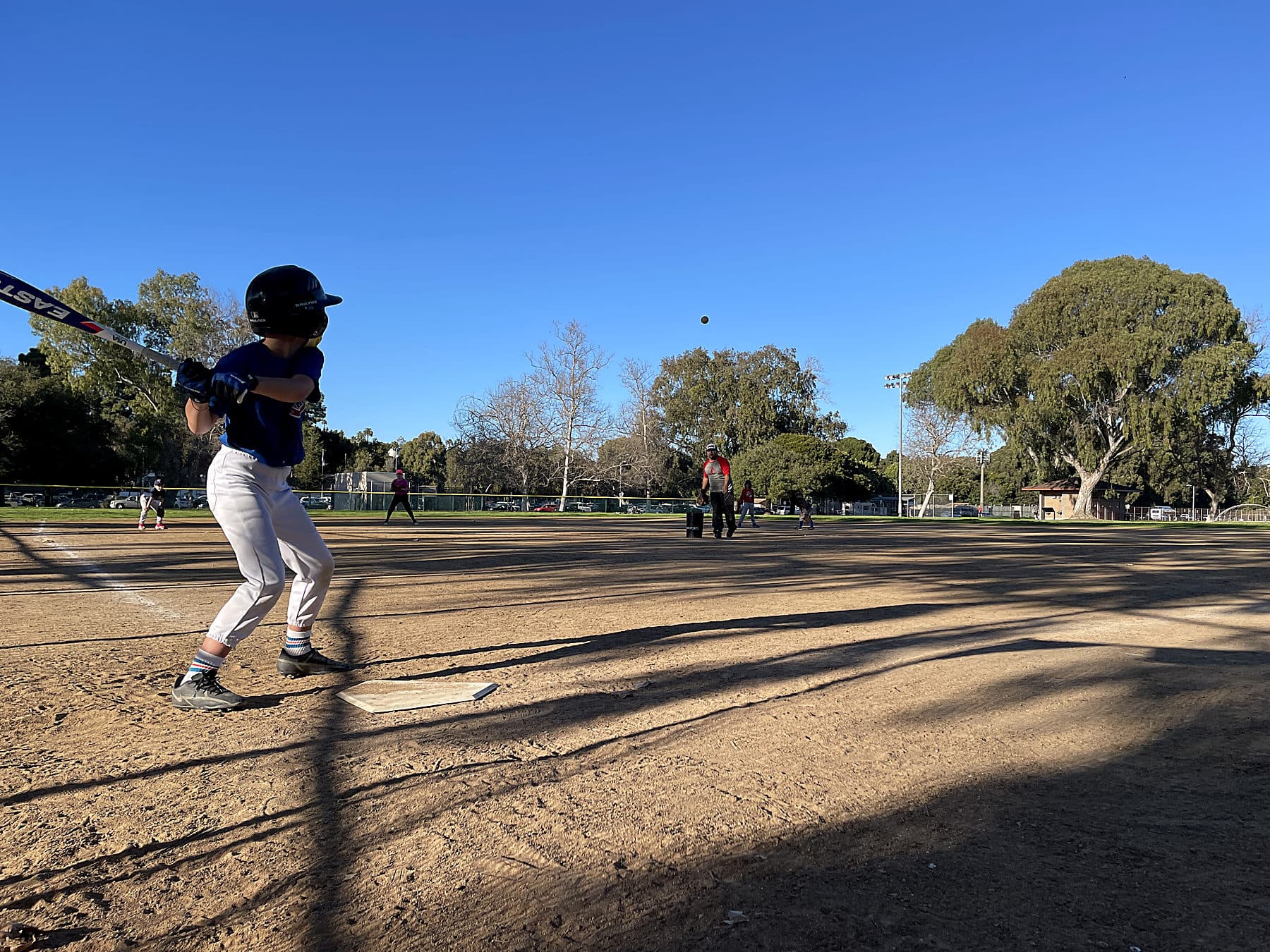
Hustle Ball: The Missing Middle Between Little League and Travel Ball
Hustle Ball sits between Little League and travel ball. I made it up with tennis balls in 2020. Here is why, how a session runs, who it fits, and how another coach could run it.
7 min readRead
MLB Lockout 2026: What It Means for Your Player
The MLB labor deal expires December 1, 2026. Here is what a lockout is, what happened in 2021-22, and what it does and does not change for your kid.
6 min readReadThe Sunday I Wanted to Lose
Five games in under 48 hours, a pitching staff with nothing left, and a coach in the third base box quietly hoping the tie game just ends. The guilt belongs to the format, not the coach.
8 min readRead
Run a travel team? Get your free page.
Baseball or softball. Claim a free directory page, post tryouts, and share cagelist.com/@yourteam with families.
Find your league
Free directories of real leagues and clubs near you. Then book a batting cage to get your reps in before opening day.
1,416 organizations
 leagues in 49 statesAdult hardball near you: MSBL, NABA and independent leagues.Browse men's leagues
 leagues in 49 statesYouth baseball and softball leagues, organized by state.Browse little leagues
 programs in 41 statesTravel and club programs in your region. Find one, or list yours free.Browse travel teams
Join the backyard batting cage community
Talk builds, gear, hosting and player development with cage owners, coaches, parents and baseball families.