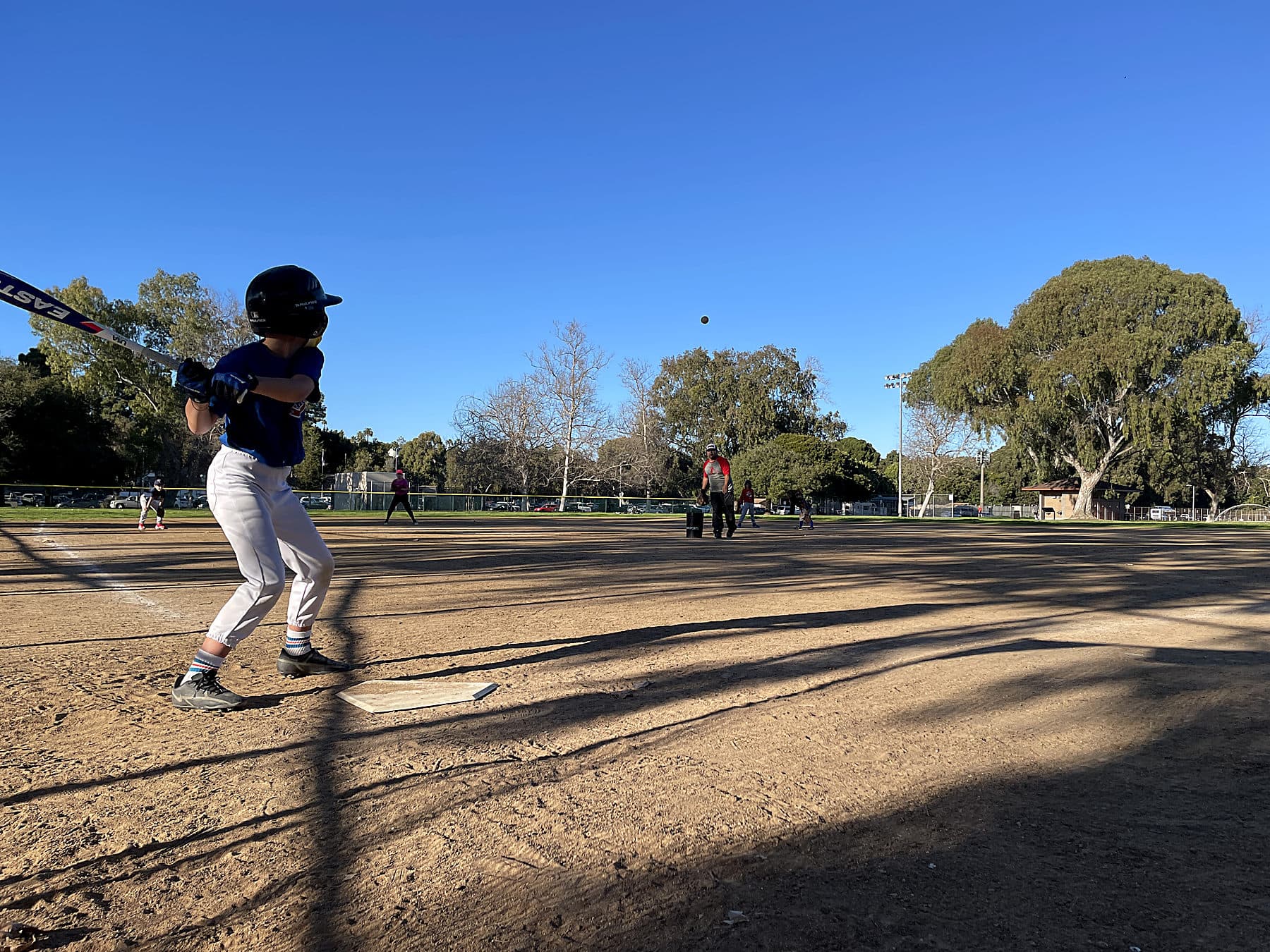
Hustle Ball™ is the missing middle between Little League and travel ball. It is more baseball than a weekly league game and a lot less than a travel schedule, and it started on an uneven field at Rustic Canyon Park, with tennis balls, in 2020.
A parent got together eight or more kids. They paid $50 each, and we played for two hours, twice a week. There were no real baseballs and no league. There was a coach pitching, a pile of kids who wanted to play, and a game I made up as I went.
I am a former pro pitcher. I played seven years, and I have spent a lot of the years since coaching kids. Hustle Ball is mine. I made it up, I call it Hustle Ball™, and I have never heard anyone else use the name. If you want the short version of why I run it, I wrote that here: Hustle Ball: why one practice should feel like a real game. This post is the longer story.
Why I made it
Parents come to watch a game. But the kids on the mound are just starting to pitch.
A kid who throws strikes usually dominates. A kid with velocity who throws strikes really dominates. That is fun to see, but it is rare. Most kids from about 9 up to 12 simply cannot throw strikes yet, so they walk everybody, or the game crawls along. Many walks every inning is far too common. Not every game, but too common. It is not fun for the parents, it is not fun for the kids, and it is not fun for the umpires.
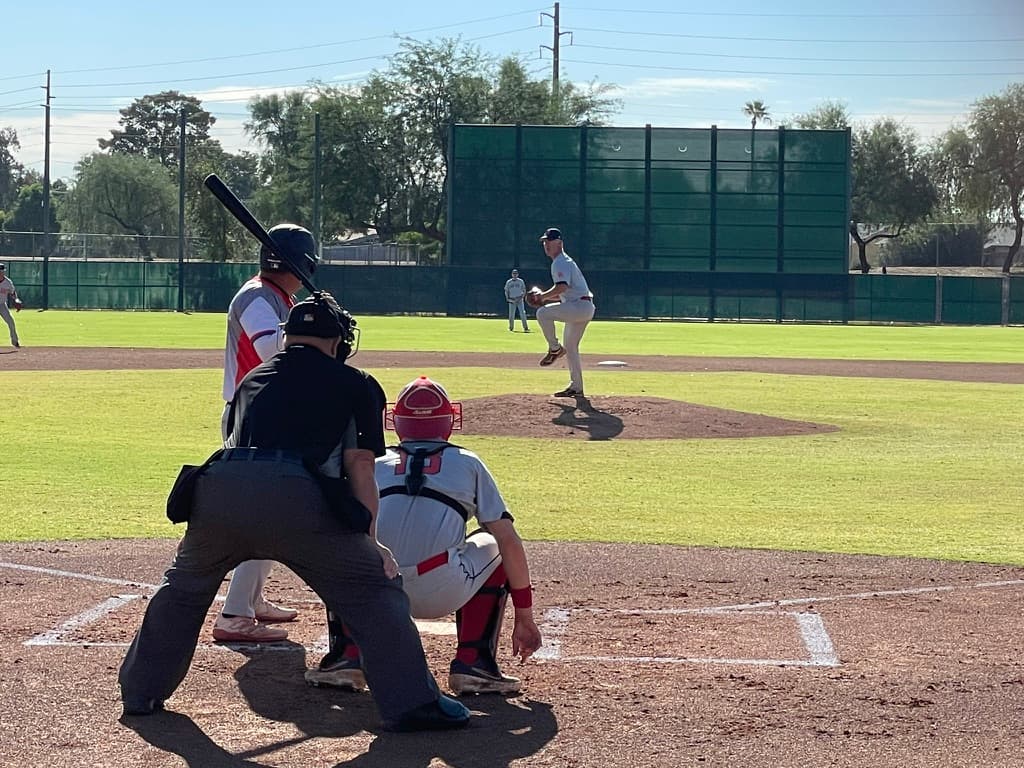
So in Hustle Ball the coach pitches. Throwing strikes consistently is the coach's job. The coach challenges the better hitters with tougher pitching and makes it easier for the less experienced hitters, so the ball gets put in play. Then kids play every position and learn to make defensive plays consistently. That action develops them far faster than sitting around watching pitchers walk the world.
Then I add the part I care about most, which is standards.
For ages nine to twelve, I believe a game like this should either replace Little League or sit next to it.
What it is really for
Fun comes first. That is not a soft thing to say, it is the plan. If a kid loves the game, he will keep coming, and loving the game is step one of development. If all you teach is mechanics, the kids get bored, and you lose them.
Inside the fun, I teach habits and accountability. That is what I mean by champion habits. Hustle Ball builds baseball IQ and awareness, and it makes kids better teammates.
Here is how I know it is needed. I have coached high schoolers who did not know the things we teach in Hustle Ball: how to wear the uniform properly, how to address a coach, how to run on and off the field, how to play the game. That is what we mean by playing it the MADE way.
How a session runs
A session is about two hours. This is the schedule I use for my homeschool class, which is the cleanest version I have written down:
- 9:00 Huddle and warm-up. We set the standard for the day.
- 9:15 to 9:30 Throwing program.
- 9:35 Game of the day. Captains pick teams.
- 9:45 to 10:55 Live Hustle Ball. The coach stops play for teachable moments.
- 10:55 Game recap, Player of the Game, break it down.
Teams are formed on the spot each time, so nobody is stuck on the same roster all season. Kids rotate through positions, so nobody gets labelled a right fielder at age eight. The game ends in the last ten minutes, then we sit down and talk about what happened.
The rules that make it Hustle Ball
The rules are about effort and attention, not mechanics. A few from the full list on the MADE Baseball Hustle Ball page:
- You are out if you do not run hard through first base.
- You are out for walking on or off the field.
- You are out for arguing a call.
- You are out for forgetting to bring your bat in.
- You are out for an untied shoe.
On the game side: the coach pitches, catchers use a bow net, there is no stealing unless a catcher is in use, there are no walks unless the coaches say so, and a team can score five runs an inning at most, except in the last inning. At the end we pick a Player of the Game.
Effort and awareness are skills. They can be coached exactly like a swing.
Who it is for
On my site the age range is 7 to 12. I want to be honest about that, because it is not how I would draw it.
The best experience is two-year groups: 7 to 8, 9 to 10, and 11 to 12. I opened it to 7 to 12 for business reasons, because it gives me a bigger pool of families. If it were only up to me, I would prefer 8 to 12. A seven-year-old can find it tough, and so can a soft or younger kid who gets put in with bigger, older ones.
A skilled coach can integrate the ages, but that coach has to watch everything. A few examples of what I mean:
- You never put a 7-year-old at third base when a 12-year-old who can really hit is at bat.
- If a 12-year-old shortstop has a strong arm, you tell him not to throw full speed to a 9-year-old at first base.
- I use what I call the first base test. I throw to first from the mound with modest velocity, but straight. If the kid cannot catch it, he does not play first.
St. Cloud currently runs 7 to 12 for the same business reason.
Beyond age, it is for kids who want more reps at playing the game and fewer at waiting for it. The MADE page says one to two years of experience is ideal, and that beginners with a good attitude who are coachable are welcome. Bring a glove, a bat, a helmet, water and real baseball shoes.
Does it travel?
Los Angeles is a different market from most places. But in Richmond Hill, families paid regularly at $40 a class. So it travels, if the coach delivers.
Could another coach run it?
Yes. Any good coach can run Hustle Ball if they understand how and what it takes, and I can teach that.
I do not have the bandwidth for a franchise right now. The path I trust is apprenticeship under me. I have two coaches who learned the nuances that way, and they are my right-hand men: Coach Louie Nogera in LA, and Coach Shane Tucker in Richmond Hill.
A coach can run it their own way, as long as they keep the kids safe and engaged and uphold the principles. What makes it hard is that it is a lot to carry. It is difficult without having experienced many classes, and it takes real zest and the ability to track many details at once. Often it is one coach managing 14 players on two sides of the field, working as the umpire, the pitcher and the judge of everything at the same time.
If you are a coach and want to learn it, message me on my CageList page.
Where CageList fits
I built CageList because I was a coach with nowhere reliable to coach. A class like Hustle Ball needs a real field and a real schedule, and finding that is the hard part. That is the whole idea: CageList is where the game connects, so coaches can find and book space and families can find who is running what near them.
Hustle Ball sign-up goes through CageList class registration. Classes appear in the Classes and Camps section of my coach page. When no class is open, tap "Notify me when Isaac runs a class or camp" on that page and you will get one email per class. For more on how I run a lesson business, see the private coach playbook.
Hustle Ball questions
What ages is Hustle Ball for?
It is listed as 7 to 12. The best experience is two-year groups (7 to 8, 9 to 10, 11 to 12), and I would personally prefer 8 to 12. It can be tough for a young or soft kid, so a coach has to watch the mix closely.
Does my kid need experience?
One to two years is ideal, but beginners with a good attitude who are coachable are welcome.
Can another coach run Hustle Ball?
Yes, if they understand how and what it takes. I teach it through apprenticeship. They can run it their own way as long as kids stay safe and engaged and the principles hold.
How do I sign up?
Through CageList class registration on my coach page. If no class is open, use "Notify me when Isaac runs a class or camp" on that page.
Turn the talk into reps
Every one of these comes back to the same thing: getting on the field and putting in the work. Find cage time near you and go do it.
Related Guides
View all articles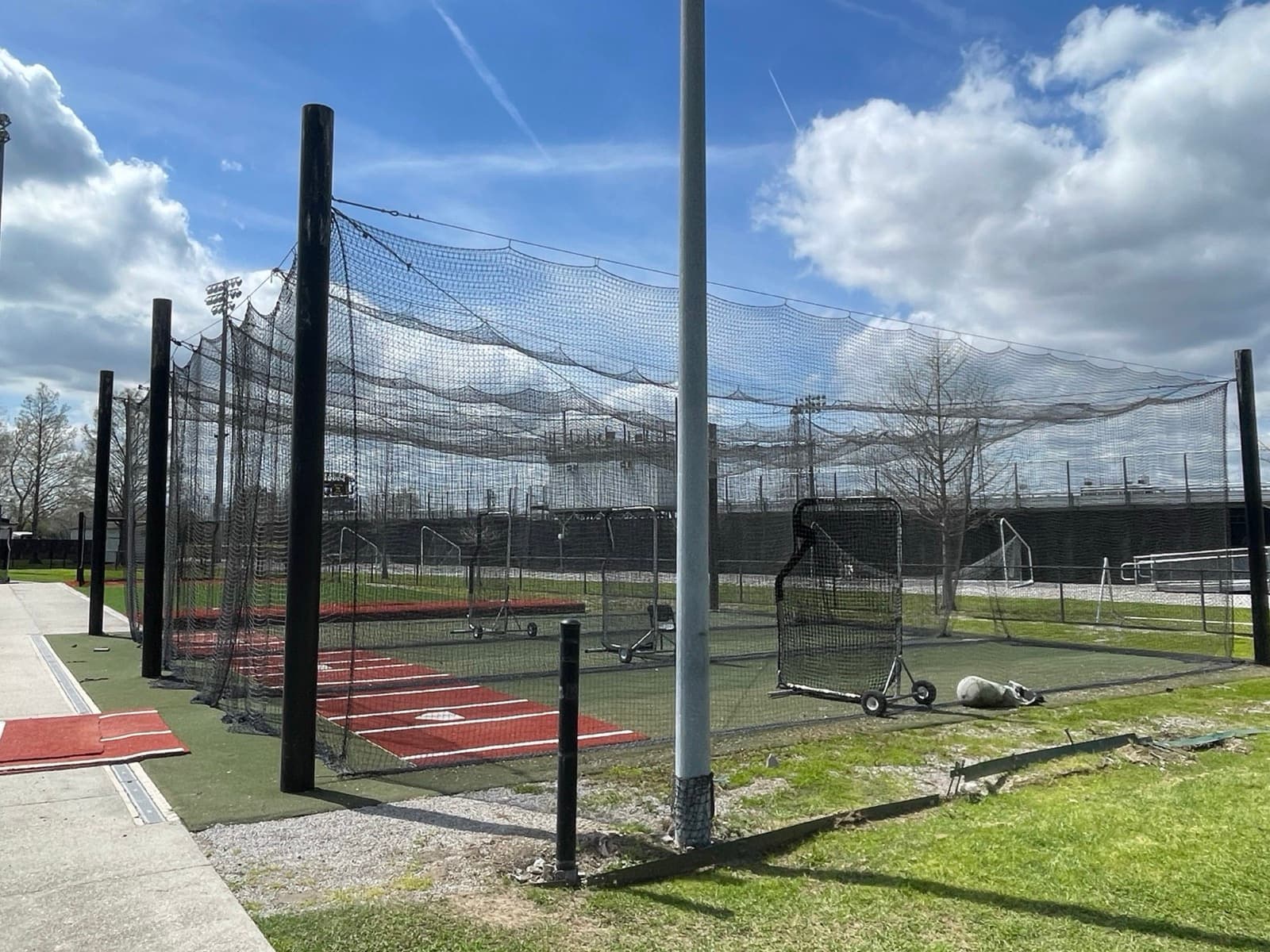
MLB Lockout 2026: What It Means for Your Player
The MLB labor deal expires December 1, 2026. Here is what a lockout is, what happened in 2021-22, and what it does and does not change for your kid.
6 min readRead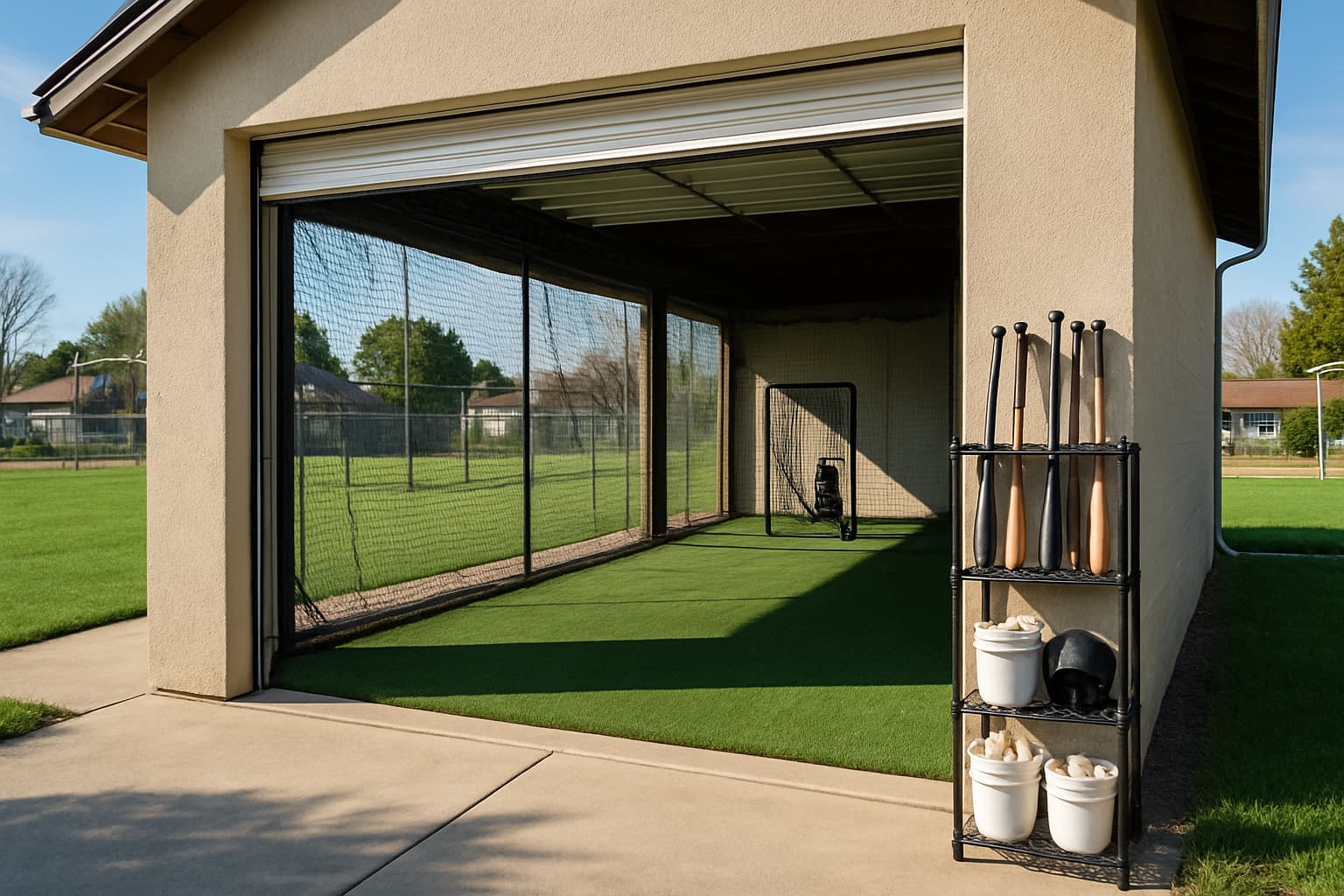
The Sunday I Wanted to Lose
Five games in under 48 hours, a pitching staff with nothing left, and a coach in the third base box quietly hoping the tie game just ends. The guilt belongs to the format, not the coach.
8 min readRead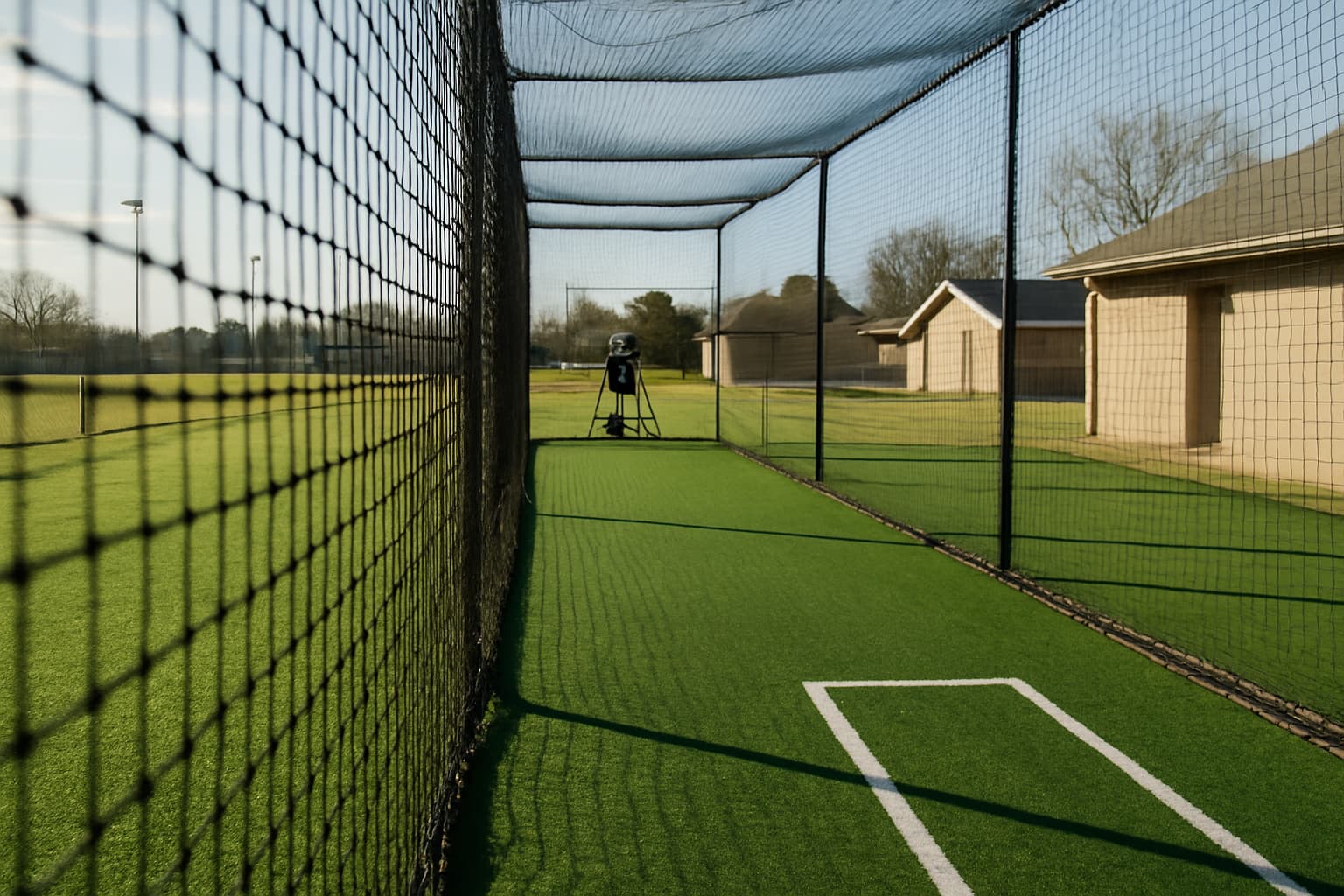
What Nobody Tells You Before Your Kid's First Travel Season
You are not crazy, you're uninformed, and those are different problems. A former pro pitcher and 20-year private coach explains how a travel baseball program actually works from the inside, so you can set expectations before the season instead of after.
10 min readRead
Run a travel team? Get your free page.
Baseball or softball. Claim a free directory page, post tryouts, and share cagelist.com/@yourteam with families.
Find your league
Free directories of real leagues and clubs near you. Then book a batting cage to get your reps in before opening day.
1,416 organizations
 leagues in 49 statesAdult hardball near you: MSBL, NABA and independent leagues.Browse men's leagues
 leagues in 49 statesYouth baseball and softball leagues, organized by state.Browse little leagues
 programs in 41 statesTravel and club programs in your region. Find one, or list yours free.Browse travel teams
Join the backyard batting cage community
Talk builds, gear, hosting and player development with cage owners, coaches, parents and baseball families.