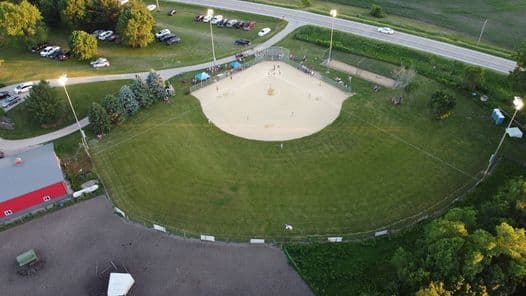
Youth and amateur baseball and softball are not short on passion. They are short on a shared map. The game is fragmented across personal Instagrams, GroupMe threads, facility waitlists, league silos, and "ask a coach who knows a guy." That fragmentation is a tax — on time, on money, on swings — and it is why serious cages sit dark while families still drive across town.
I did not start CageList to invent another feed. We built it so the people who already love this game can find each other and the places they need to practice — without the scavenger hunt.
The fragmentation tax
If you run a team, a league, a facility, or a backyard cage, you already feel the split. It shows up in small frustrations that compound into a worse season:
- Programs live on personal social. Tryouts get buried under weekend photos. When a coach leaves, the "official page" walks out with their login. New families googling your program find a highlight reel and a dead phone number.
- Cage time lives on phone trees. Indoor facilities book out. Fields conflict. Winter is a blood sport for tunnel slots. Coaches spend more nights texting for space than designing practice.
- Leagues own assets they underuse. Cages stay locked outside practice windows while boards invent the next car wash. Kids in the boundaries still pay elsewhere for reps.
- Hosts built something real and still have empty hours because the neighborhood never had a trusted way to book — so the investment looks like a lifestyle cost instead of infrastructure.
- Builders, coaches, and parents each solve the same problem in isolation — then reinvent it every season, in every town, with the same wasted motion.
None of that means people do not care. It means the infrastructure never caught up to the ambition of the sport. Fragmentation is not a vibe problem. It is an access problem. Every season the same work gets redone because there was no durable shared layer underneath the chats and feeds.
What a map actually is (and is not)
CageList is not trying to replace Instagram highlights or the team GroupMe. Those tools are fine for what they are. They fragment the game when they are forced to be the official record — the place parents trust for tryouts, the place a host gets paid, the place a league documents who used the cage.
We are building the layer underneath: bookable cages, claimable team and league pages, and honest directories that point families to where they can practice and who runs the programs near them.
Think "not another feed — the map." Operators get a front door that survives staff changes. Investors reading over your shoulder should hear the same thing: a category-defining network in a fragmented, high-passion market — not a social app with bats. The product promise is findability and official ownership, not likes and DMs.
Why verticals while backyard density is still growing
Backyard supply is the long-term density play. We already have real cages online, and we want every serious build to have a path to utilization. But waiting for perfect density before serving demand is how marketplaces stay empty on both sides. Liquidity comes from giving people a reason to arrive before the graph looks finished.
So we push into adjacent verticals on purpose — not as distraction, but as organic demand engines that give everyone a reason to show up while supply compounds:
- Little Leagues — idle cage hours become controlled fundraisers and more reps for kids in the boundaries. Start at CageList for Little Leagues and the board case in Why Empty League Cages Shouldn't Be the Norm. Seasonal ops live in the winter cage playbook.
- Travel teams — a coach starting a program needs practice space and an official page, not only an Instagram. See how to start a travel team the right way and claim your team page.
- Facilities and academies — claim the local directory page so searchers find the real operator instead of an unclaimed stub. Claim your facility page.
- Hosts — the backyard cage that was built for one kid becomes neighborhood infrastructure with real payouts when it is listed and bookable.
Each vertical brings users who need the same core job: where do we practice, and who is official? That is how you grow a two-sided network without pretending density is already finished — and without apologizing for serving leagues and teams while backyards keep coming online.
City pages are not enough without meaty truth
Programmatic city SEO helps people discover cages near them. It is not a substitute for the stories and playbooks that teach operators how to behave on the map — how to start a team, how to talk to a board, how to stop treating empty hours like destiny. That is why we interleave quality editorial with local pages: the map needs both findability and belief.
If all we published were city lists, we would look like a directory with no point of view. If all we published were manifestos, we would starve the searcher who typed a city name at 9 p.m. looking for a tunnel. The discipline is rhythm: local pages for discovery, meaty posts for conversion and trust — including the investor who is quietly reading to see whether we understand the market we are in.
Every serious cage should have a path to return
Here is the part that should never be controversial: if someone invests real money in a quality batting cage — league, facility, or backyard — that asset should have a clean path to utilization. Empty is not a tradition. Empty is unused inventory.
We are not saying every cage must become a full-time business overnight. We are saying the opportunity should exist: self-serve booking, clear rules, documented sessions, and payouts that treat the host or league like an adult. Build with the intention that the space can be entered and used without a babysitter for every hour — then list it so the neighborhood can find it.
That is good for the builder's ROI story, good for the host's calendar, and good for the kid who needed one more session before Saturday. When capital flows into training infrastructure that can actually earn, more good cages get built. That is the flywheel investors should care about — and the practical outcome operators feel on a Tuesday night when the calendar finally has names on it.
What happens as people actually use CageList
As the map fills in, the fragmentation tax drops in ways you can feel week to week:
- A new coach can stand up a team without inventing a website from scratch — list or claim on Travel Teams, then book cages nearby.
- A board can pilot idle hours without Venmo chaos — process and talk track in our Little League series, including how to pitch CageList to your board in five minutes.
- A family stops asking three group chats where to hit this week.
- A host's dark evenings become booked sessions with a paper trail.
- A builder's pitch includes utilization, not only "for your kid."
Will Instagram disappear? No. Should it be the operating system of amateur baseball and softball? Also no. The official layer should be durable, searchable, and owned by the program — not trapped in a personal grid that mixes private life with roster logistics.
The practical test is simple: can a new family in your town find a place to hit and a program to trust without six group chats? If the answer is still no, the map is not done — and that is exactly the work in front of us.
The through-line
CageList exists to make the baseball and softball world less fragmented and more usable: one place to find practice, one place to put the official program, one place where a serious cage can earn its keep. We wrote the product plays in pieces — how CageList is changing the game, the travel and league guides above, and why CageList exists. This post is the strategy spine that ties them together.
If you are an operator: pick your door — find a cage, list your team, or talk to us about your league cage. If you are reading for diligence: the bet is network effects in a fragmented, high-passion market where sunk-cost training assets are chronically underused. The map is how that bet shows up in the real world — one neighborhood, one claimed page, one booked hour at a time.
Find a baseball league near you
Men's leagues, Little League, and travel teams near you, then book cage time to get ready for the season.
Related Guides
View all articles
CageList Is Now an Authorized JUGS Sports Dealer
CageList is now an authorized JUGS Sports dealer. Real JUGS machines, nets, screens, and practice balls, sold and shipped directly at real JUGS pricing.
3 min readRead
Everybody Thinks the Umpire Is Bad
Without umpires, baseball does not exist. Isaac Hess on the one season he wore the mask, what the job pays, what a day looks like and what we say to the people in the gear.
8 min readRead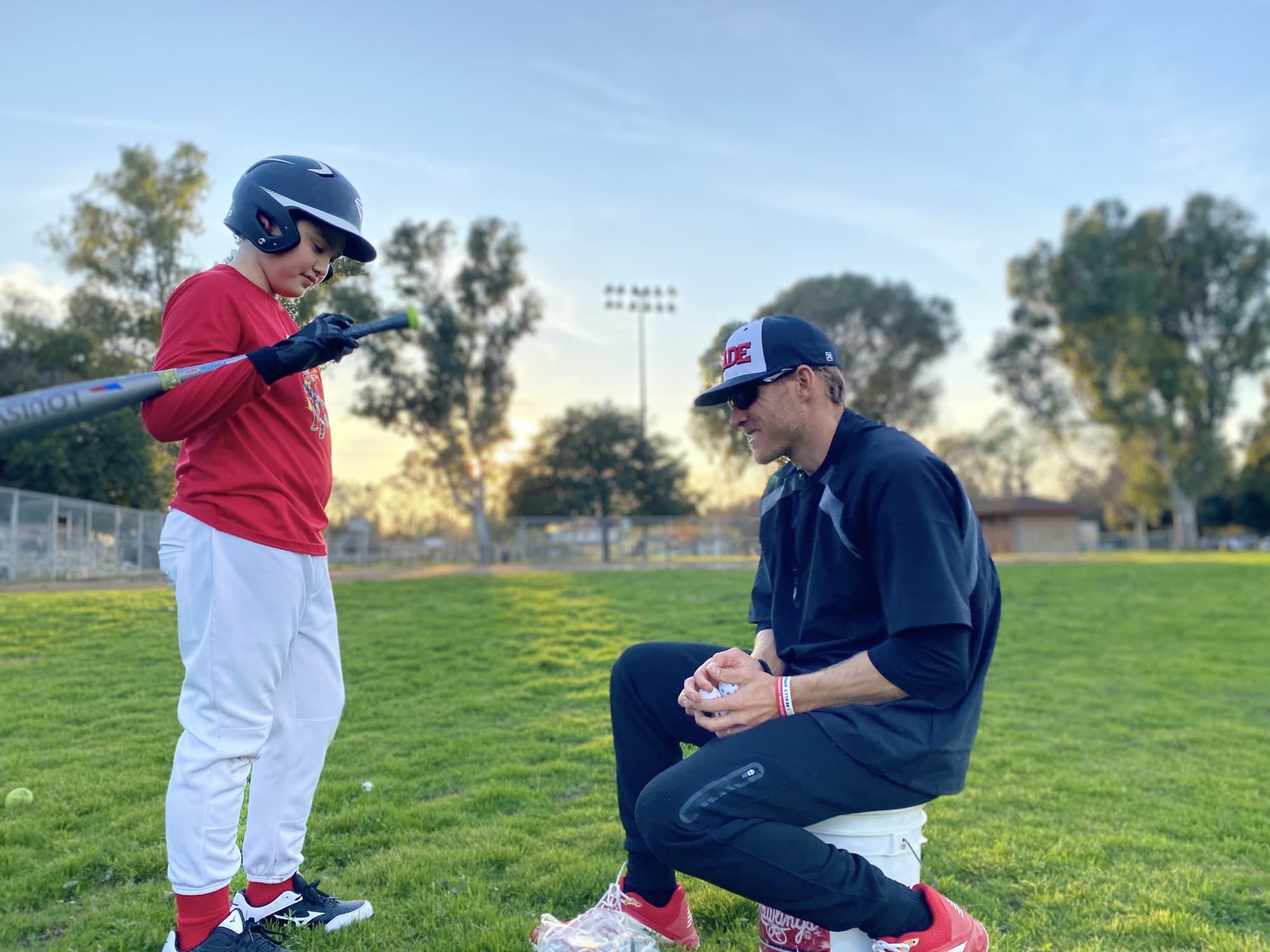
I Was a Coach With Nowhere to Coach. So I Built CageList.
For years I gave baseball lessons in Los Angeles, and the hardest part was never the coaching. It was finding a place to do it. Isaac Hess on why he built CageList.
6 min readRead
Run a travel team? Get your free page.
Baseball or softball. Claim a free directory page, post tryouts, and share cagelist.com/@yourteam with families.
Find your league
Free directories of real leagues and clubs near you. Then book a batting cage to get your reps in before opening day.
1,417 organizations
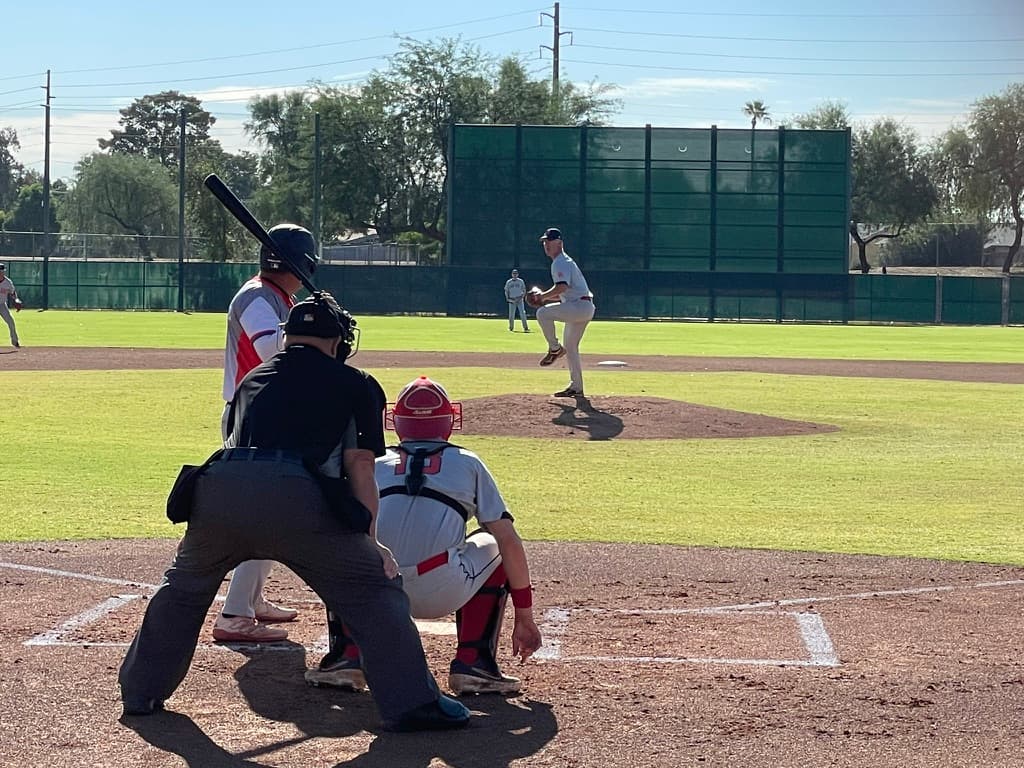 leagues in 49 statesAdult hardball near you: MSBL, NABA and independent leagues.Browse men's leagues
 leagues in 49 statesYouth baseball and softball leagues, organized by state.Browse little leagues
 programs in 41 statesTravel and club programs in your region. Find one, or list yours free.Browse travel teams
Join the backyard batting cage community
Talk builds, gear, hosting and player development with cage owners, coaches, parents and baseball families.