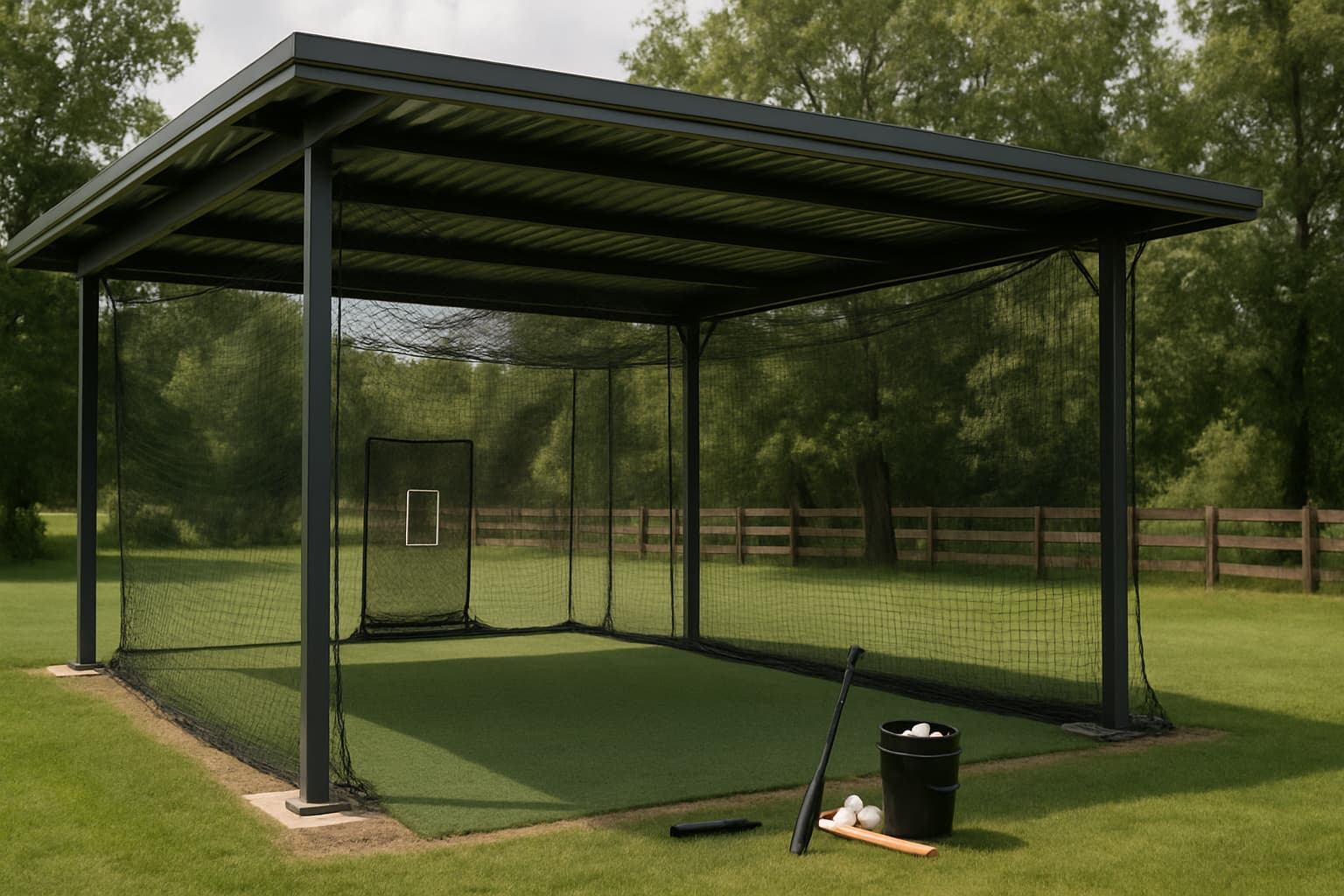
Weather kills more backyard cages than wear ever will. Sun rots netting, snow loads bend frames, standing water ruins bases, and wind turns a tall cage into a sail — and all four have cheap, known defenses. Here's the full weatherproofing playbook, organized by what's actually attacking your cage.
Sun: The Slow Killer
UV exposure is the number-one netting assassin. If your net isn't UV-treated poly, it's living on borrowed time in full sun — a mid-grade treated net outlasts an untreated one by years (our netting guide covers the material choice). Beyond material, exposure management matters: if the cage sits unused for weeks in summer, bunch the net to one end or drop it entirely. Turf fades and stiffens in sun too; a seasonal brushing keeps the pile from setting in one baked position.
Snow: The Fast Killer
One wet-snow night can do what a decade of hitting can't. Snow accumulates in the net's ceiling panels, and the load stretches twine, pulls seams, and bows ridgelines — kit frames especially. The defense is procedural, not structural: before the first heavy storm, slack the tension or drop the ceiling net. Ten minutes in November saves a spring re-rig. Steel frames tolerate more but aren't immune; if you keep the net up year-round in snow country, spec the frame for it (see the frame guide).
Water: The Underground Killer
Rain doesn't hurt the cage — it hurts what the cage stands on. Water pooling at posts rots wood, rusts steel at the ground line, and washes fines out of compacted bases until the floor ruts. Walk the cage during a hard rain once: wherever water stands is where next year's problem starts. Crowning the base, adding a shallow gravel curtain drain on the uphill side, and sealing the post-to-concrete joint are weekend fixes. Surface drainage choices are covered in our turf vs. concrete comparison.
Wind: The Structural Test
A 12-foot netted cage catches serious wind load. In gust-prone sites, favor lower profiles, add mid-span uprights to long ridgelines, and check turnbuckles and cable clamps each spring — wind doesn't break cages so much as it loosens them until something else does. Kit cages in open country benefit from simple guy lines at the corners.
The Seasonal Calendar
Spring: re-tension everything, re-square the net, inspect winter damage, re-compact the batter's box. Summer: manage sun exposure during idle weeks; brush turf. Fall: clear leaves before they mat (wet leaves stain and weaken twine), touch up drainage before the rains. Winter: drop or slack the net ahead of snow, store the machine and tosser indoors, and let the cage rest. Owners who follow this loop report netting and frames lasting half again their rated life — and if you rent your cage out on CageList, weatherproofing is revenue protection: a cage that's down for repairs in March misses the highest-demand booking window of the year. Not hosting yet? Here's how it works, and here's what listed cages near you look like for comparison.
Frequently Asked Questions
Should I take my net down every winter?
In snow country, either take it down or reliably slack/drop it before storms. In mild climates, leaving a UV-treated net up year-round is fine with seasonal inspection.
How do I protect a pitching machine outdoors?
Don't store it outdoors at all — moisture and temperature swings kill motors and harden wheels. Wheel it in after every session or build a dry storage box.
What's the cheapest weatherproofing upgrade?
A UV-treated net at purchase time, and the habit of slacking it before snow. Both are nearly free and dominate everything else.
Can turf stay out all winter?
Yes — quality turf is built for it. The base underneath is what needs protection: fix drainage before winter, not after the frost heave.
Get the numbers
Get your free batting cage cost estimate
Enter your email and we'll send you an itemized build breakdown — frame, netting, turf, lighting, and install — plus what a cage like yours could earn if you rent it out.
No spam, unsubscribe anytime. Prefer the interactive tool? Open the full cost calculator.
Already have a cage?
Rent it out when you're not hitting
Players, parents, and coaches near you are looking for cage time. Listing is free, you set your own price and hours, and you approve every booking.
Related Guides
View all articles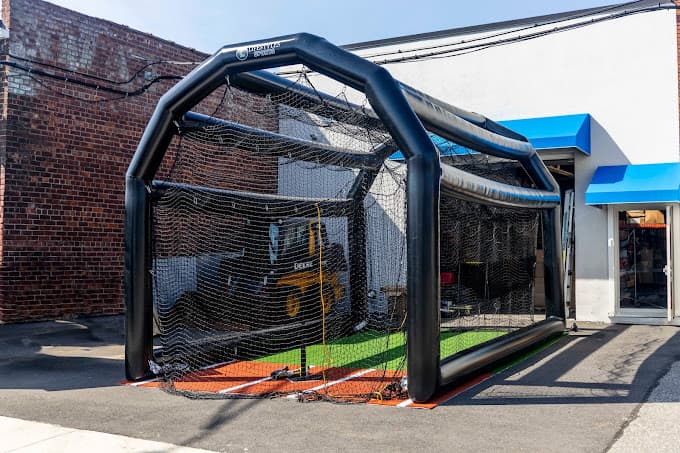
Build a Batting Cage
Inflatable Batting Cages: What They Cost, and Whether They Pay for Themselves
Inflatable batting cages run from $1,500 party units to $10,000 branded commercial builds, and only one manufacturer publishes a real price. What each tier costs, why $3,999 is not the price of a cage, and the booked hours it takes to pay one off.
Build a Batting Cage
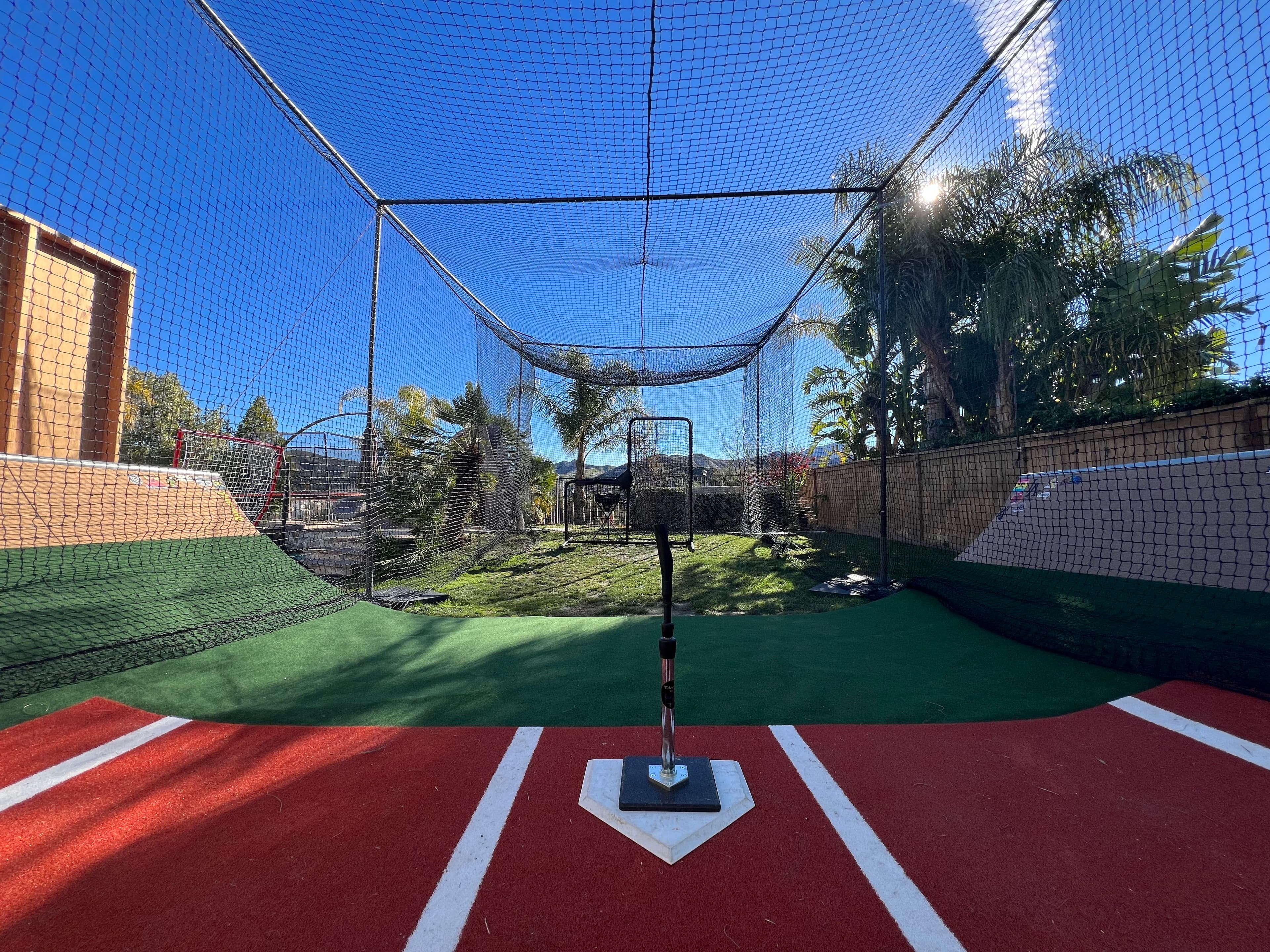
27 Types of Batting Cage: A Photo Field Guide to Every Backyard Setup in America
Barn conversions, driveway slivers, retractable tunnels, ranch cages and climate-controlled outbuildings. A photo field guide to 27 kinds of batting cage, built from 214 real bookable listings on CageList, with what each one costs and who it is for.

Build a Batting Cage
Backyard Batting Cage Kits, Compared: What You Really Get at Each Price (2026)
Every price tier of backyard batting cage, honestly compared — the companies, the netting grades, the realistic lifespan, and what a cage that survives real hitters (or paying renters) actually needs.
Run a travel team? Get your free page.
Baseball or softball. Claim a free directory page, post tryouts, and share cagelist.com/@yourteam with families.
Find your league
Free directories of real leagues and clubs near you — then book a batting cage to get your reps in before opening day.
1,000 organizations


Join the backyard batting cage community
Talk builds, gear, hosting and player development with cage owners, coaches, parents and baseball families.