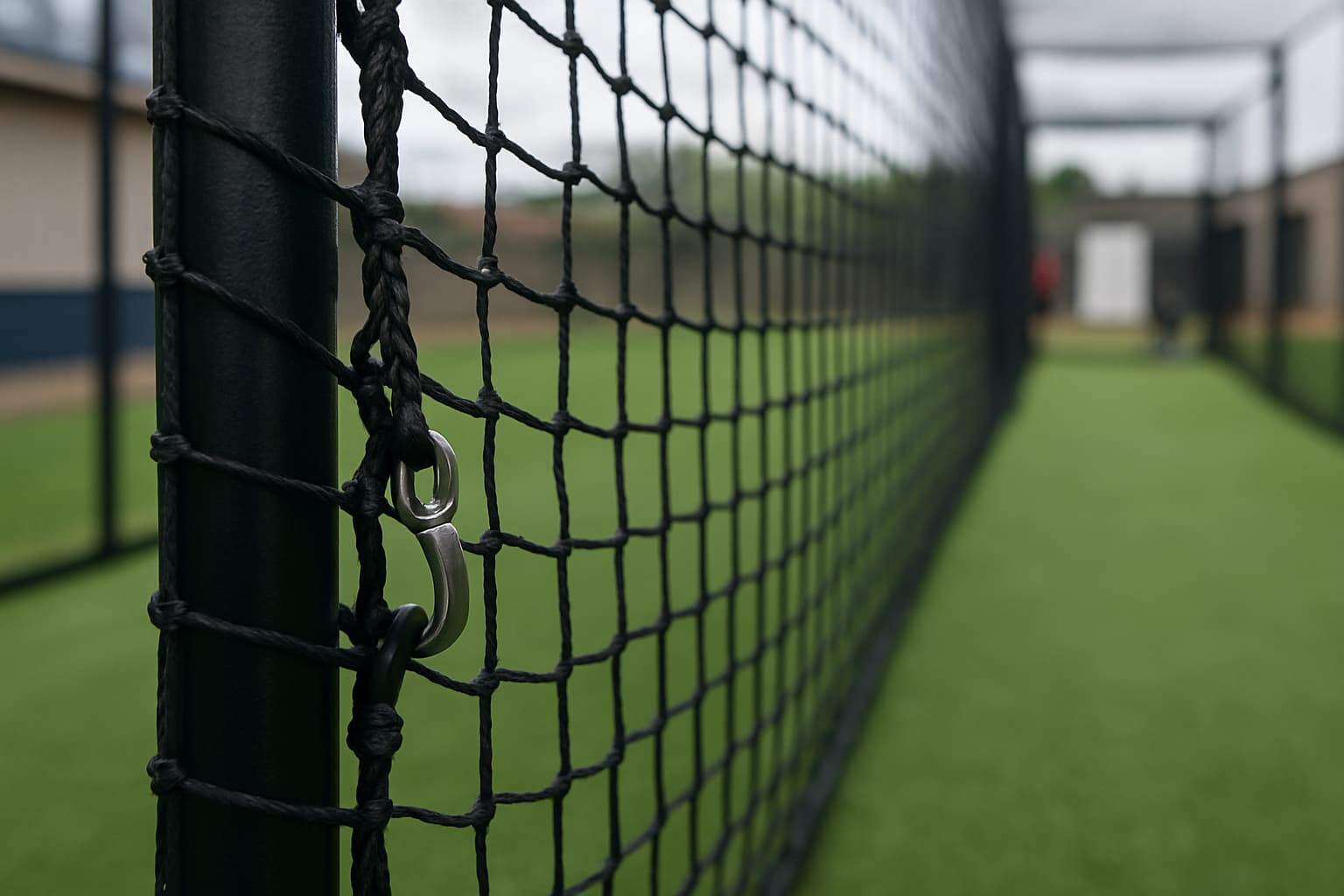
The floor decides more about your batting cage than almost any other component: how it plays, how it drains, how your player's knees feel after a hundred swings, and whether the cage is usable in March. The turf-versus-concrete question is really a question about layers — and the best answer for most builds uses both.
What Each Surface Actually Gives You
Bare concrete
Concrete's virtues are permanence and consistency: a dead-flat slab that never ruts, drains predictably with the right slope, and gives machines and L-screens a stable footing. Its vices are just as real: it's punishing on joints for long sessions, balls skip off it unnaturally fast, and a slick dusty slab is a genuine slip hazard. Almost nobody should hit on bare concrete.
Turf over compacted base
Artificial turf over crushed, compacted stone plays the most like a real field: honest hops, forgiving footing, natural cleat feel. It drains well if the base is built right, costs less than pouring a slab, and is the standard for outdoor cage builds. The trade-off is base preparation — a lazily compacted base develops low spots and wrinkles within a couple of seasons.
The hybrid: turf over concrete
Indoor facilities and premium outdoor builds glue turf to a slab: perfectly flat forever, easy to clean, joint-friendly enough with a padded turf, and immune to washout. It's also the most expensive path — you're paying for both layers.
The Comparison That Matters
Cost: compacted base + turf typically runs $3–$6 per square foot installed; a concrete slab alone $6–$10; slab + turf $9–$15. Joints and fatigue: turf-over-base is kindest, bare concrete worst. Drainage: a permeable base drains through; slabs need deliberate slope. Longevity: the slab lasts forever, but quality turf is the wear item either way — expect 8–15 years outdoors. Maintenance: slabs win; bases need occasional re-leveling at the plate area where cleats dig.
Our Recommendation
For a backyard build: turf over a properly compacted stone base, with extra base attention (or a small pad) at the batter's box and machine position. It's the best play-feel per dollar and the easiest to fix later. Choose the full slab hybrid only if you're building semi-permanent, want zero maintenance, or you're converting a garage or barn where the slab already exists. Either way, the floor is one line in a bigger budget — see our complete cage cost breakdown — and it interacts with layout decisions covered in our space planning guide.
Try Before You Build
The fastest way to develop an opinion about surfaces is to hit on a few. Private cages on CageList span the whole range — grass, turf-over-base, turf-over-slab — and an hour's booking tells you more about what your player likes underfoot than any spec sheet.
Climate Notes: Freeze, Heat, and Rain
Climate should tilt the decision. In freeze-thaw country, the compacted base is the safer bet — it flexes with frost heave, while slabs poured without proper sub-base or expansion joints crack within a few winters, and a cracked slab telegraphs through glued turf. In hot-sun markets, remember that artificial turf runs 20–40 degrees hotter than air temperature on summer afternoons; a lighter-colored infill and morning sessions manage it, but bare slab stays cooler underfoot than dark turf. In high-rain regions, the permeable base drains through while slabs demand correctly sloped forms — get the slope wrong at the pour and you own the puddle forever. None of these are dealbreakers; they're weightings. A Minnesota backyard leans base-and-turf, a Phoenix garage conversion leans slab, and a Houston build cares about drainage above all.
Frequently Asked Questions
Can I put turf straight on dirt or grass?
You can, briefly. Without a compacted base it wrinkles, holds water, and ruts at the batter's box within a season. Build the base.
What turf pile height is right for a cage?
Short, dense pile (around half an inch, often nylon) at the hitting areas for durability; padded backing helps on slab installs.
Does a slab need to slope?
Yes — roughly 1% away from the hitting area so water sheets off. A dead-flat slab outdoors becomes a puddle.
Which surface is best for pitching machines?
Machines want flat and stable: slab or well-compacted base both work; soft ground under a tripod machine causes the inconsistency hitters blame on the machine.
Get the numbers
Get your free batting cage cost estimate
Enter your email and we'll send you an itemized build breakdown — frame, netting, turf, lighting, and install — plus what a cage like yours could earn if you rent it out.
No spam, unsubscribe anytime. Prefer the interactive tool? Open the full cost calculator.
Already have a cage?
Rent it out when you're not hitting
Players, parents, and coaches near you are looking for cage time. Listing is free, you set your own price and hours, and you approve every booking.
Related Guides
View all articles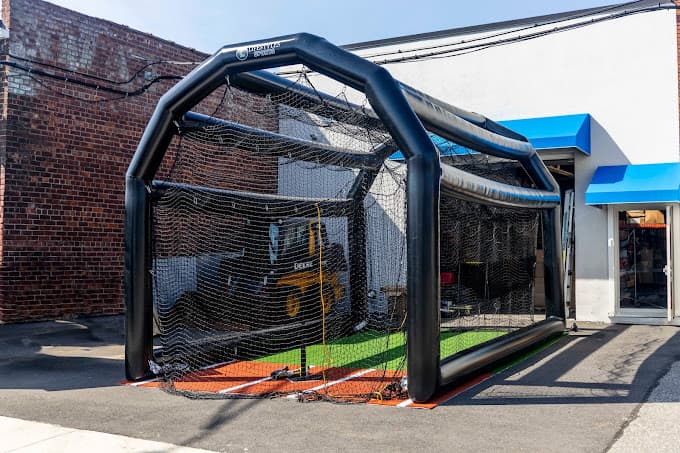
Build a Batting Cage
Inflatable Batting Cages: What They Cost, and Whether They Pay for Themselves
Inflatable batting cages run from $1,500 party units to $10,000 branded commercial builds, and only one manufacturer publishes a real price. What each tier costs, why $3,999 is not the price of a cage, and the booked hours it takes to pay one off.
Build a Batting Cage
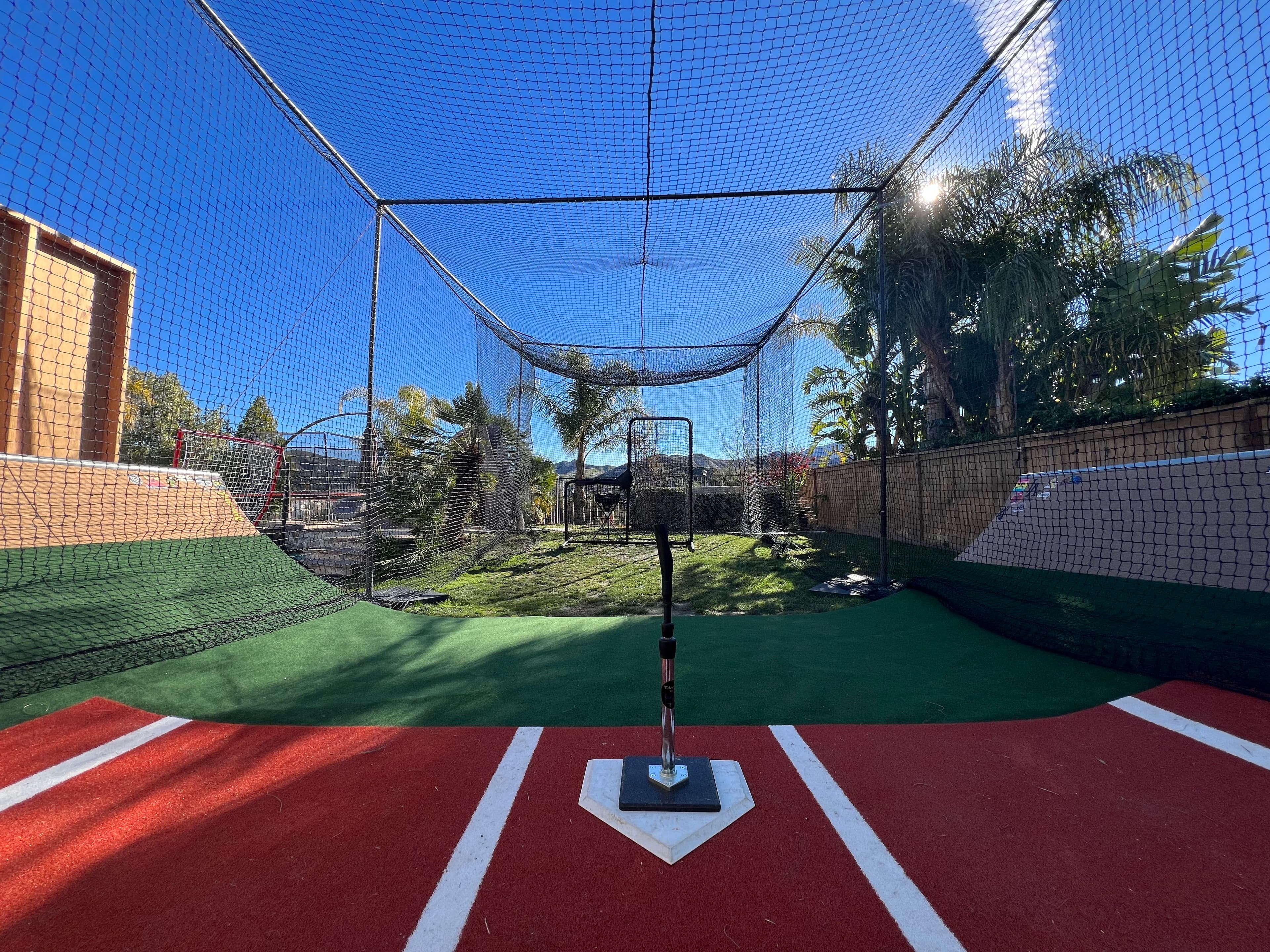
27 Types of Batting Cage: A Photo Field Guide to Every Backyard Setup in America
Barn conversions, driveway slivers, retractable tunnels, ranch cages and climate-controlled outbuildings. A photo field guide to 27 kinds of batting cage, built from 214 real bookable listings on CageList, with what each one costs and who it is for.
Build a Batting Cage
Backyard Batting Cage Kits, Compared: What You Really Get at Each Price (2026)
Every price tier of backyard batting cage, honestly compared — the companies, the netting grades, the realistic lifespan, and what a cage that survives real hitters (or paying renters) actually needs.
Run a travel team? Get your free page.
Baseball or softball. Claim a free directory page, post tryouts, and share cagelist.com/@yourteam with families.
Find your league
Free directories of real leagues and clubs near you — then book a batting cage to get your reps in before opening day.
1,000 organizations
Join the backyard batting cage community
Talk builds, gear, hosting and player development with cage owners, coaches, parents and baseball families.