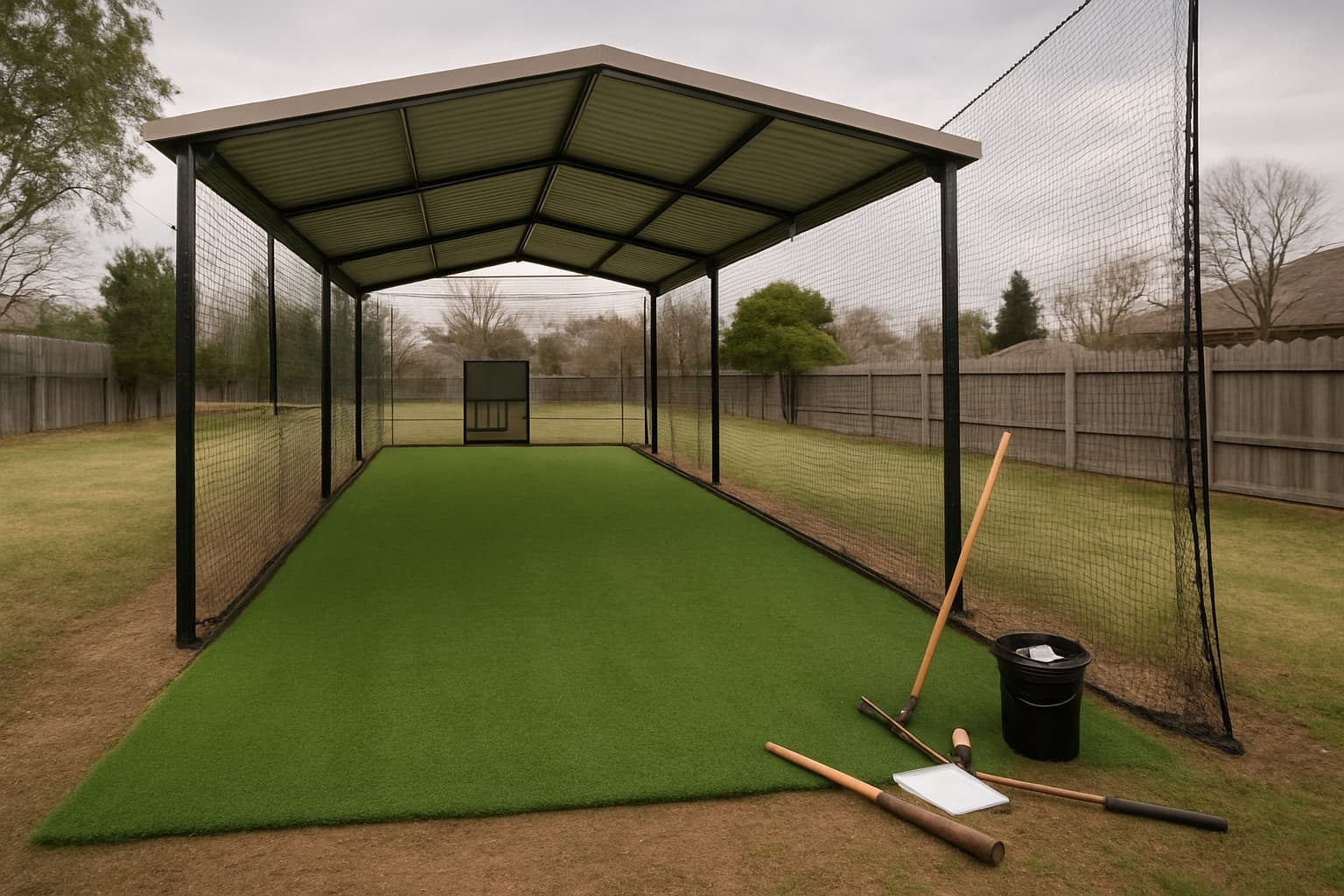
Turf installation is where backyard builds either level up to facility-grade or telegraph "DIY" forever. The difference isn't the turf — it's the fifteen decisions under and around it. Here's the full install sequence with the professional details that separate a floor that lasts twelve years from one that wrinkles in two.
The Base Is 80% of the Job
Professional turf floors are compacted-stone sandwiches: 3–4 inches of crushed base rock, then a finer screed layer, each compacted in thin lifts with a plate compactor (a $100/day rental that is not optional). The finished base should be dead flat with a slight crown or slope for drainage — check with a string line, not your eye. Every wrinkle and rut you'll ever see in the turf is a base flaw wearing a turf costume. If you're still choosing your floor system, start with the turf vs. concrete comparison; if you're gluing to an existing slab, your prep is cleaning, crack-filling, and dry-fitting instead.
Rolling Out Without Ruining It
Unroll the turf and let it relax in the sun for several hours — cold, tightly-rolled turf fights you and remembers the roll. Dry-fit everything before any cutting or fastening. Cut from the back with a fresh blade, following the stitch rows. Plan seams to run with the ball path, not across the batter's box, and keep the pile direction consistent across pieces: two panels with opposing pile lean read as two different colors in sunlight — the most common amateur tell.
Seams and Securing
Seam with proper seaming tape and adhesive (or stainless staples on permeable bases), butting edges without gaps or compression humps. Perimeter-secure with landscape spikes or a buried edge; interior fastening only at seams. Over-nailing the field of the turf creates dimples that collect water and catch cleats.
The Batter's Box: Reinforce It Now
The plate area takes 100x the wear of anywhere else. Pros handle it one of three ways: a second sacrificial turf layer glued over the box, a dense nylon insert, or a replaceable stance mat. Do one at install time — retrofit patches never blend. Keep a remnant off-cut for future repairs; dye lots vary and a matching patch is gold.
Infill or Not?
Short-pile cage turf usually runs without infill or with a light sand dressing to settle the pile and add ballast. If you use sand, broom it in across several passes, not one dump. Skip rubber crumb in cages — it migrates, bounces, and ends up in the ball bucket.
The Finish-Line Checklist
Walk the floor in cleats before calling it done: no seam catches, no dimples, no pile-direction shifts. Water-test with a hose — anywhere it pools, address now. Then brush the entire surface against the pile lean to stand it up. That final brushing is the "professional finish" in one step, and repeating it seasonally (per the weatherproofing calendar) keeps the floor looking installed-yesterday. Want a reference standard? Book an hour in a top-reviewed private cage nearby and study the floor — seams, box, edges — before you install your own.
Frequently Asked Questions
Can I install cage turf myself?
Yes, if you rent a plate compactor and respect the base work. The turf handling is careful labor; the base is the skill.
What causes turf wrinkles?
Base flaws, skipped relaxation time before fitting, or temperature swings on unsecured turf. All three are prevented at install, not fixed after.
Glue or staples for seams?
Seam tape and adhesive on slabs; adhesive or stainless staples on stone bases. Never rely on gravity — cage traffic finds every free edge.
How thick should base rock be?
3–4 inches compacted for the main layer plus a thin screed layer, done in lifts. More depth helps in freeze-thaw or soft-soil sites.
Get the numbers
Get your free batting cage cost estimate
Enter your email and we'll send you an itemized build breakdown — frame, netting, turf, lighting, and install — plus what a cage like yours could earn if you rent it out.
No spam, unsubscribe anytime. Prefer the interactive tool? Open the full cost calculator.
Already have a cage?
Rent it out when you're not hitting
Players, parents, and coaches near you are looking for cage time. Listing is free, you set your own price and hours, and you approve every booking.
Related Guides
View all articles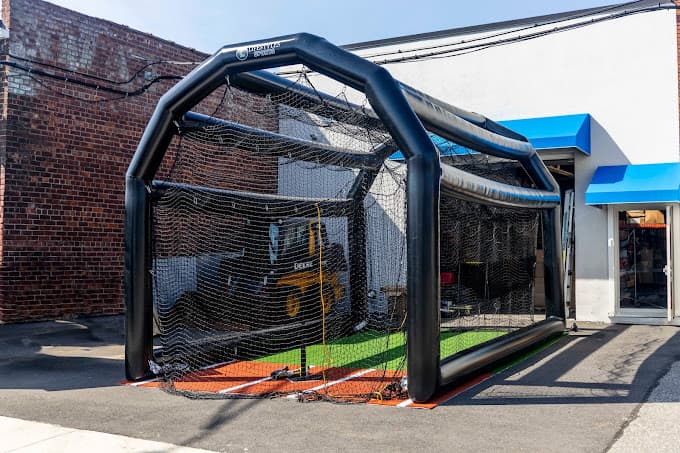
Build a Batting Cage
Inflatable Batting Cages: What They Cost, and Whether They Pay for Themselves
Inflatable batting cages run from $1,500 party units to $10,000 branded commercial builds, and only one manufacturer publishes a real price. What each tier costs, why $3,999 is not the price of a cage, and the booked hours it takes to pay one off.
Build a Batting Cage
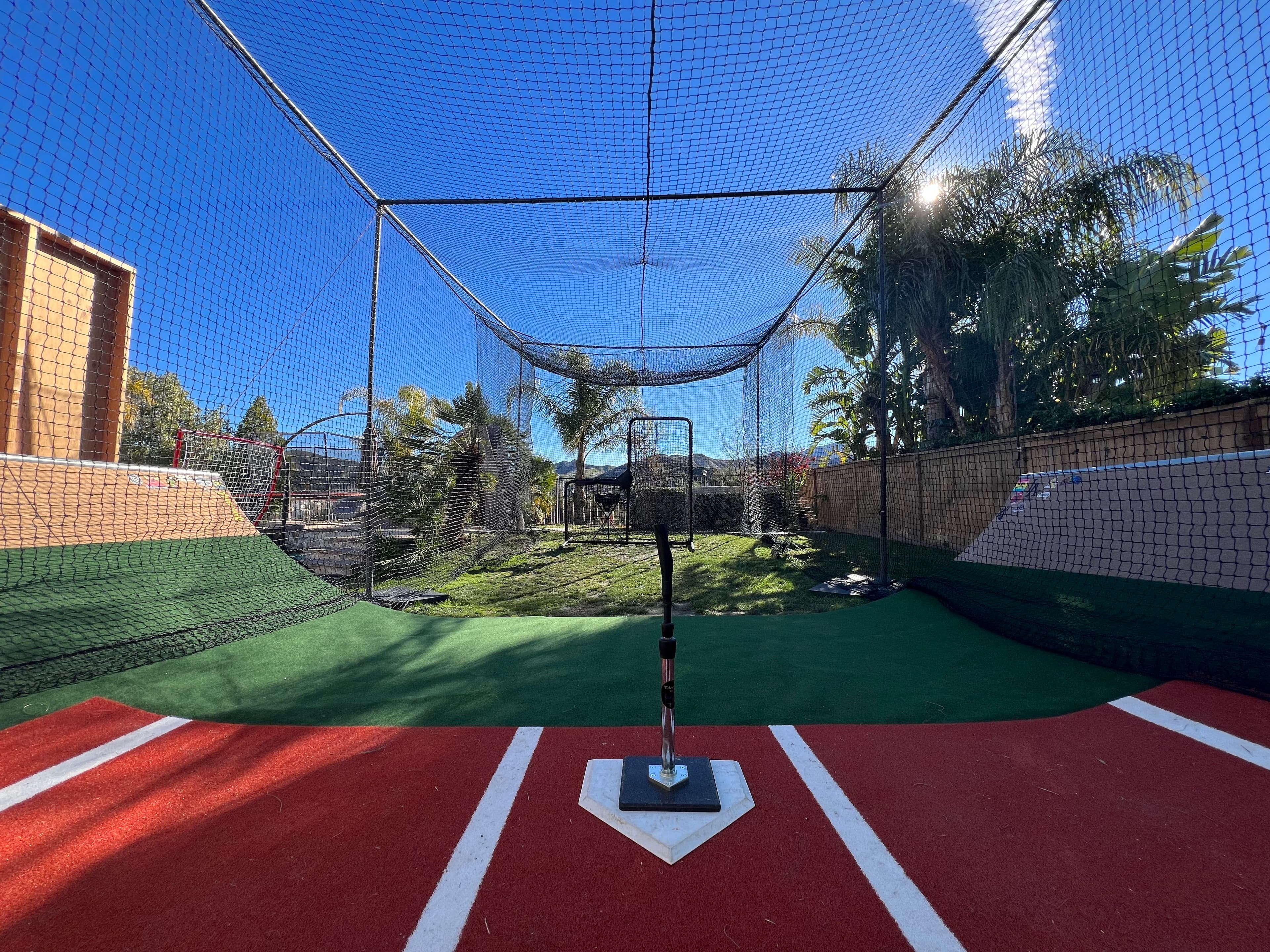
27 Types of Batting Cage: A Photo Field Guide to Every Backyard Setup in America
Barn conversions, driveway slivers, retractable tunnels, ranch cages and climate-controlled outbuildings. A photo field guide to 27 kinds of batting cage, built from 214 real bookable listings on CageList, with what each one costs and who it is for.
Build a Batting Cage
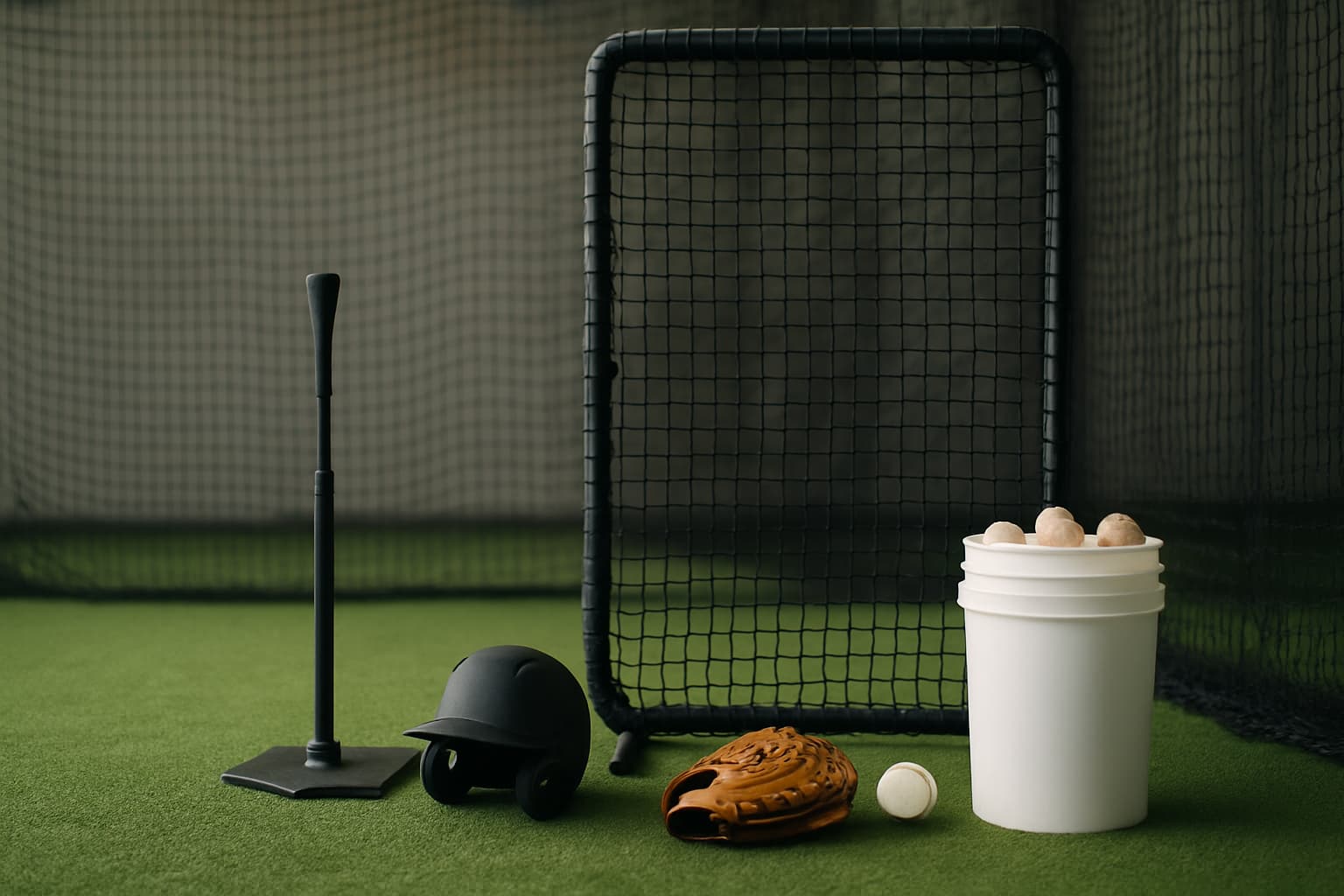
Backyard Batting Cage Kits, Compared: What You Really Get at Each Price (2026)
Every price tier of backyard batting cage, honestly compared — the companies, the netting grades, the realistic lifespan, and what a cage that survives real hitters (or paying renters) actually needs.
Run a travel team? Get your free page.
Baseball or softball. Claim a free directory page, post tryouts, and share cagelist.com/@yourteam with families.
Find your league
Free directories of real leagues and clubs near you — then book a batting cage to get your reps in before opening day.
1,000 organizations
Join the backyard batting cage community
Talk builds, gear, hosting and player development with cage owners, coaches, parents and baseball families.