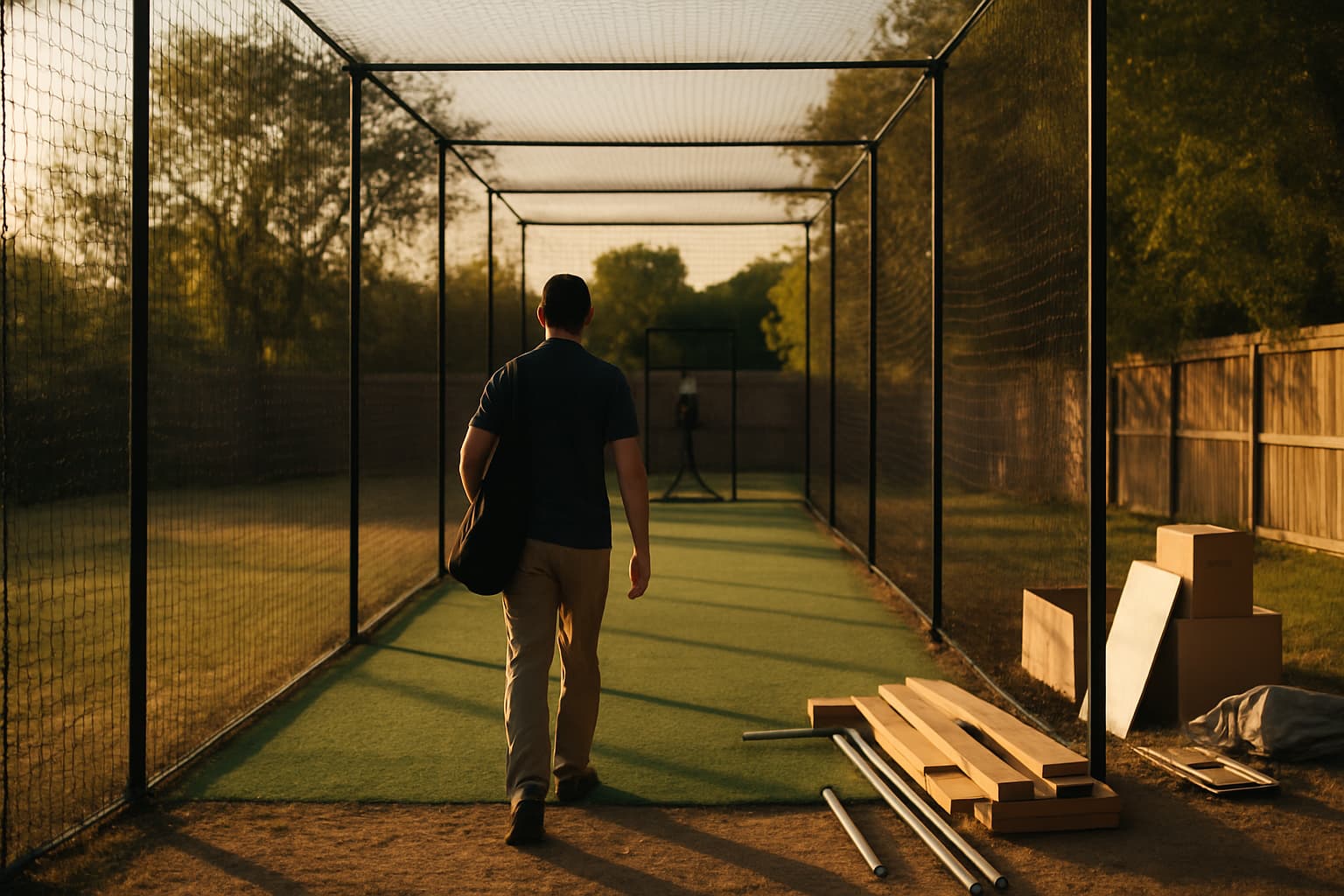
Everyone shopping for a batting cage tries to save money in the same place: width. They'll go 12 feet wide instead of 14 to shave a few hundred dollars off the frame and netting. I've built and hit in both, and I'll tell you straight — that extra two feet is the best money you'll ever spend on a cage, and I'd never give it back.
Why I'll never hit in a 12-foot cage again
I can tell you from my own swings exactly what a narrow cage does to you. In a 12-foot cage the net is right there, and you know it's right there. As a hitter, the second any part of your brain registers that there's a wall two feet off your bat path, it changes what you do. You feel a little tension as you get to contact and extension. You don't want to smoke the net on your follow-through, so — without ever deciding to — you pull up a hair early.
That hair is everything. Hitting is a game of full, free, committed swings. The best rounds of BP I've ever taken were the ones where I wasn't thinking about anything except the ball. The worst were the ones where some background worry was sitting in my head. A cage that's too tight puts that worry there on every single swing, and you can't train your way out of it — it's the room, not you.
What that tension actually costs your swing
When you subconsciously protect the net, a few things break down. You decelerate through the zone instead of accelerating. You cut your extension short, so you never feel what full reach out front is supposed to feel like. And you start grooving a shorter, more defensive move — the exact opposite of what you're paying for cage time to build. Give a hitter 14 feet and the net disappears from their mind. They finish. They extend. They swing like the net isn't a factor, because it isn't.
14 feet is the sweet spot. 16 is the flex.
For almost everyone, 14 feet is the number I'd write down and not think twice about. That single extra foot on each side of the box is the difference between "clear enough" and "100% clear," and clear is what lets you let it rip.
If you're a grown man, or you've got a serious 14-year-old with real bat speed, and you have the space and the budget, I'd genuinely look at 16 feet. The full extra foot on both sides of the batter's box makes a real, physical difference — you're never running your bat into the net, never pulling up, never managing the room. It's a luxury, but if you're a true baseball fanatic building the cage you'll hit in for the next ten years, it's the kind of luxury you feel every day. Before you talk yourself out of it on price, it's worth understanding how much room a cage actually needs and what the frame and netting really cost.
Don't shortchange the length either — go 70 feet if you can
Width gets you a free swing; length gets you a real practice. If you have the room, build 70 feet. Seventy is the number where everything opens up: you can drop a mound in and throw, and you can put a pitching machine at a true 60 feet, 6 inches — regulation distance — with the hitter standing in comfortably. Anything shorter and you're always compromising the machine's distance or crowding the plate.
And if you're lucky enough to have even more room — 75 or 80 feet — that's the dream setup. At that length you can put a real pitching mound in and stand the machine behind it, or run live arms and a machine without either one crowding the other. You get regulation distance and space to breathe. Most people won't build that, and that's fine. But if you can, do it — you will never once wish you'd built a shorter cage.
What I tell people who ask me
If you're only ever doing tee work and soft toss with a little kid, a smaller cage is genuinely fine and I won't upsell you. But if you're serious — if you know in your gut you want a real place to hit for years — don't save money on the two dimensions that decide whether your swing is free: width and length. Go 14 feet wide (16 if you can), 70 feet long (more if you're blessed with the space). It costs a little more up front and it's worth every penny, because you can't put a price on stepping in and knowing, on every swing, that the net is never going to be a factor.
If you're weighing a build, run the numbers first — and when you just want to get some quality swings in, find a cage near you and go hit.
— Isaac Hess, Founder of CageList
Get the numbers
Get your free batting cage cost estimate
Enter your email and we'll send you an itemized build breakdown — frame, netting, turf, lighting, and install — plus what a cage like yours could earn if you rent it out.
No spam, unsubscribe anytime. Prefer the interactive tool? Open the full cost calculator.
Already have a cage?
Rent it out when you're not hitting
Players, parents, and coaches near you are looking for cage time. Listing is free, you set your own price and hours, and you approve every booking.
Related Guides
View all articles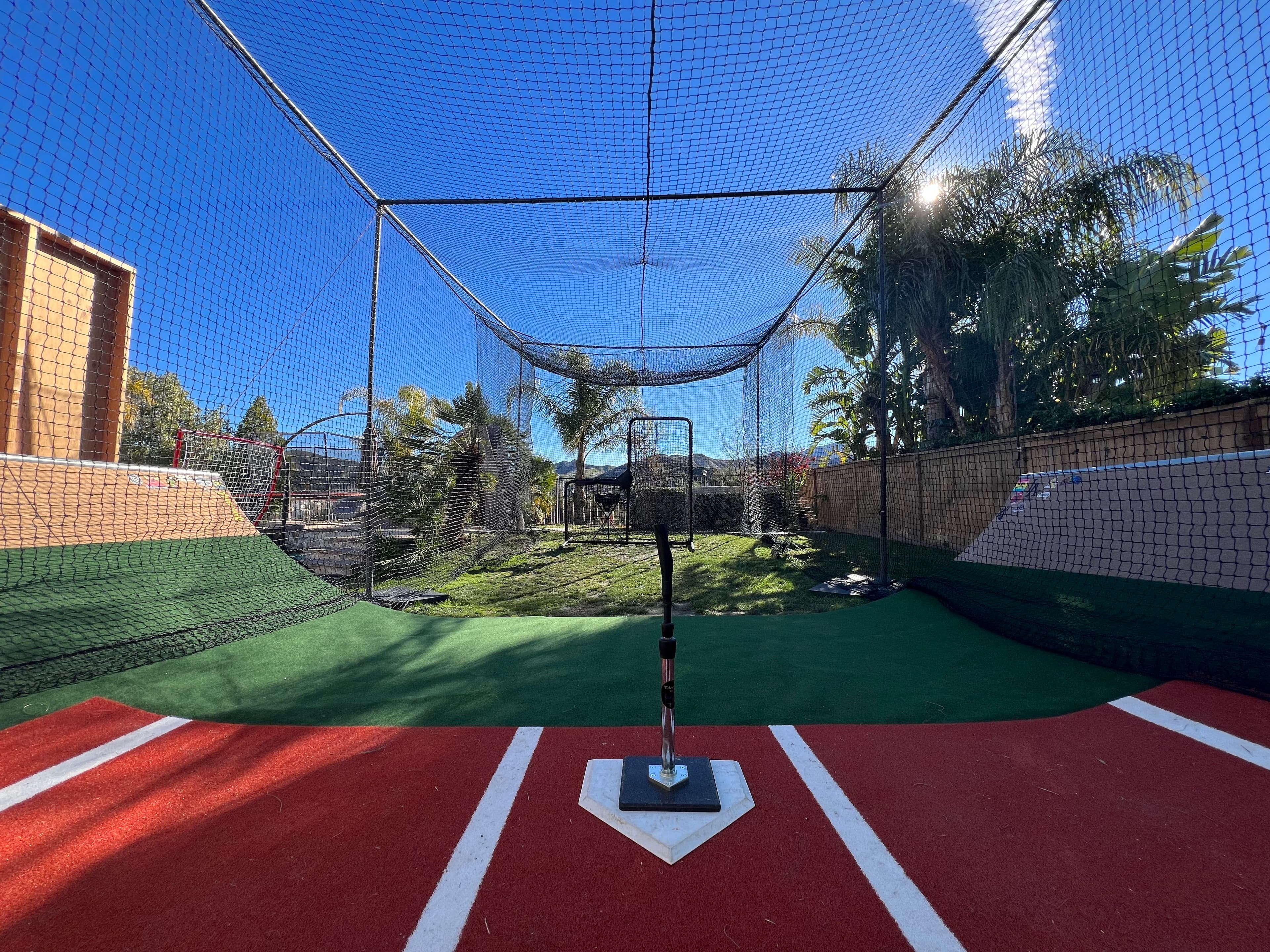
Build a Batting Cage
27 Types of Batting Cage: A Photo Field Guide to Every Backyard Setup in America
Barn conversions, driveway slivers, retractable tunnels, ranch cages and climate-controlled outbuildings. A photo field guide to 27 kinds of batting cage, built from 214 real bookable listings on CageList, with what each one costs and who it is for.
Build a Batting Cage
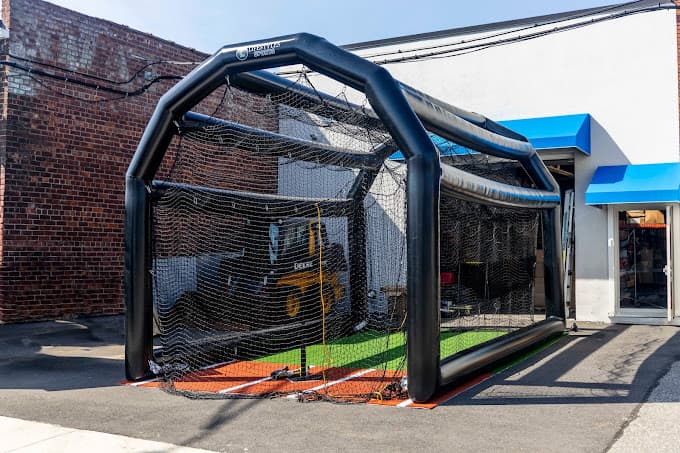
Inflatable Batting Cages: What They Cost, and Whether They Pay for Themselves
Inflatable batting cages run from $1,500 party units to $10,000 branded commercial builds, and only one manufacturer publishes a real price. What each tier costs, why $3,999 is not the price of a cage, and the booked hours it takes to pay one off.
Build a Batting Cage
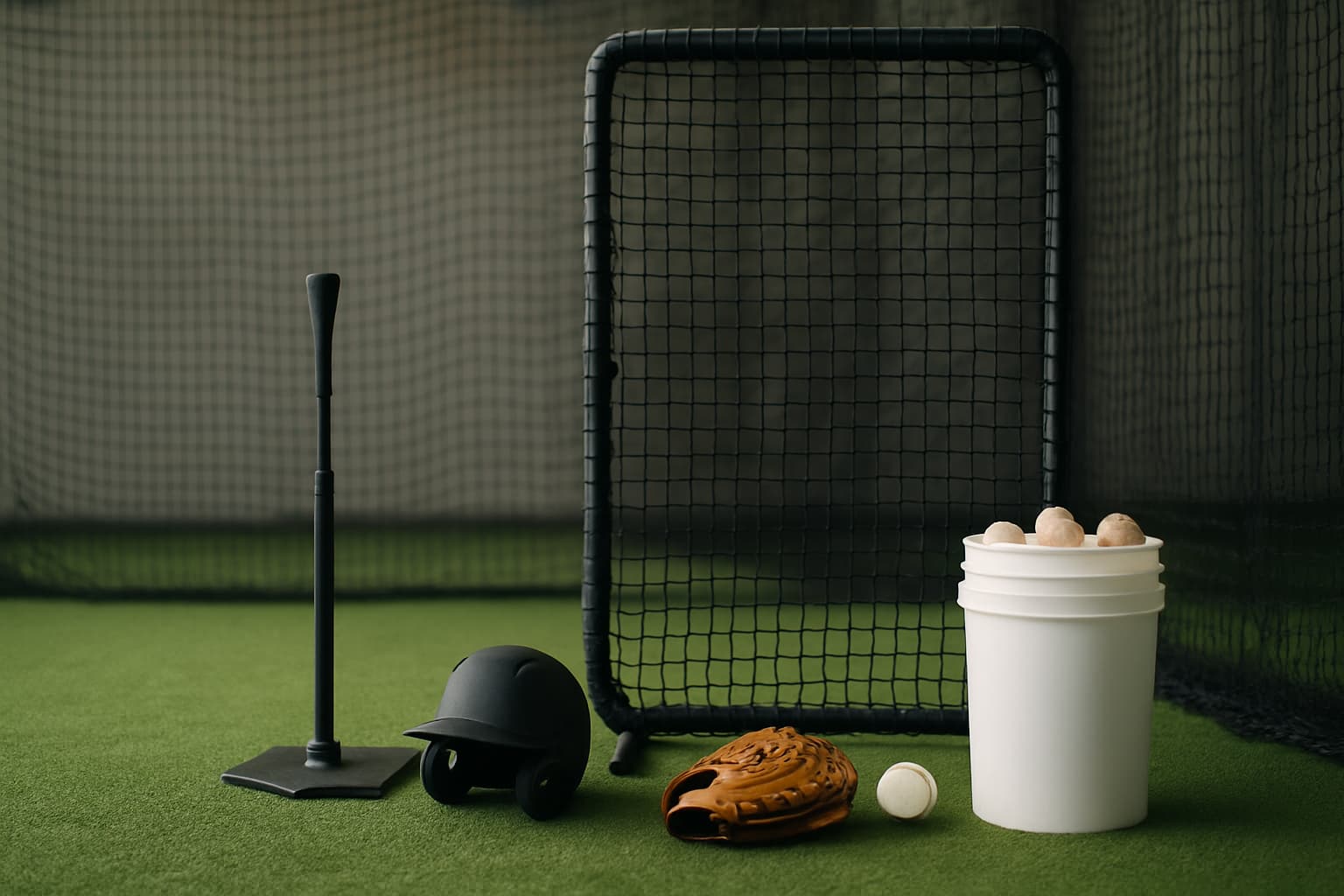
Backyard Batting Cage Kits, Compared: What You Really Get at Each Price (2026)
Every price tier of backyard batting cage, honestly compared — the companies, the netting grades, the realistic lifespan, and what a cage that survives real hitters (or paying renters) actually needs.
Run a travel team? Get your free page.
Baseball or softball. Claim a free directory page, post tryouts, and share cagelist.com/@yourteam with families.
Find your league
Free directories of real leagues and clubs near you — then book a batting cage to get your reps in before opening day.
1,000 organizations

Join the backyard batting cage community
Talk builds, gear, hosting and player development with cage owners, coaches, parents and baseball families.