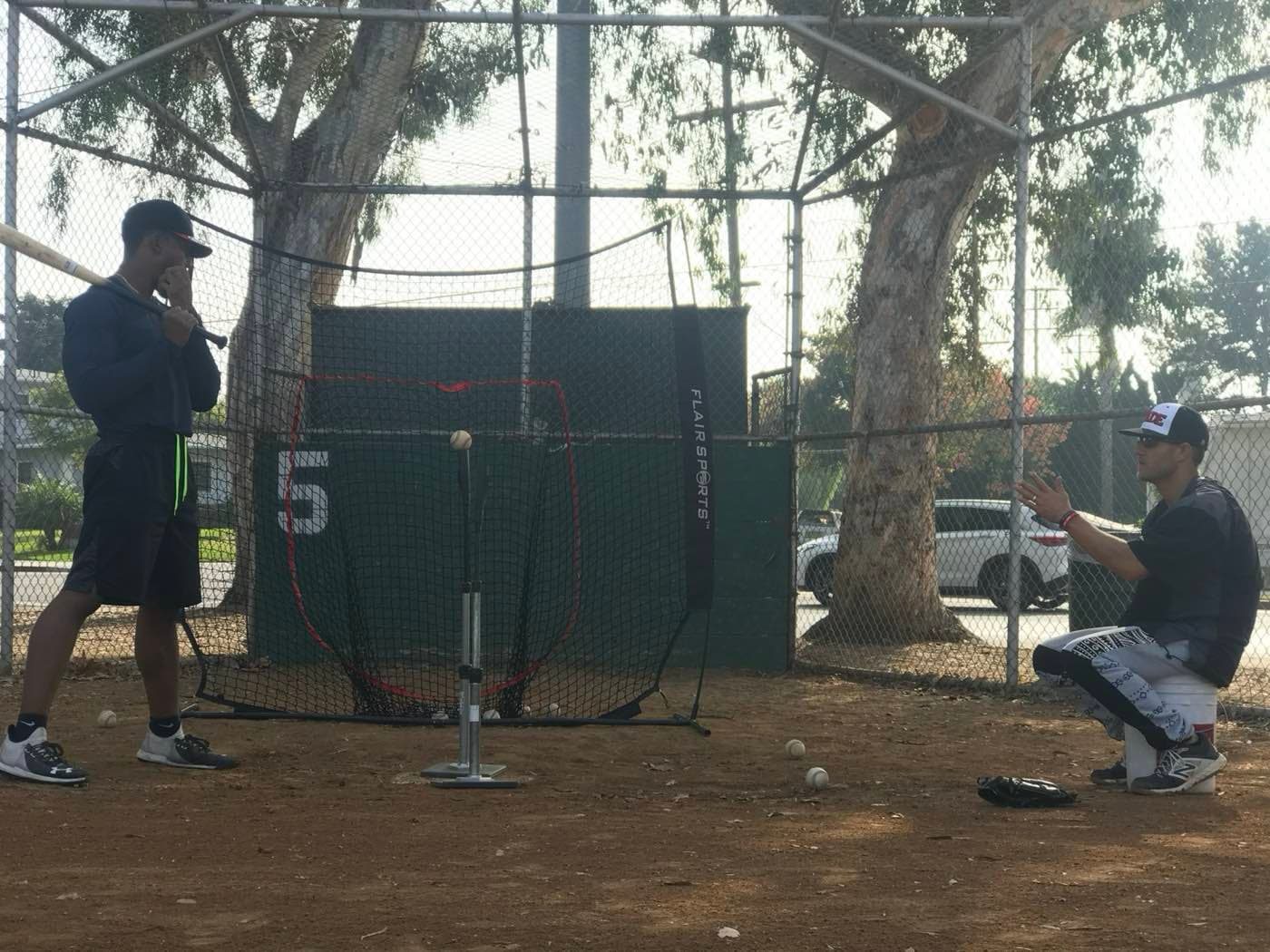
Most Little Leagues own a batting cage that gets used hard for about eight weeks and then sits behind a padlock for the rest of the year. Every board eventually asks the same question: could we open it up, charge for it, and put the money back into the program?
The short answer is usually yes. The longer answer is that it depends on three things your league already has on file, and it is worth an hour of a board member’s time to check them before anyone votes on anything.
Leagues already do this
This is not a new idea, and you are not the first board to think of it. Plenty of leagues rent their cages already — the ones who do it well just do it on paper. If you want to see who else is running a program near you, our Little League directory lists leagues by state.
Redmond North Little League, for example, publishes a full rental agreement for the batting cages at their training center. A renter has to keep a copy of the current rental permit on them during use. One player at a time in the cage, with one adult operator. Cancel less than 24 hours out and you forfeit the fee. Reservations are made by calling the league or walking up to the front desk. Renters bring their own NOCSAE-approved helmet and an official bat. Break the rules and the coach and their team lose cage access for the rest of the year.
That is a real, working system, and it is worth reading before you build your own. It also shows you exactly where the friction is: somebody has to answer that phone, hold that calendar, and chase that money.
Question 1: who actually owns the cage and the ground under it?
This is the one that surprises boards, because the answer is different almost everywhere.
Some leagues own their complex outright. Many more play on land owned by a city, a county, or a parks district, and operate it under a use agreement or ground lease — often running five years or longer, with the league picking up maintenance and sometimes utilities in exchange. Others use fields belonging to a school district or a church, on arrangements that can be anything from a formal lease to a handshake that predates everyone currently on the board.
Your answer decides who has to approve this. If the league owns the cage and the land, the board decides. If anyone else owns either one, they are part of the conversation, and it is far better to bring them in at the start than to explain it afterwards.
Question 2: what does your use agreement say about making money?
An agreement that lets your league run its programming does not automatically let you charge outsiders to use the facility. Some agreements address this directly. Most say nothing at all.
Silence is not permission, but it is not a refusal either — it is a phone call. Ask your city or district contact two things: whether revenue-generating use by people outside league programming is permitted under the current agreement, and if it is restricted, whether there is a process to request it. Municipalities have become steadily more willing to let the organizations using their fields carry more of the cost, and a league proposing to fund its own program is a comfortable conversation to have.
Get the answer in writing. Not because anyone is going to be difficult, but because the board that votes on this in three years will not remember the phone call.
Question 3: what does your insurance actually cover?
Little League’s own guidance sets the floor at $1,000,000 single limit for bodily injury and property damage, and it is explicit that when a league’s facility is rented or leased to other organizations, the league should obtain proof of adequate accident and general liability insurance from them, along with signed waivers from participants.
That guidance is written for a scenario where another team or league leases your complex for a season. A parent booking an hour of cage time is not that. But the underlying question is the same one your carrier will ask, so ask them first: does our general liability coverage extend to paid use by people who are not registered in our programs?
Two follow-ups worth asking in the same call. Where the field belongs to a city, county, school or church, does that owner need to be named as an additional insured? And is a signed waiver from every adult user required, recommended, or neither?
Our safety and liability guide covers the same ground from the host side, including what a signed waiver does and does not do. A short answer in writing from your broker is what your board will actually want to see. It is also the single thing most likely to stall this if you leave it until the meeting.
What about taxes?
Your treasurer will ask, so here is the shape of it. For a 501(c)(3), rental income from property the organization owns is generally treated as passive and excluded from unrelated business income tax. Two common exceptions matter here: if the property is debt-financed, that exclusion can fall away, and if you bundle in substantial services rather than just renting the space, the income can be recharacterized. Gross unrelated business income above $1,000 in a year means filing a Form 990-T.
There is also a reasonable argument that opening your cage to local players is squarely within why your league exists in the first place, which is a different question again.
None of that is advice, and this is exactly the kind of question a treasurer should put to the league’s accountant rather than to a website. It is a fifteen-minute conversation, and it is much cheaper than the alternative.
What it actually takes to run
Once the answers come back, the remaining problem is operational, and it is the reason a lot of leagues stop here.
The paper version works, but it costs a volunteer. Someone answers the phone, keeps the calendar, collects the money, remembers the cancellation rule, and hands over the gate code. That is a real job during a season when the same people are already running registration and dragging infields.
The alternative is to put the calendar online: families see the hours you have opened, book a slot, pay when they book, and the money lands in the league account. You keep practices, games, tournaments and maintenance blocked, and you approve or decline each request until you are comfortable. That is the part CageList does for leagues — and we waive our commission on a verified league’s own cage, so the rate you set is the rate your program keeps.
A reasonable starting point
If your board decides to go ahead, start narrow. Open a handful of hours a week that never collide with league activity. Approve every booking by hand at first so you can see who is asking. Price it well below a commercial facility — check what cages near you actually charge before you set a number. Around $20 an hour is a rate families say yes to without thinking, and it is still real money against a cage that was earning nothing. Then widen it once the board has watched it work for a month.
The cage is already built and already paid for. The only question is whether it works eight weeks a year or fifty.
Still working out where your league fits? Start with how to find baseball leagues near you, or go straight to CageList for Little Leagues.
Common questions
Do we need permission from our city to rent out our batting cage?
If the city owns the land or the facility, almost certainly yes — check your use agreement or lease and ask your contact directly. If your league owns both outright, the board decides.
Does Little League prohibit renting out a league facility?
There is no blanket prohibition. Local leagues set their own facility policies, and many already rent their cages. Little League’s guidance concerns insurance: carry adequate general liability coverage, and obtain proof of insurance from organizations that lease your facility.
Will renting our cage affect our nonprofit status?
Rental income from property a 501(c)(3) owns is generally passive and excluded from unrelated business income tax, with exceptions for debt-financed property and for rentals bundled with substantial services. Above $1,000 of gross unrelated business income you file a Form 990-T. Ask your accountant about your specific situation.
Can we limit bookings to our own league families?
You control who gets in. The practical approach is to approve each request by hand rather than allowing instant booking, so nobody reserves the cage without a board member saying yes.
How much should a Little League charge for cage time?
Commercial cages commonly run $40 an hour and up — our pricing guide walks through how hosts land on a rate. Leagues renting to their own community usually sit well under that; around $20 an hour is a common, easy yes for families and still meaningful revenue against an asset that was idle.
What insurance do we need to rent out our batting cage?
Start with the general liability policy you already carry and ask your broker whether it extends to paid use by non-members. Where someone else owns the field, ask whether they must be named as an additional insured. Little League’s stated minimum for general liability is $1,000,000 single limit.
This article is general information, not legal, tax or insurance advice. Every league’s lease, policy and municipality is different — confirm your own with your district administrator, your carrier and your accountant.
Get the numbers
Get your free batting cage cost estimate
Enter your email and we'll send you an itemized build breakdown: frame, netting, turf, lighting, and install, plus what a cage like yours could earn if you rent it out.
No spam, unsubscribe anytime. Prefer the interactive tool? Open the full cost calculator.
Already have a cage?
Rent it out when you're not hitting
Players, parents, and coaches near you are looking for cage time. Listing is free, you set your own price and hours, and you approve every booking.
Related Guides
View all articles
Little League Fundraising Calendar: Fall to Opening Day
What a volunteer league should plan each season before opening day: budget, sponsor banners, concessions, donated items, state rules, tax and insurance questions.
7 min readRead
Everybody Thinks the Umpire Is Bad
Without umpires, baseball does not exist. Isaac Hess on the one season he wore the mask, what the job pays, what a day looks like and what we say to the people in the gear.
8 min readRead
I Was a Coach With Nowhere to Coach. So I Built CageList.
For years I gave baseball lessons in Los Angeles, and the hardest part was never the coaching. It was finding a place to do it. Isaac Hess on why he built CageList.
6 min readRead
Run a travel team? Get your free page.
Baseball or softball. Claim a free directory page, post tryouts, and share cagelist.com/@yourteam with families.
Find your league
Free directories of real leagues and clubs near you. Then book a batting cage to get your reps in before opening day.
1,421 organizations
 leagues in 49 statesAdult hardball near you: MSBL, NABA and independent leagues.Browse men's leagues
 leagues in 49 statesYouth baseball and softball leagues, organized by state.Browse little leagues
 programs in 41 statesTravel and club programs in your region. Find one, or list yours free.Browse travel teams
Join the backyard batting cage community
Talk builds, gear, hosting and player development with cage owners, coaches, parents and baseball families.