Bunting looks simple until the game asks for it. The pitch is moving, the defense is charging, the runner is breaking, and the hitter has to deaden the ball in a precise part of the field. That is why bunting cannot be treated as a five-minute afterthought at the end of practice. Players need to learn the footwork, bat angle, pitch selection, and decision-making before the sacrifice bunt or squeeze play shows up in a real inning.
A batting cage is one of the best places to build those fundamentals because it gives the hitter many controlled reps without turning every attempt into a full team drill. You can book a lane through CageList, bring a bucket of baseballs or softballs, and spend twenty minutes on a skill that wins close games.
Start with the right bunting position
The safest beginner setup is to pivot the feet, square the chest enough to see the ball, and keep the knees athletic. The bat should start near the top of the strike zone with the barrel above the hands. This matters because hitters should move down to the ball, not jab up at it. The top hand pinches the bat lightly behind the barrel, with fingers protected. The bottom hand controls the angle.
Players should not catch the ball with stiff arms. Think of receiving the pitch with soft hands. The bat gives slightly at contact so the ball dies instead of bouncing hard back to the pitcher. Before adding speed, rehearse the move without a ball: pivot, show the bat early, track an imaginary pitch, and pull the bat back on anything outside the strike zone.
Teach direction before placement
Young hitters often try to aim by stabbing the barrel. Direction comes from the angle of the bat and the position of the body. To bunt toward first base, the barrel points slightly toward first while the hitter stays balanced. To bunt toward third, the barrel works slightly that direction. The hitter should not twist wildly at the last second.
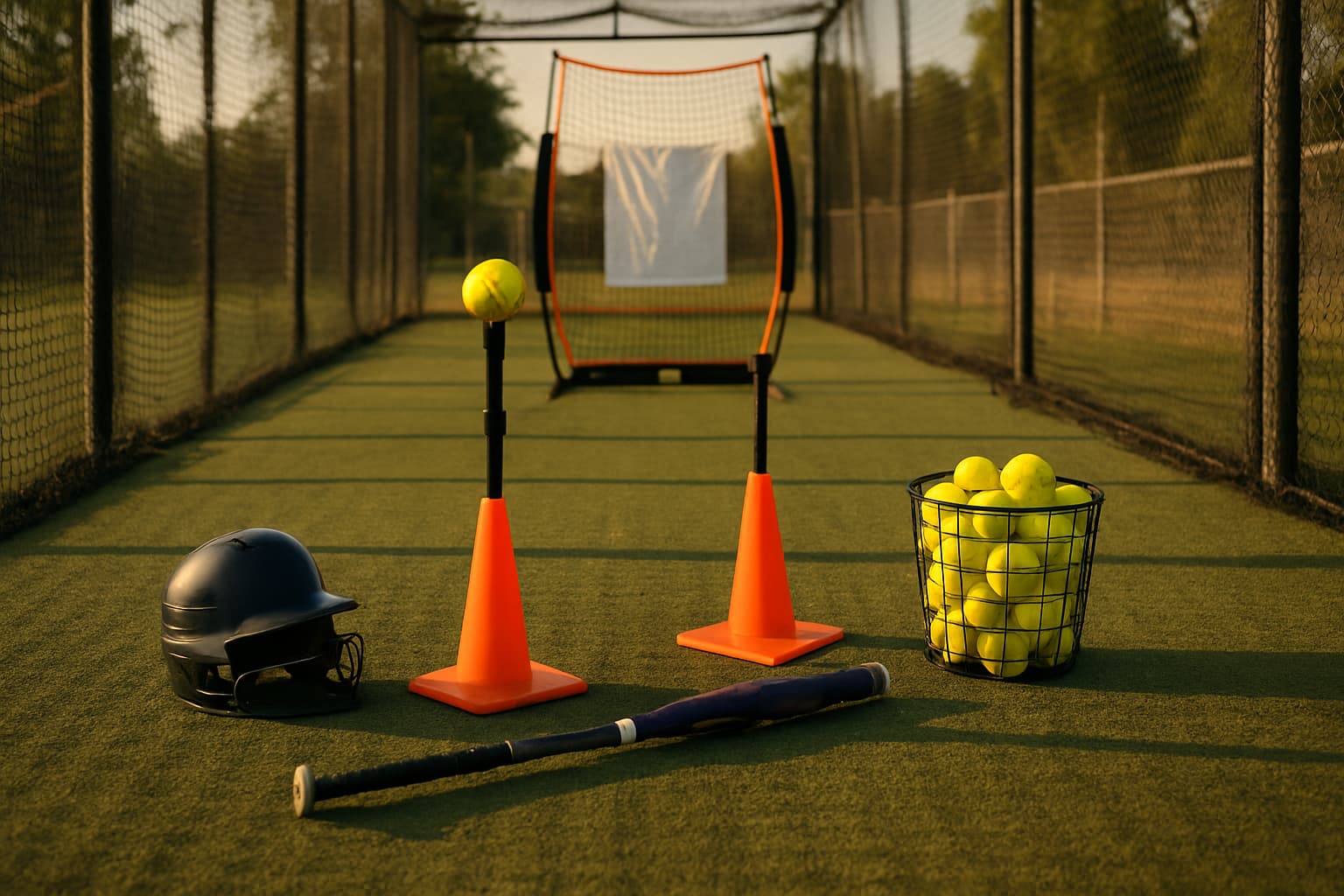
Use cones or tape inside the cage to create target lanes. Start with a large zone, then shrink it as the hitter improves. The first goal is not perfection. It is a bunt that is down, fair, and away from the catcher. Once the hitter can do that repeatedly, add game targets such as sacrifice toward first, drag bunt toward third, or squeeze bunt straight down.
Practice pitch selection
A good bunter is not required to bunt every pitch. High fastballs, pitches in on the hands, and balls far outside are difficult to control. In the cage, mix takes into bunting rounds. The hitter should show early, track the pitch, and pull the bat back if it is not a strike or not a buntable pitch in that count.
This is where bunting connects to the broader batting cage practice guide. Treat bunting like any other skill round: define the goal, control the setup, then make it more game-like. A strong session might include ten stationary bunts, ten front-toss bunts to target lanes, and ten decision reps where the hitter must either bunt or pull back.
Build drag and push bunt skills carefully
After the sacrifice bunt is reliable, faster players can learn drag bunts and push bunts. A drag bunt usually starts later and keeps the hitter moving out of the box. A push bunt uses firmer contact to get the ball past a charging corner infielder. Both skills require more athletic timing, so they should come after the player can deaden the ball safely.
Keep early drag-bunt work slow. Walk through the footwork first. Then add front toss. Machine work can help later, but only if the speed is realistic and the hitter can protect their fingers. For more skill stations that fit around bunt work, use the batting cage drills library and rotate tee, front toss, and machine rounds.
Make bunting competitive
Players buy into bunting faster when the drill has a score. Award two points for a bunt in the target lane, one point for a fair bunt outside the target, and zero for a pop-up, foul ball, or missed take sign. Add pressure by giving the hitter three attempts to move a runner, or by making the team beat its previous score.
For players who only practice full swings, bunting also improves barrel awareness. They learn to track the ball longer, control contact, and use the hands without over-swinging. Pair this work with a proper batting practice warm-up so the hands, wrists, and eyes are ready before the drill starts.
FAQ
When should a young player learn to bunt?
As soon as the player can protect their hands and track the ball safely. The earliest work should be slow, controlled, and focused on fair bunts, not advanced plays.
Should hitters square around early?
For sacrifice bunts, showing early helps beginners see the ball and control the bat. Drag bunts can be shown later after the fundamentals are reliable.
What is the biggest bunting mistake?
The biggest mistake is stabbing at the ball. Soft hands and bat angle create better bunts than a last-second jab.
Find a baseball league near you
Put your work into a real season — men's leagues, Little League, and travel teams, all in one guide.
Related Guides
View all articles
Training & Hitting
Practicing Hitting at Home Between Cage Sessions
You can not book a cage every day, but you can still get quality swings at home. Here is how to build a simple at-home hitting routine between rentals.
Training & Hitting
How to Run a Hustle Ball Class: Coach Pitch, Close Games, Teachable Moments
A coach's how-to for Hustle Ball™ — manage pace with coach pitch, keep games close, rotate positions, and teach without killing the energy.
Training & Hitting
Hustle Ball: Why One Practice a Week Should Feel Like a Real Game
MADE Baseball's Hustle Ball™ — coach-pitch live play that keeps kids loving the game. Why one weekly practice should feel like a real game, not only drills or tournaments.
Run a travel team? Get your free page.
Baseball or softball. Claim a free directory page, post tryouts, and share cagelist.com/@yourteam with families.
Find your league
Free directories of real leagues and clubs near you — then book a batting cage to get your reps in before opening day.
1,000 organizations

Join the backyard batting cage community
Talk builds, gear, hosting and player development with cage owners, coaches, parents and baseball families.