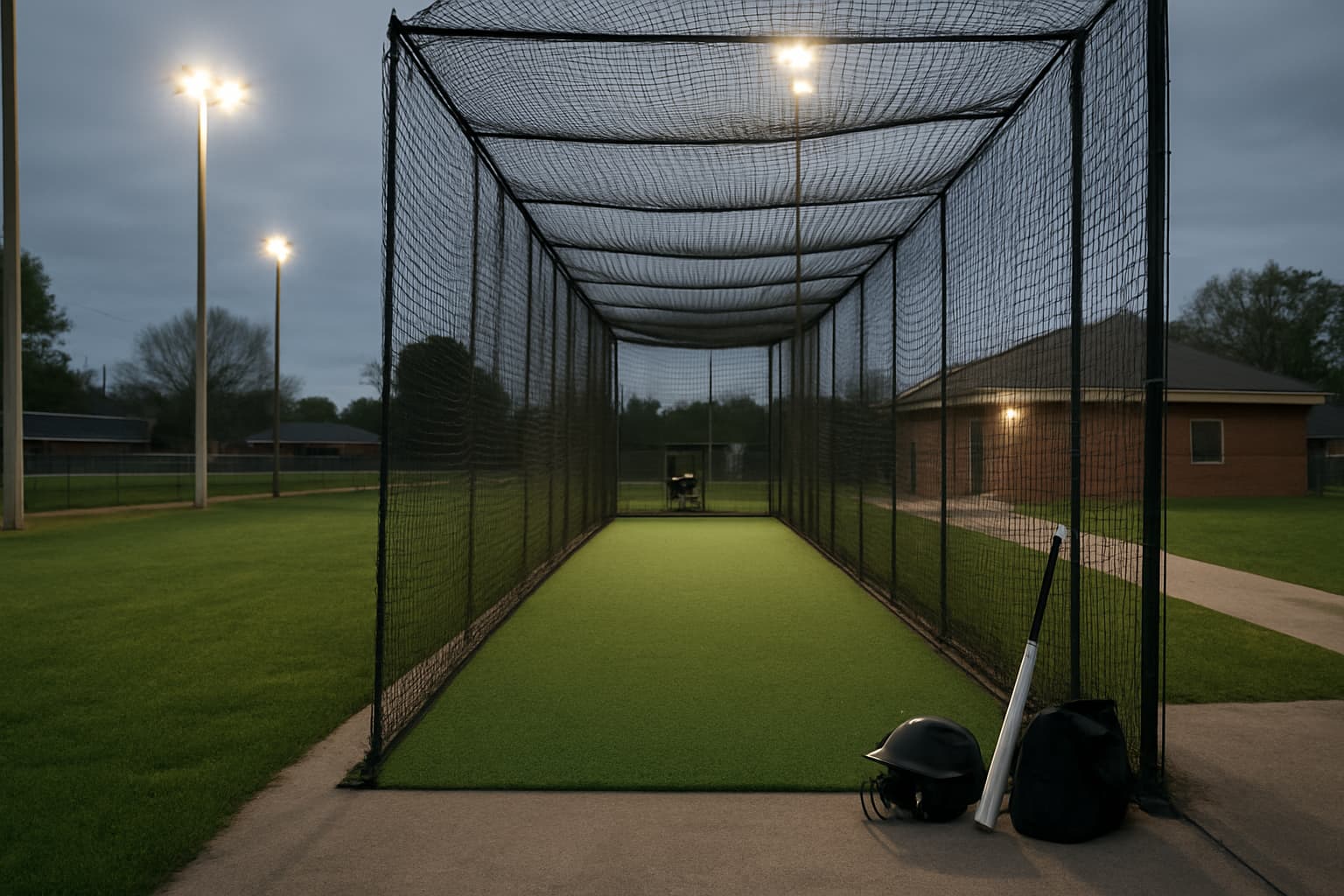
Whether you are building a cage or booking one, indoor and outdoor setups offer different experiences. Neither is universally better — the right choice depends on climate, usage patterns, and what you are trying to accomplish at the plate.
Indoor Batting Cages
Advantages
- Weather-independent: The obvious one. Rain, cold, and heat do not cancel your session. In northern states, this means year-round access without interruption.
- Consistent lighting: No sun glare, no shadow shifts as the day progresses. Lighting is controllable and consistent — important for pitch tracking drills and video analysis.
- Climate comfort: Heated in winter, cooled in summer. Your mechanics do not suffer from shivering or dehydration.
- Better ball tracking technology: HitTrax, Rapsodo, and other tracking systems work best indoors where controlled lighting and a fixed background improve sensor accuracy.
Disadvantages
- Higher cost to build: Converting a garage or building an indoor structure adds significant cost over an outdoor setup.
- Lower availability in rental market: True indoor private cages are rarer. Expect to pay a premium on CageList for a well-equipped indoor lane.
- Space constraints: A proper indoor cage requires ceiling height (minimum 12 feet) and enough length to accommodate a full swing without safety concern.
Outdoor Batting Cages
Advantages
- Lower cost to build and maintain: No structure required. A frame, netting, and a level surface is all you need.
- More space options: Backyards, side lots, and open areas all qualify. You are not constrained by ceiling height or building dimensions.
- Natural light: Some hitters prefer natural daylight for tracking pitches — it more closely mirrors game conditions.
- Abundance in rental market: Most CageList listings are outdoor or semi-covered setups, so selection and pricing are typically better.
Disadvantages
- Weather dependence: Sessions get cancelled. In markets with frequent rain or cold winters, this limits your practice volume significantly.
- Surface wear: Outdoor turf and dirt surfaces degrade faster than indoor surfaces, especially in wet climates.
- Wind interference: Moderate winds affect pitch paths from wheel-based machines and can make soft toss inconsistent.
What to Choose
Indoor makes sense if: you are in a cold or rainy climate, you practice year-round, you want technology integration (HitTrax, Rapsodo), or you are building a commercial facility where consistency is non-negotiable.
Outdoor makes sense if: you are in a warm, dry climate, your practice is seasonal, you are building a backyard cage on a budget, or you prefer renting and want maximum selection.
For many players, the best setup uses both — outdoor for spring and summer practice volume, indoor during winter months or for technology-focused sessions.
CageList lists both indoor and outdoor batting cages. Filter by location, amenities, and availability to find what fits your training needs.
Search batting cages near youFrequently Asked Questions
Can I convert my garage into a batting cage?
Yes, if you have the ceiling height (at least 10–12 feet) and length (at least 35–40 feet). Many homeowners use a standard two-car garage as the structure and install netting and a pitching machine on a track or tee.
Do outdoor cages work in winter?
In mild climates (Southeast, Southwest, Southern California) — yes. In northern states, outdoor cages typically sit unused November through March. A covered or enclosed setup extends the outdoor season significantly.
Are indoor batting cage rentals more expensive?
Generally yes — indoor cages with climate control and lighting typically command $60–$120 per hour versus $30–$70 for comparable outdoor setups. Premium equipment like Hack Attack machines or HitTrax integration adds further to the rate.
Keep exploring on CageList
Book a batting cage near you
CageList helps players, parents, coaches, and teams find private cage time without the runaround.
Related Guides
View all articles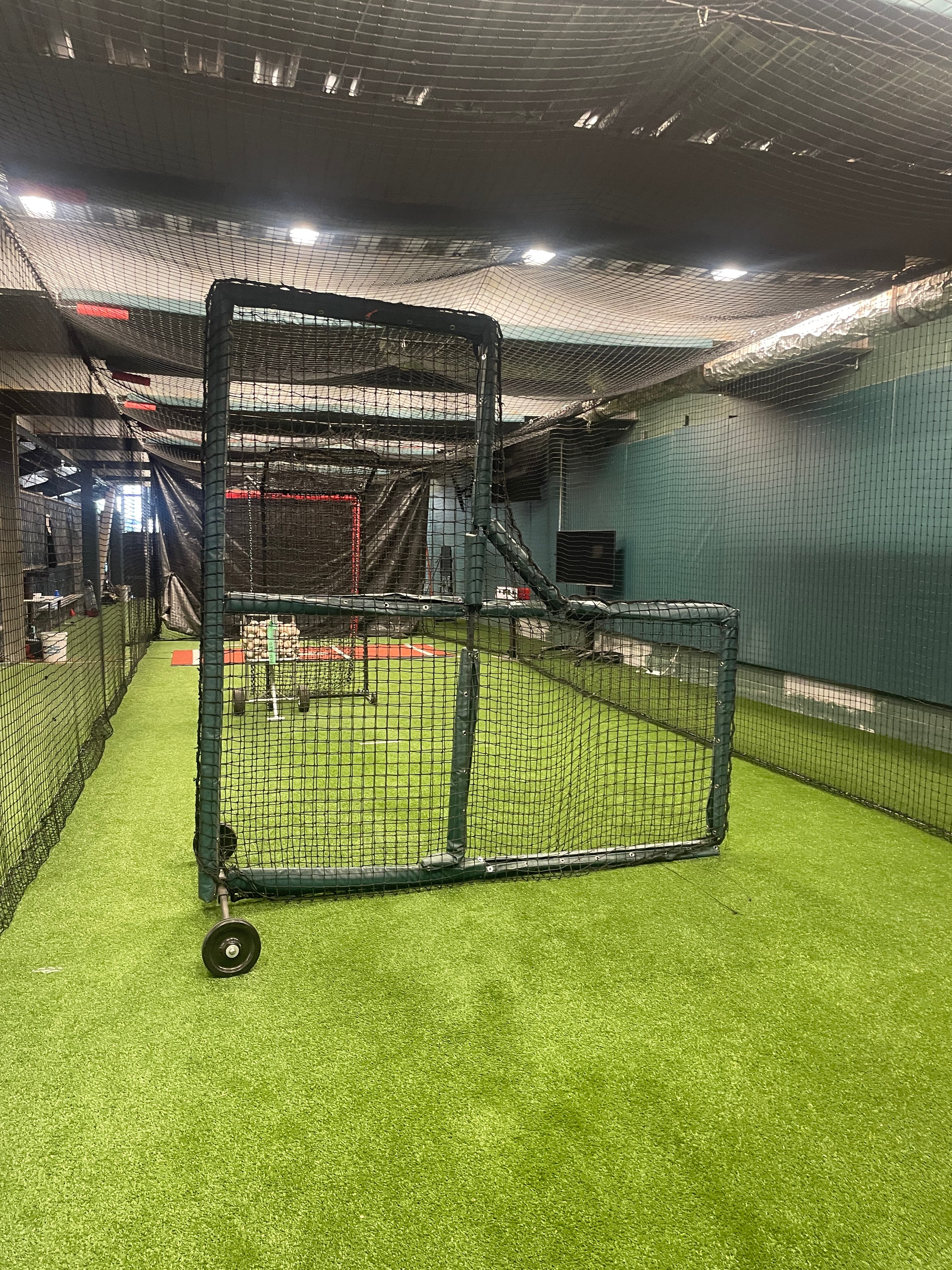
Find & Rent Batting Cages
What You Actually Get at a HitTrax Cage in Dick's Sporting Goods
Dick's runs two different services in the same HitTrax cage, and they cost very different amounts. Here is what you get, what it costs, and when a real cage is the better call.
Find & Rent Batting Cages
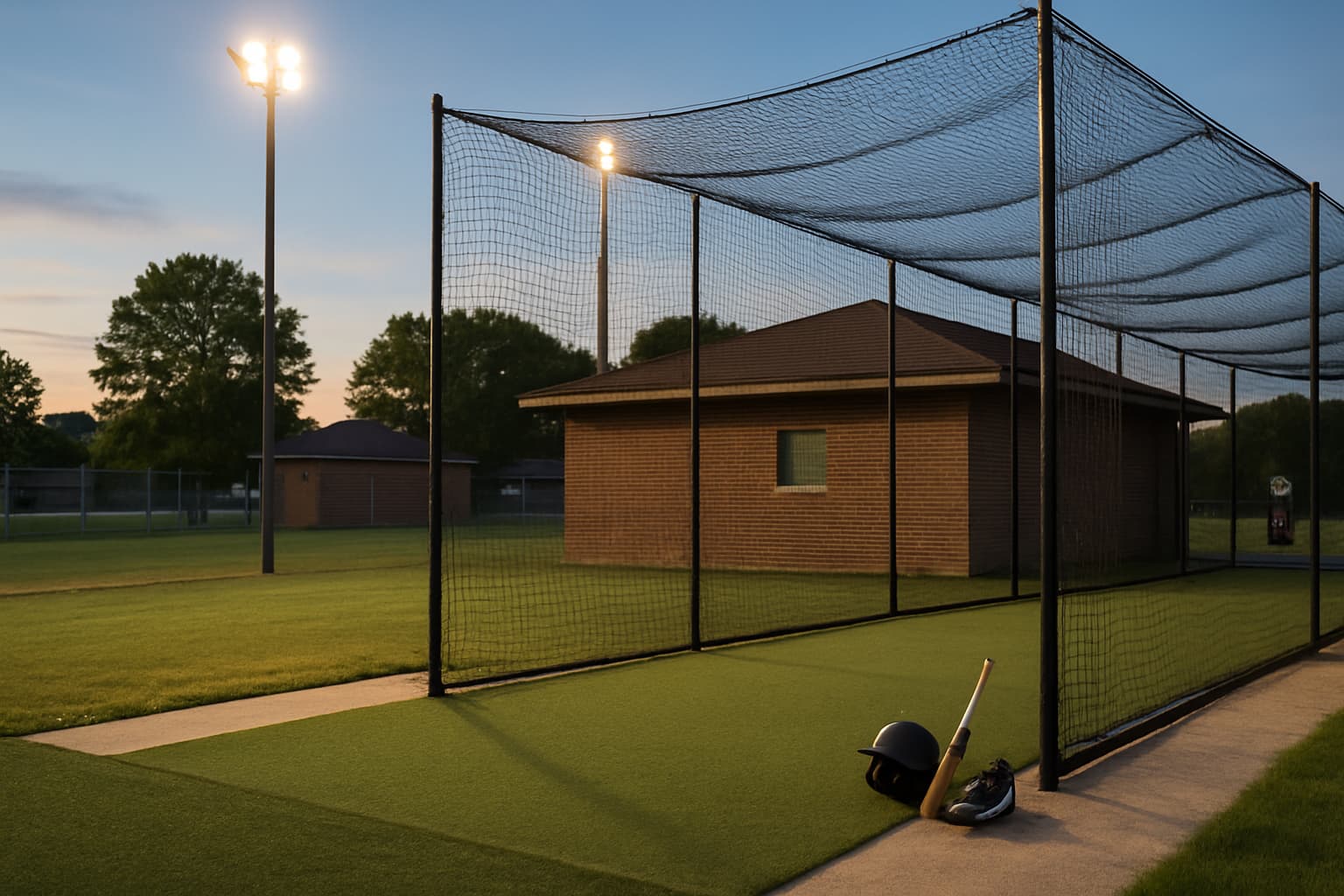
Renting a Batting Cage for the First Time: What to Expect
Booking your first batting cage? Here is what to expect start to finish: how booking works, what to bring, cage etiquette, and how to get the most from your hour.
List Your Cage
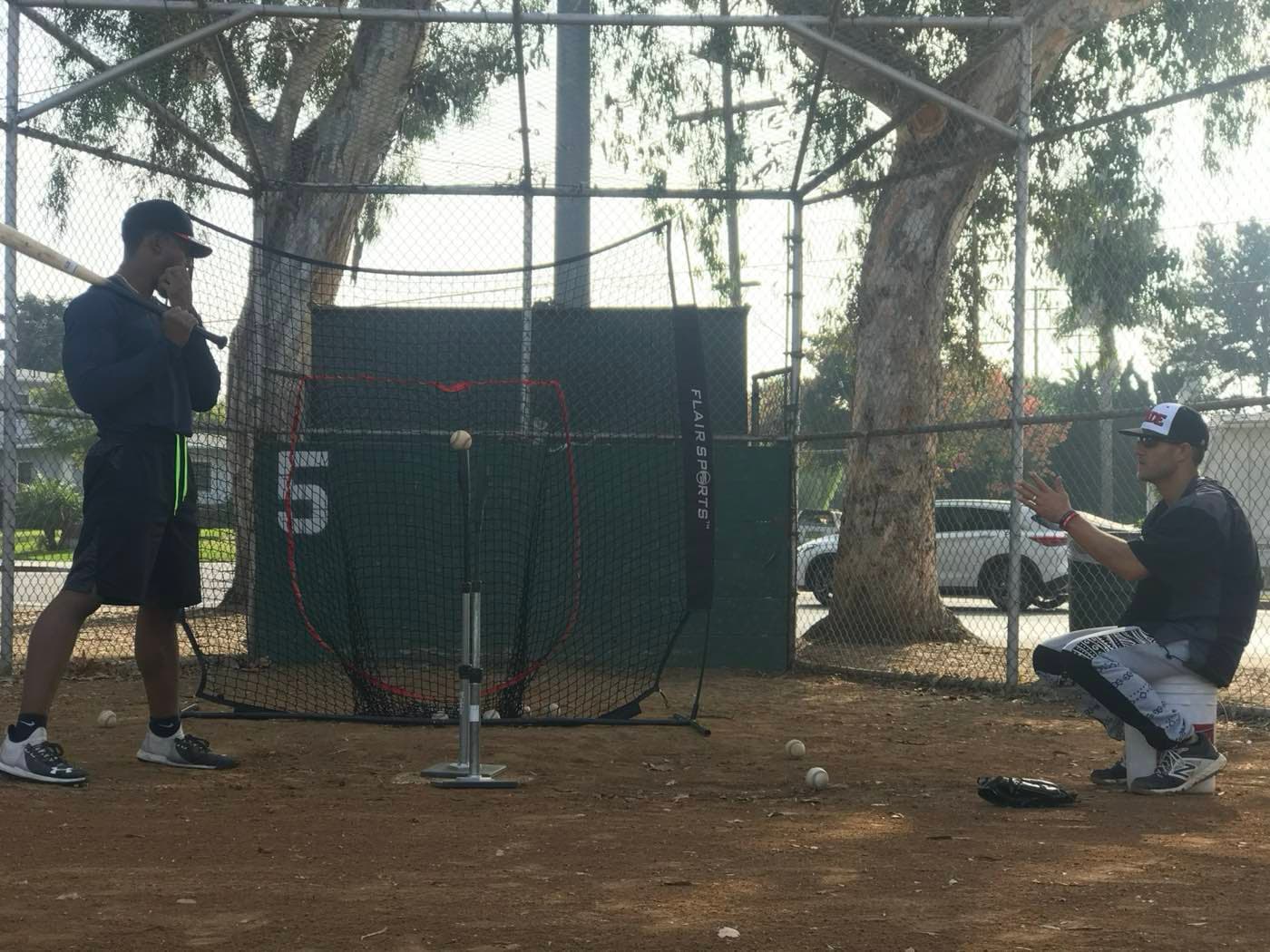
Can Your Little League Rent Out Its Batting Cage?
Most leagues own a cage that sits idle most of the year. Opening it up is usually allowed — it depends on who owns the ground, what your use agreement says, and what your liability policy covers. Here is how to check all three.
Run a travel team? Get your free page.
Baseball or softball. Claim a free directory page, post tryouts, and share cagelist.com/@yourteam with families.
Find your league
Free directories of real leagues and clubs near you — then book a batting cage to get your reps in before opening day.
1,000 organizations

Join the backyard batting cage community
Talk builds, gear, hosting and player development with cage owners, coaches, parents and baseball families.