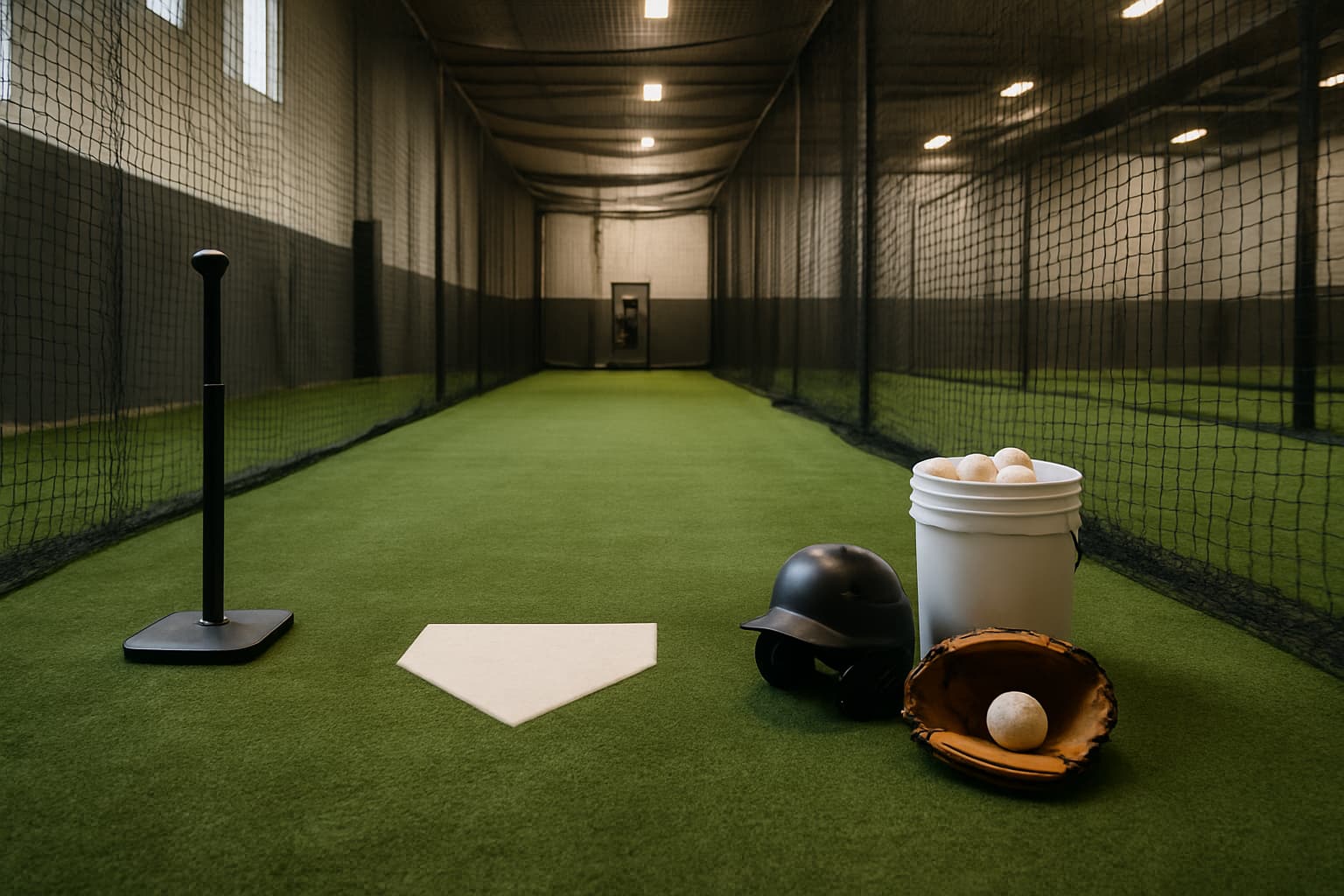
Omaha is one of the most baseball-obsessed cities in the country, home to the College World Series every June and a travel ball market that runs year-round. Finding a private batting cage that actually fits your schedule, though, is a different story.
This guide covers what cage access really looks like in Omaha, what you'll pay, where to find private rental hosts through CageList, and how to make the most of your session whether it's July or January.
The Omaha Batting Cage Landscape
Omaha's commercial options are decent by Midwest standards. You'll find a handful of indoor training academies scattered across the metro, mostly concentrated on the west side in Elkhorn and near the Dodge Street corridor, plus a few token-based cage setups attached to sports complexes. During spring and summer, some parks and recreation centers open outdoor cage areas.
The problem isn't finding a cage. It's finding one that's available when you need it, dialed to the right settings, and not shared with three other teams running concurrent tee work.
That's where private rentals change the math. Omaha has a solid base of backyard cage owners, baseball families who built serious setups and rent them out by the hour through CageList. These aren't makeshift nets in a backyard. Many have dedicated turf surfaces, quality pitching machines with adjustable arm angles and speeds, L-screens, proper lighting for evening sessions, and hosts who genuinely know the game.
What to Expect: Prices, Session Lengths, and Setup Types
Pricing
Private cage rentals in the Omaha metro typically run $30–$65 per hour, depending on the setup quality and what's included. Cages with a dual-wheel pitching machine, turf, and lighting sit toward the higher end. A basic backyard net with a single-wheel machine is usually $25–$40. Commercial facilities charge $40–$70 per hour for a reserved bay, assuming one is open.
Session lengths
Most families book 60–90 minutes. That's enough time for meaningful rounds without the session dragging. For a team or a multi-player family, 2 hours is the right call, it gives everyone full reps and room to work on specific mechanics without rushing.
Backyard vs. indoor private setups
Both exist on CageList. Backyard cages in Omaha are usable from roughly April through September, outdoor season is real here, and those months get enough warm weather for consistent outdoor work. Covered or garage-enclosed setups are the move from October through March, when Nebraska winters make outdoor cage time impractical. When searching, filter by "covered" or check the listing photos to confirm the setup type before you book.
Where Cages Are Most Common in the Omaha Metro
Private cage hosts tend to cluster in neighborhoods where youth baseball is dense. In the Omaha metro, that means:
- Elkhorn, fast-growing suburb with a strong youth baseball culture and newer home construction that gives families the space to build serious setups
- Papillion and La Vista. Sarpy County has one of the highest concentrations of travel ball families in the state; plenty of hosts here
- Bellevue, affordable neighborhoods with larger lots; good backyard cage territory
- Gretna, newer west-side development, good mix of covered and outdoor cages
- West Omaha (168th–192nd corridor), suburban density here means more options, especially for evening sessions after work or school
Omaha's Baseball Culture and Why It Matters
If you're from here, you already know: Omaha takes baseball seriously in a way most cities don't. Charles Schwab Field hosts the College World Series every June, which means the city has been soaked in elite baseball culture for decades. High school programs are competitive. Travel ball organizations run year-round. Creighton's program draws solid recruits. Nebraska Cornhuskers fans make the drive from Lincoln regularly.
That culture shows up in backyard cages. Hosts who list on CageList in Omaha tend to have put real thought and money into their setups, because they built them for their own kids first. You're not renting someone's hobby project. You're using a cage that's been dialed in over seasons of actual use.
Handling Omaha's Off-Season: October Through March
Nebraska winters are real. Temperatures regularly drop into the teens and twenties from November through February, and outdoor cage work becomes impractical or impossible. This is the season where indoor private rentals matter most.
Commercial facilities get crowded during winter, teams are all chasing the same limited indoor time. Private cage hosts with covered or garage setups offer an alternative that's often easier to book, more flexible on timing, and cheaper than a reserved bay at an academy.
When searching CageList during winter months, filter for covered setups and use the calendar to check host availability. Many hosts prefer winter bookings since their setup would otherwise sit idle, that sometimes translates to better rates or more flexible scheduling.
How CageList Works
Search your location, filter by what matters (pitching machine, turf, covered, specific dates), and browse listings with real photos. Each host sets their own schedule and hourly rate. You book and pay through the platform, then show up for your session. No awkward cash exchanges. No figuring out if the machine works when you get there.
Leave a review after your session. It helps other families find the good setups and gives hosts useful feedback.
Find Private Batting Cages Near You
CageList connects you with private backyard batting cage owners in your area who rent by the hour. No waiting. No crowds. Just you, your machine settings, and focused reps.
Search Batting Cages Near You →Frequently Asked Questions
Are there batting cages open year-round in Omaha?
Commercial facilities stay open year-round, and private CageList hosts with covered or garage setups are available through winter. Outdoor cages are usable April through September in most years. When searching during winter months, filter for "covered" or "indoor" setups to find what's actually usable in cold weather.
How much does it cost to rent a batting cage in Omaha?
Private rentals on CageList run $30–$65 per hour depending on the setup. Basic backyard nets with a single-wheel machine are on the lower end. Fully equipped cages with a dual-wheel machine, turf, and lighting are toward the top of that range. Commercial facilities typically charge $40–$70 for a reserved bay when one is available.
Can I find batting cages in Papillion or Bellevue?
Yes. Sarpy County (Papillion, La Vista, Bellevue) has good private cage coverage on CageList. These areas have strong travel ball communities, which means more hosts who've built serious setups. Search by city or use the map view to find listings closest to you.
Do Omaha hosts include a pitching machine?
Most do, but check the listing details. Hosts who include a pitching machine and turf surface typically call that out in their listing title and photos. Use the "pitching machine included" filter when searching to narrow to setups that are ready to go when you arrive.
Keep exploring on CageList
Book a batting cage near you
CageList helps players, parents, coaches, and teams find private cage time without the runaround.
Related Guides
View all articles
Find & Rent Batting Cages
What You Actually Get at a HitTrax Cage in Dick's Sporting Goods
Dick's runs two different services in the same HitTrax cage, and they cost very different amounts. Here is what you get, what it costs, and when a real cage is the better call.
Find & Rent Batting Cages
Renting a Batting Cage for the First Time: What to Expect
Booking your first batting cage? Here is what to expect start to finish: how booking works, what to bring, cage etiquette, and how to get the most from your hour.
List Your Cage
Can Your Little League Rent Out Its Batting Cage?
Most leagues own a cage that sits idle most of the year. Opening it up is usually allowed — it depends on who owns the ground, what your use agreement says, and what your liability policy covers. Here is how to check all three.
Run a travel team? Get your free page.
Baseball or softball. Claim a free directory page, post tryouts, and share cagelist.com/@yourteam with families.
Find your league
Free directories of real leagues and clubs near you — then book a batting cage to get your reps in before opening day.
1,000 organizations

Join the backyard batting cage community
Talk builds, gear, hosting and player development with cage owners, coaches, parents and baseball families.