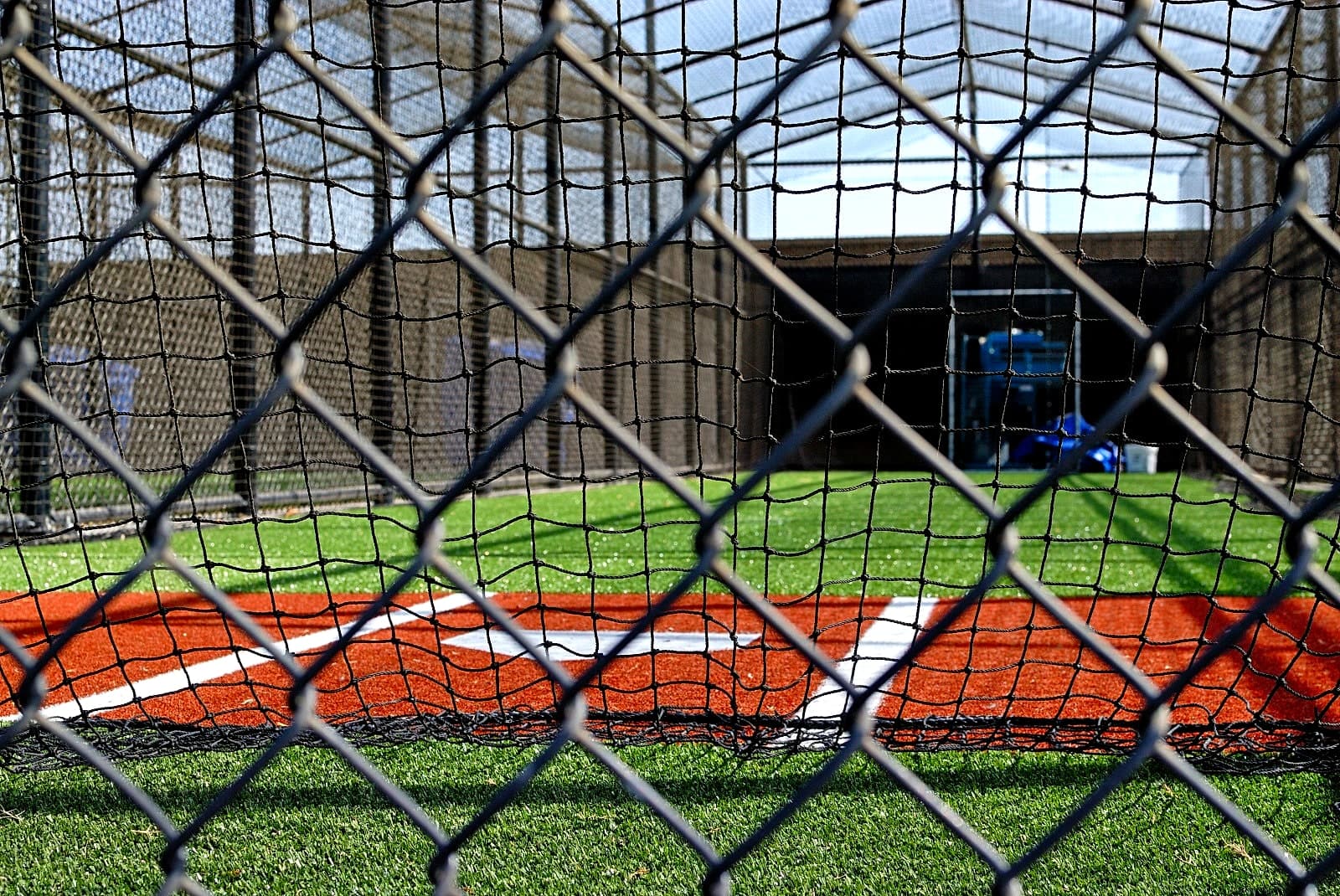
One wheel or three? How much speed do you actually need? A no-nonsense buyer's guide to the machines worth putting in a backyard cage, for solo hitters, travel players, and pro-grade setups.
Updated July 2026
A pitching machine is the fastest way to turn a backyard cage into real development: consistent reps, on demand, without wearing out a parent's arm. But the market runs from ninety-dollar arm machines to five-thousand dollar three-wheelers, and the specs are written to sell top-end numbers you may never use. This guide cuts through it: the six things that actually matter, honest price tiers, and which machine fits which hitter.
If you're still planning the cage itself, start with our batting cage build guide. Already have the space? Keep reading, then grab the machine that matches your player below.
How to choose a pitching machine
Six factors separate a machine you'll love from one that collects dust. Read them in order; they're roughly the order that should drive your decision.
1
Wheel count: 1, 2, or 3
One wheel throws straight fastballs and is the cheapest, quietest place to start. Two wheels add spin, so you can dial in curves and change speeds without swapping parts. Three wheels give you full pitch shaping (fastballs, sliders, curveballs) and the most repeatable game-speed reps. More wheels means more money and more setup, so match the wheels to the hitter, not the ego.
2
Top speed vs. usable speed
A machine that tops out at 100 mph is impressive on paper, but what matters is the speed range you'll actually train at. Youth hitters live in the 40–60 mph band; high school and college want 60–90 mph with movement. Buy for the speed your players use most days, and leave headroom, not the other way around.
3
Ball type it feeds
Machines are built around a ball: real leather/pearl baseballs, dimpled machine balls, or small vision-training balls. Dimpled balls are cheaper and easier on the wheels; leather feels most game-real but wears faster. Small-ball machines (golf-ball-sized) are a different tool entirely: they build pitch recognition and barrel accuracy in a tiny space.
4
Auto-feeder or hand-fed
The four tiers, and who each is for
Skip the spec-sheet rabbit hole. Almost every machine falls into one of these four buckets. Find the hitter that sounds like yours and you've narrowed it to a handful of models.
Entry / solo backyard
Under ~$300
Best for: Parents and single players who want consistent fastballs at home without a training partner.
What to look for: A simple single-wheel or arm machine with an automatic feeder, dimpled-ball compatibility, and speeds into the 40–45 mph range.
Examples: SKLZ and Heater Sports entry machines with auto-feeders.
Vision & small-ball trainers
Varies
Best for: Hitters chasing pitch recognition and barrel accuracy in a garage or half-cage: huge rep counts in tight space.
What to look for: A small-ball machine with adjustable speed and angle so you can simulate rise, drop, and off-speed with mini balls.
Examples: MaxBP Original and MaxBP Pro Plus.
Pitching machine FAQ
What's the best pitching machine for a home batting cage?
It depends on the hitter. For solo backyard reps, an entry machine with an automatic feeder is the most machine per dollar. For travel and high-school players who need real movement and game speed, a three-wheel machine like the Junior Hack Attack is the sweet spot. For a premium home cage or academy, the pro-grade Hack Attack and JUGS BP3 are what college and pro programs use.
Do I need a three-wheel machine?
Not to start. One wheel throws straight fastballs and is cheaper and quieter. Two wheels add spin and speed changes. Three wheels give you full pitch shaping and the most game-real reps. Buy three wheels when the hitter genuinely needs to train breaking balls and varied speeds; otherwise you're paying for capability you won't use.
How fast should a pitching machine throw?
Match the speed to the player. Youth hitters train mostly in the 40–60 mph range; high school and college want 60–90 mph with movement. Buy a machine whose usable range covers where your players spend most reps, with some headroom, not one you picked purely for its top-end number.
Can I use a pitching machine alone?
Yes, if it has a hopper or automatic feeder. That's the single most important feature for solo practice or for a cage you rent out: it lets a hitter get reps without someone loading each ball. Hand-fed machines need a partner.
What power do pitching machines need?
Most run on standard household power, so you'll want an outlet or a generator at the cage. Some models offer battery packs for field use at extra cost. Confirm the power requirement and cord length before you build the machine into a cage layout.
The machines we'd actually buy today, pulled live from the CageList gear store, from an affordable first machine to the pro-grade wheels college and travel programs trust.
Affiliate disclosure: As an Amazon Associate, CageList earns from qualifying purchases.
A hopper/auto-feeder is the difference between solo practice and needing a partner. If the cage will be used alone, or rented out, an automatic feeder is worth the upgrade. Hand-fed machines are fine when there's always a coach or parent loading balls.
5
Portability & power
Corded machines need an outlet or a generator at the cage; battery options exist but cost more. Weight and folding matter if the machine moves between a garage and the cage, or travels to the field. A permanent backyard cage can take a heavier, higher-end machine that a travel team never could.
6
Price tier & who it's for
Entry machines start under a few hundred dollars and cover solo backyard reps. Travel-grade three-wheelers run into the low thousands. Pro-grade wheels used by college and MLB programs sit at the top. Spend where the reps are: a serious hitter with a home cage justifies more than an occasional weekend user.
Youth & travel game-speed (3-wheel)
Low thousands
Best for: Travel and high-school players who need real fastballs and breaking balls, sized so youth hitters can still see the ball out of the machine.
What to look for: A three-wheel machine with a visible feed, game-speed fastballs plus curve/slider, and portability for field-to-cage moves.
Examples: Junior Hack Attack.
Pro-grade (3-wheel, elite speed)
$4,000+
Best for: Serious home cages, academies, and teams that want the same machine college and pro programs train on.
What to look for: A three-wheel machine that throws every pitch type at elite speeds with precise, repeatable settings: the machine renters and clients recognize.
Examples: Hack Attack and JUGS BP3.
Do pitching machines work with real baseballs?
Many do, but check the spec. Dimpled machine balls are cheaper and easier on the wheels, while leather balls feel most game-real and wear the wheels faster. Small-ball vision machines use their own mini balls and are a separate training tool, not a substitute for full-size BP.