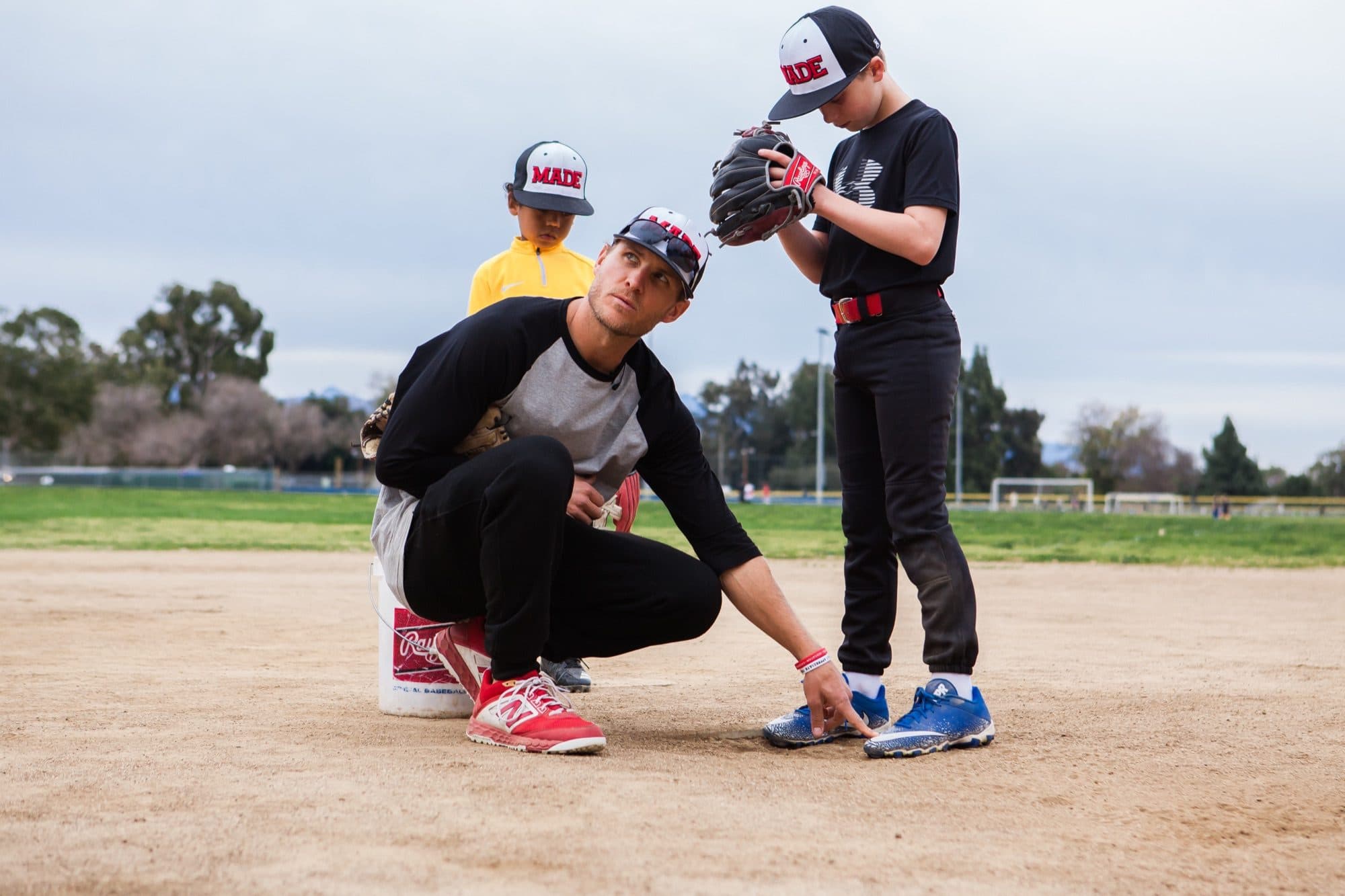
MADE Pitching Principles
We work with youth pitchers day in and day out. These are the commonalities we've found in how to teach pitching at a fundamental level.
The Order We Teach It In
- Mechanics
- Mindset and approach / confidence
- Arm care
- Mobility
- Recovery
- Knowing who you are as a pitcher (power? finesse?)
- Tinkering with different pitch grips
Questions Worth Sitting With
Not every question needs a canned answer. These are the ones we bring up with a pitcher to get them thinking, not to hand them a line.
- Does it matter what type of glove you have?
- How important is long toss?
- What happens when you go into deep counts consistently?
- Why should you be able to execute your mechanics in extremely slow motion?
- What are the top questions you should ask yourself if you want to be recruited?
The Fundamentals, Q&A
What is the most important part of pitching (beginners)?
Throwing strikes. Learn how to make it spin (4-seam).
What is the most important part of pitching (intermediate to advanced)?
Fastball command, and command of your off-speed pitches too. If you can't throw a breaking ball for a strike, you shouldn't be throwing one.
What is your best pitch?
Strike 1 — the mindset of working ahead.
What is the best pitch in baseball?
The change-up.
When can we practice pitching?
Every single time we're throwing.
What are your pitching mechanics?
Mechanics is just another word for your form.
What is a pitcher's routine?
The process of taking a sign and coming set on every single pitch.
At what age should a pitcher start taking a sign from a catcher?
As soon as they start pitching. This needs to be taught from the very beginning — the catcher gives the sign for a fastball down the middle every single pitch. It's repetitive, but it needs to happen as soon as kid-pitch starts.
What does it mean to “come set,” and how do we do it?
Taking a sign, then coming to a paused position with the back foot in front of the rubber and the hands about six inches in front of the chest.
What is the wind-up, and when do we use it?
A small jab step that helps build more momentum into the pitch. We use it when nobody is on base.
What is the stretch, and when do we use it?
Taking a sign, then coming directly to a set position. We use it when there are baserunners on base.
What signs does the pitcher get from the catcher?
Fastball, change-up, curveball, slider, cutter, knuckleball.
What are the two types of fastball grips we should practice, and when?
4-seam and 2-seam — anytime we throw. Figure out which feels more comfortable, but get a feel for both. Make a game out of figuring out which one works best for you, both for accuracy and for velocity.
Related Reading
Same mental-approach thinking, applied to the box instead of the mound.