Loading...
What Does an Indoor Batting Facility Cost?
Price a retrofit of an existing space (warehouse, retail unit, old gym) into a working indoor facility. Build cost and monthly carry, itemized.
The space
2,00020,000
212
6,900 sq ft of bays leaves 100 sq ft for lobby, lessons, retail and offices.
What shape is the space in?
Clear ceiling height
14–18′ of clear height works for a standard hitting bay. Confirm the measurement is to the lowest obstruction in the bay footprint.
The build
Netting grade
Turf coverage
Lighting
Who runs the build?
Equipment
Pitching machine per bay
Your market
Industrial rent runs about 5× wider by market than construction labor does (roughly $4.50/sq ft/yr in the cheapest metros to $22 in Los Angeles) so this is the number that moves your carry the most.
60 paid bay-hours a week across 6 bays. Cage rental is only one revenue line: lessons, memberships, teams and camps usually carry more of a real facility's P&L, and none of them are in this number.
Space prep & systems$56,000 – $126,000
Cage framing & netting$30,000 – $48,000
Turf (bays only)$17,250 – $41,400
Lighting$2,400 – $7,200
Electrical for machines$3,000 – $9,000
Pitching machines$18,000 – $36,000
Permits & inspections$1,500 – $5,790
Lease$4,667 – $6,417
NNN (taxes, CAM, building insurance)$583 – $1,750
Utilities$1,167 – $2,042
Liability insurance$183 – $425
Cage rental at your inputs
$14,289/mo gross
$5,672/mo left after lease and carry, before staff, marketing and your own pay · at that rate the build takes about 49 months to earn back
An estimate, not a quote. Get real numbers from a local build-out firm before you sign a lease.
What does an indoor batting facility cost?
Retrofit, 6–8 bays
Lease, per sq ft/yr
Sq ft per bay
Retrofitting an existing space (a warehouse bay, an empty retail unit, an old gym) into a 6–8 cage indoor facility typically runs $80,000 to $200,000 for the build-out, before equipment. That covers cage framing and netting, turf, lighting, and the electrical and HVAC work the space needs. Ground-up construction is a different animal entirely at $150–$250 per square foot, which is why most first facilities are conversions, not new builds.
The number that decides whether the business works, though, usually isn't the build: it's the lease. Industrial rent swings roughly 5× by market, and you pay it every month whether the bays are booked or not.
What this tool does not include: staff wages, marketing, point-of-sale or scheduling software, working capital, or your own salary. It prices the room and the gear: the two things you can estimate before you have a signed lease. Everything else depends on how you run it.
One-time spend vs. monthly carry
One-time
Space prep, cage framing and netting, turf, lighting, electrical, machines, permits, and a build-out firm's markup if you use one. You spend it once, before you open.
Every month
Lease, NNN (taxes, common-area maintenance, building insurance), utilities, and liability coverage. This is the number that has to be covered every single month, in January as much as in March.
Where the money goes
Space prep & systems
HVAC, restrooms, ADA and electrical service. A bare shell runs $25–$50/sq ft; a former gym can be near zero.
Cage framing & netting
Commercial 70′ tunnel. Standard grade runs lower but wears faster under all-day paid use.
Turf
Installed. Turfing only the bays is the cheaper path; full-floor turf makes the space sellable for team training.
Lighting & electrical
High-bay LED over the tunnels plus machine drops, conduit and panel capacity.
Pitching machines
Commercial-grade, mid tier. These get hammered far harder than a backyard machine.
Permits & inspections
Priced off construction valuation in most jurisdictions. A change of use can add impact fees.
Build-out firm
GC overhead and profit, if you're not coordinating the trades yourself.
Lease cost by market
Frames, nets, turf and machines ship at national prices. Rent does not. The same 7,000 sq ft costs wildly different money depending on the metro, and unlike the build, you pay it again every month.
per sq ft/yr, Lower-cost metros
per sq ft/yr, National average
per sq ft/yr, Major metros
Add $1–$3/sq ft/yr for NNN on top of base rent. On a 7,000 sq ft space that's another $580–$1,750 a month before you turn a light on.
Not sure a facility is the right move?
Plenty of people who start pricing a commercial facility are really after something smaller: a cage of their own that also earns. A backyard build runs $1,500–$15,000 instead of six figures, carries no lease, and can be rented out on CageList. If the goal is income rather than running a business, that path is worth pricing first.
Price a backyard cage instead →Real facilities on CageList
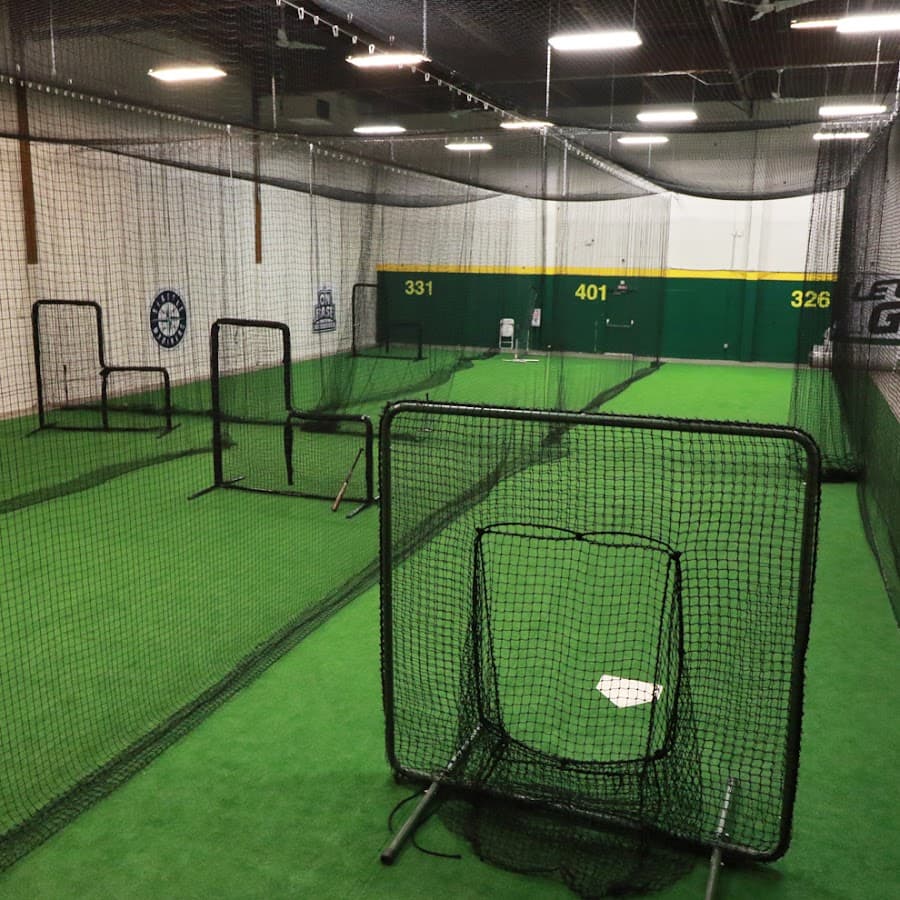
Go Time Athletics
Seattle, WA
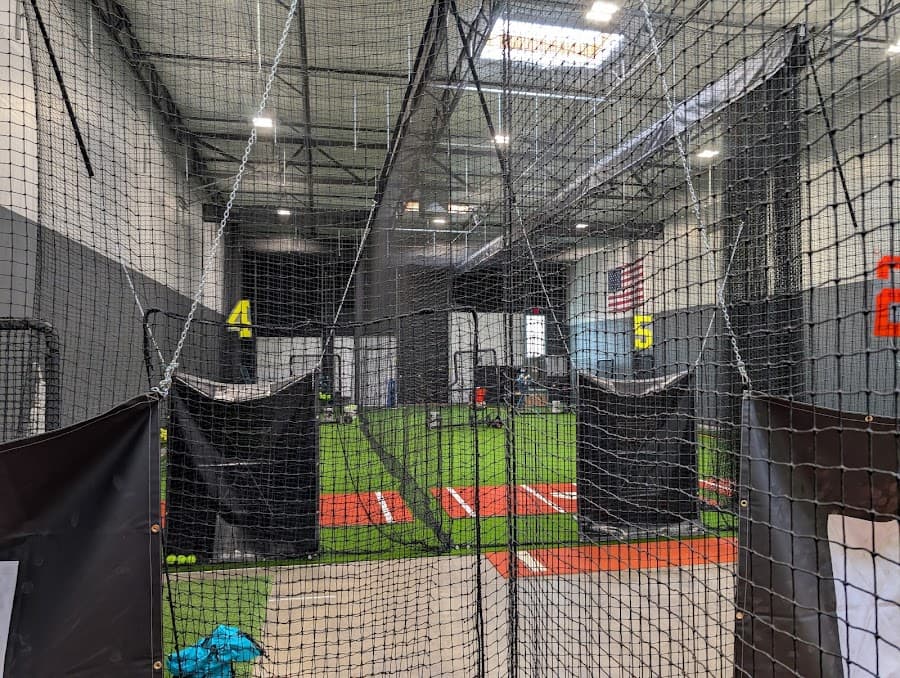
Apollo Hit House
Vancouver, WA
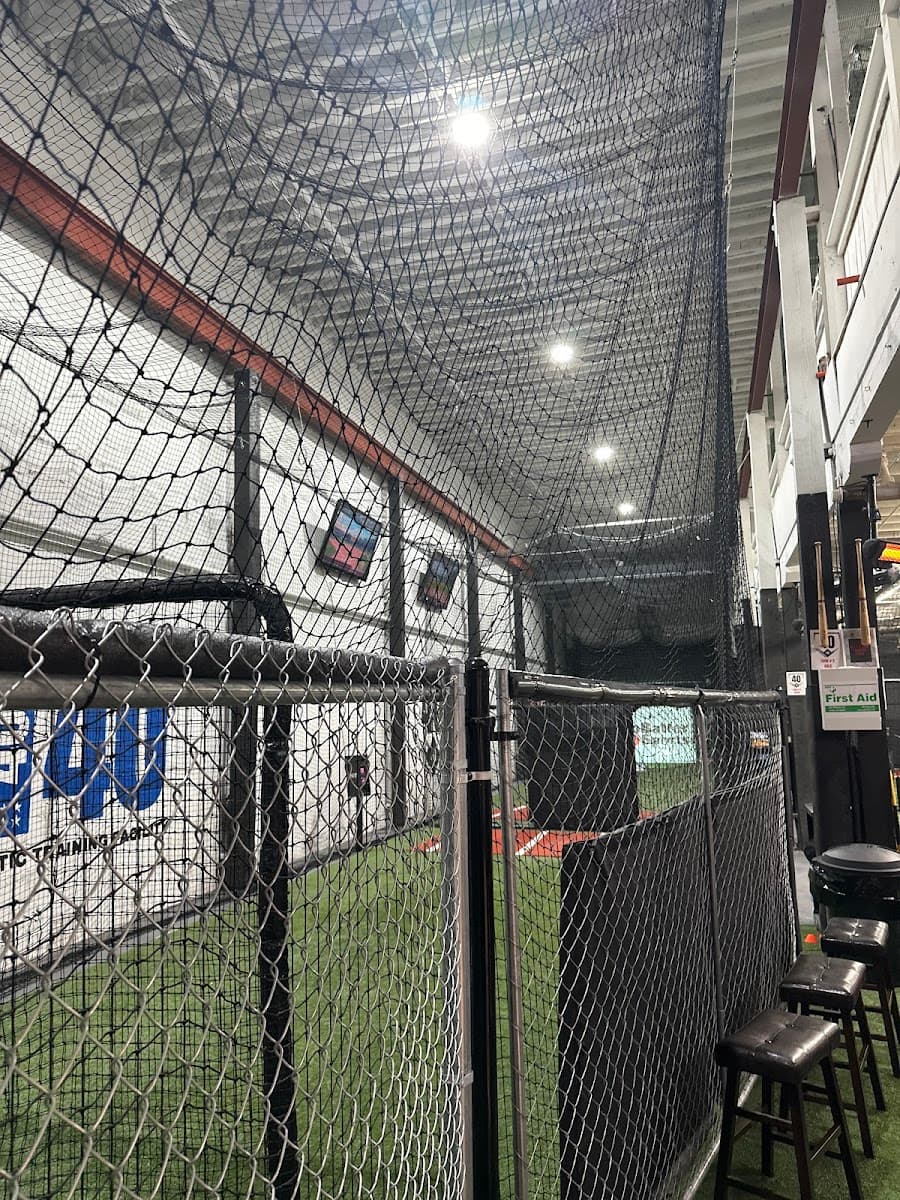
4040 Athletic Training
Olympia, WA
Indoor facility cost FAQ
How much does it cost to open an indoor batting cage facility?
Retrofitting an existing space into a 6–8 bay indoor facility typically runs $80,000 to $200,000 for the build-out, plus roughly $3,000–$6,000 per bay for commercial pitching machines. On top of that you carry the lease every month. Industrial space runs about $4.50 to $22 per square foot per year depending on the market, plus $1–$3 per square foot for NNN. Ground-up construction is a different scale entirely, around $150–$250 per square foot.
How much space do you need per batting cage?
Budget about 1,150 square feet per hitting bay. A regulation 70-foot tunnel at 14 feet wide is 980 square feet on its own, and you need run-off behind the plate plus a shared walkway between bays. A 7,000 square foot space comfortably fits six bays with roughly 100 square feet left for a lobby. If you want retail, offices or an open training area, size up.
What ceiling height do you need for an indoor batting cage?
Fourteen feet of clear height is the practical minimum and 16 feet or more is comfortable. The number that matters is clear height to the lowest obstruction inside the bay footprint (a duct, joist, sprinkler head or light fixture) not the height of the roof deck. Under 14 feet, anything but a line drive catches the ceiling, which limits what you can sell the space for.
Is it cheaper to convert a warehouse than to build new?
Substantially. A retrofit uses the existing shell, roof and slab, so you're paying for cage framing, netting, turf, lighting and whatever systems the space lacks. Ground-up construction runs $150–$250 per square foot, which on a 7,000 square foot building is over a million dollars before a single cage goes in. Nearly all first facilities are conversions.
How much is insurance for a batting cage business?
A small operation typically pays $400–$1,100 a year for $1 million in general liability coverage. A 10–12 lane facility runs closer to $4,000–$9,000 a year, depending on revenue, hours and whether you serve alcohol. You'll want a specialty recreation or amusement policy rather than generic business coverage, since participant-to-participant injury needs to be covered explicitly.
Do you need permits to convert a space into a batting facility?
Yes. Most jurisdictions require a tenant improvement permit, and converting from warehouse or retail into recreation use usually triggers a change of use review, which can bring occupancy, egress, restroom and ADA requirements with it. Permit fees are typically calculated off construction valuation (roughly 1% to 2.5% of the build) and a change of use can add sewer or impact fees on top. Check with the local building department before you sign a lease, not after.
Can cage rental alone pay for an indoor facility?
Usually not, and any plan that assumes it will is fragile. Cage rental is the easiest revenue line to model but rarely the biggest one: lessons, memberships, team rentals, camps and clinics typically carry more of a facility's P&L. Model the cage rental as your floor, then treat lessons and memberships as what makes the deal work.
How many bays should a first facility have?
Most first facilities land between four and eight bays. Fewer than four makes it hard to cover a commercial lease, since your revenue ceiling is bay-hours times rate. More than eight raises both the build cost and the lease you have to fill, which is a lot of risk before you know your market's real demand. Six is a common starting point in a 6,000–8,000 square foot space.