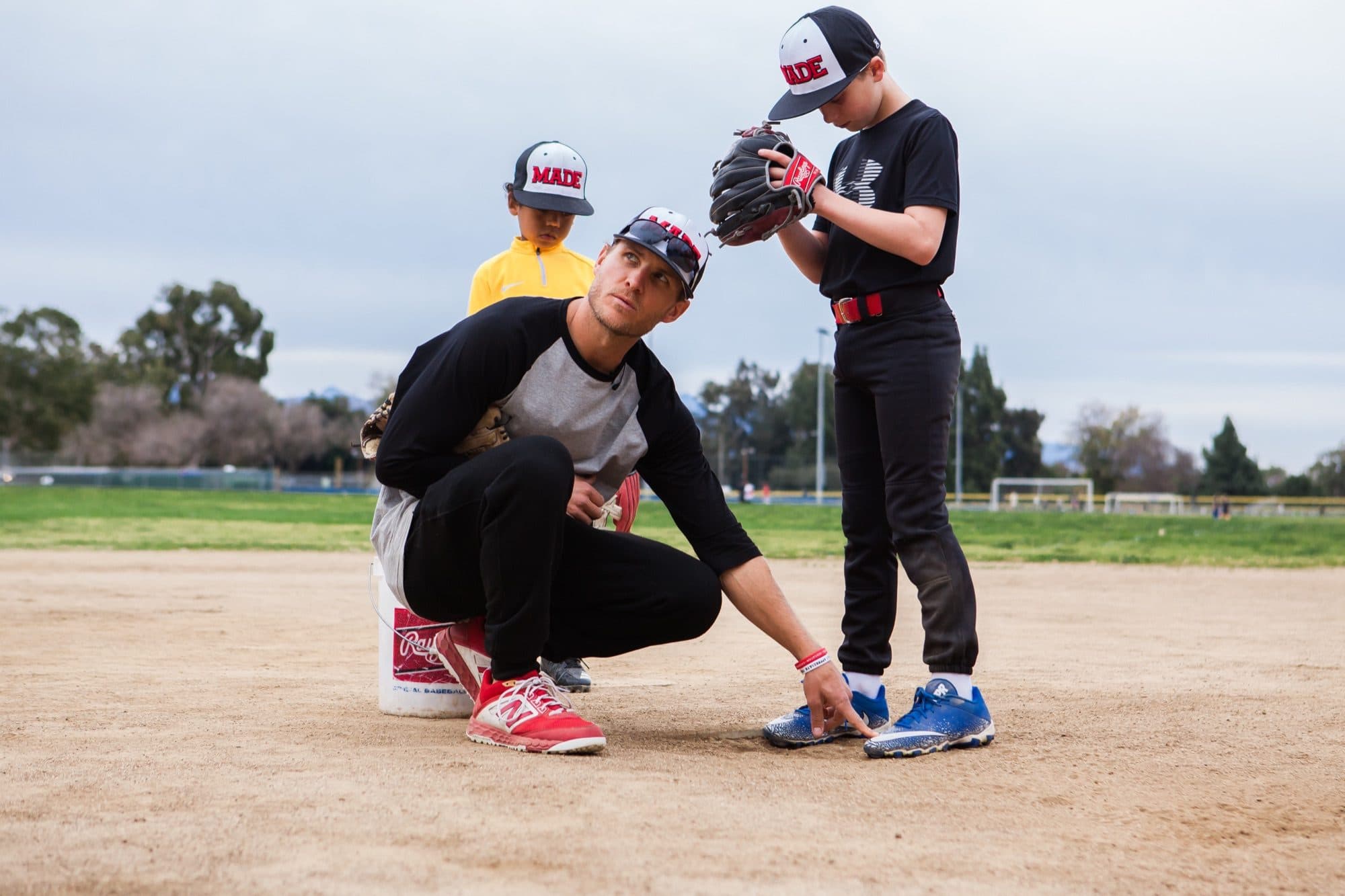
Teaching Baseball IQ
A player who can answer these without hesitating is thinking two pitches ahead, not one.
We ask questions like these throughout a lesson or a camp — not as a formal quiz, but as a running check on whether a player is actually thinking about the game, or just going through the motions. Ask them enough and players start asking themselves.
Routine & Preparation
What time should you always be at practice?
Whose responsibility is it to be waiting at the door, ready to get to practice, no later than 10 minutes early?
Whose responsibility is it to have your baseball clothes together so they get washed?
Tell me 3 drills you can do at home on your own to get better.
How many seconds or less should it take you to run to your position every inning?
What should you do every single time you get in the car after a practice or game, in any sport or activity?
Situational Awareness
Ground ball to shortstop — where are you supposed to look when you cross over first base?
Base hit up the middle — what's the first thing you tell yourself out of the batter's box?
Answer: Get on... 2!
You want to turn the bag so hard you make the center fielder press a certain button. Which one?
Answer: The panic button.
What should you always do heading into a base if there's any chance of a close play?
What is the name of our throwing program?
Answer: BCDs.
What comparison do we use for good mechanics?
Answer: Build...
What's more important for a pitcher — accuracy or velocity?
Mindset & Culture
What's the main thing you can control every day you step on the field, and every day you have in your life?
Answer: Your attitude.
What does KASH stand for?
What does MADE stand for, and what does it mean to “Get MADE”?
Name two things baseball teaches you so much.
Answer: Humility (responding to failure), teamwork, leadership (lead by example), work ethic (every day).
Related Reading
Where a lot of these answers come from in the first place.